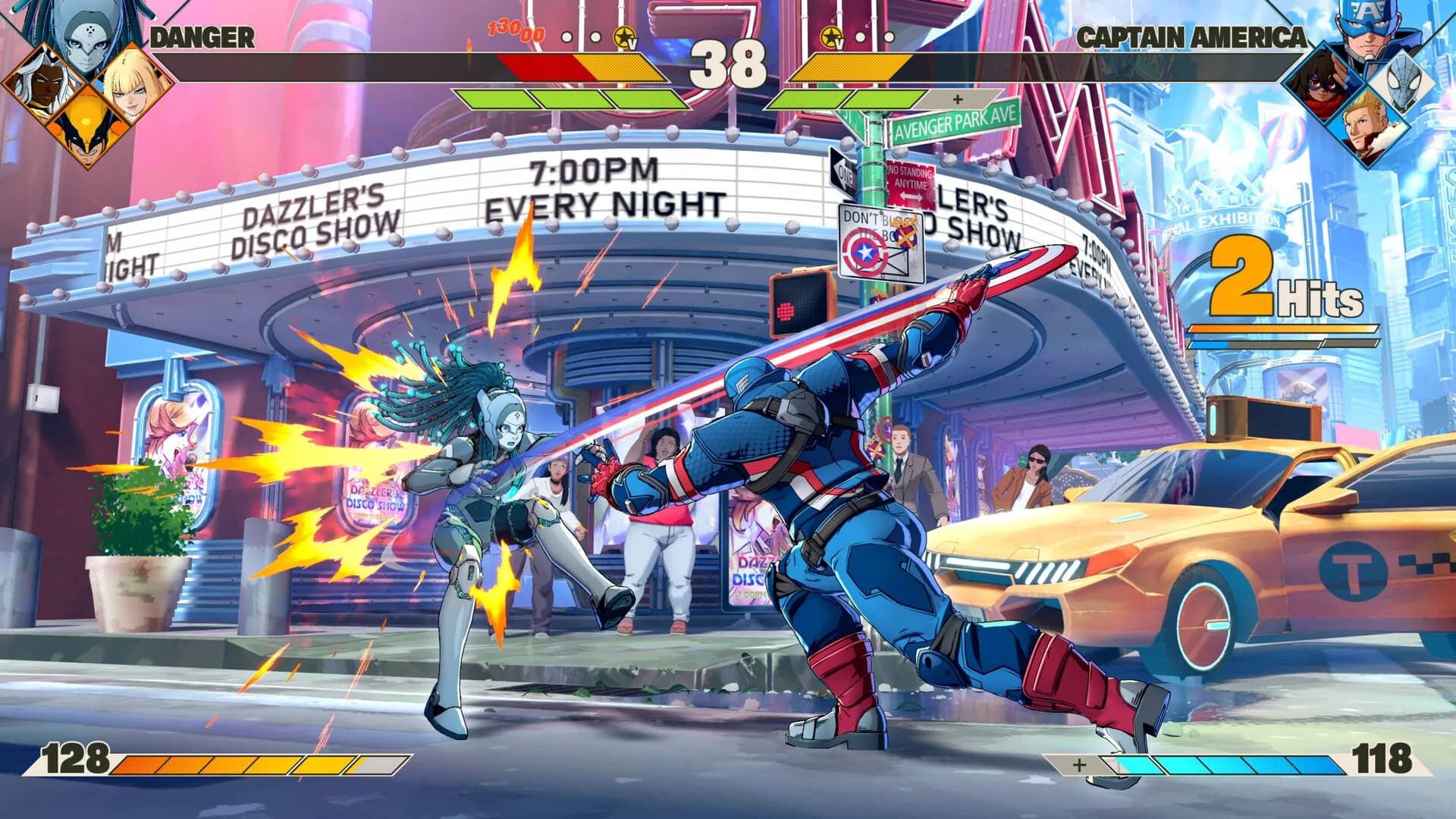
MARVEL Tokon Fighting Souls is twenty characters, five teams, and a single life bar that changes the whole Marvel-versus equation. Before dreaming of long air combos, you have to understand the systems and know the role of each champion. This guide gives you the foundations: the mechanics to master, how to build a team of four that holds together, and the archetype and core strategy of every character in the roster. An honesty note first: with the game just launching, precise combo routes will stabilise with the community; this guide therefore focuses on system mastery and per-character strategy, the real base for improving fast.
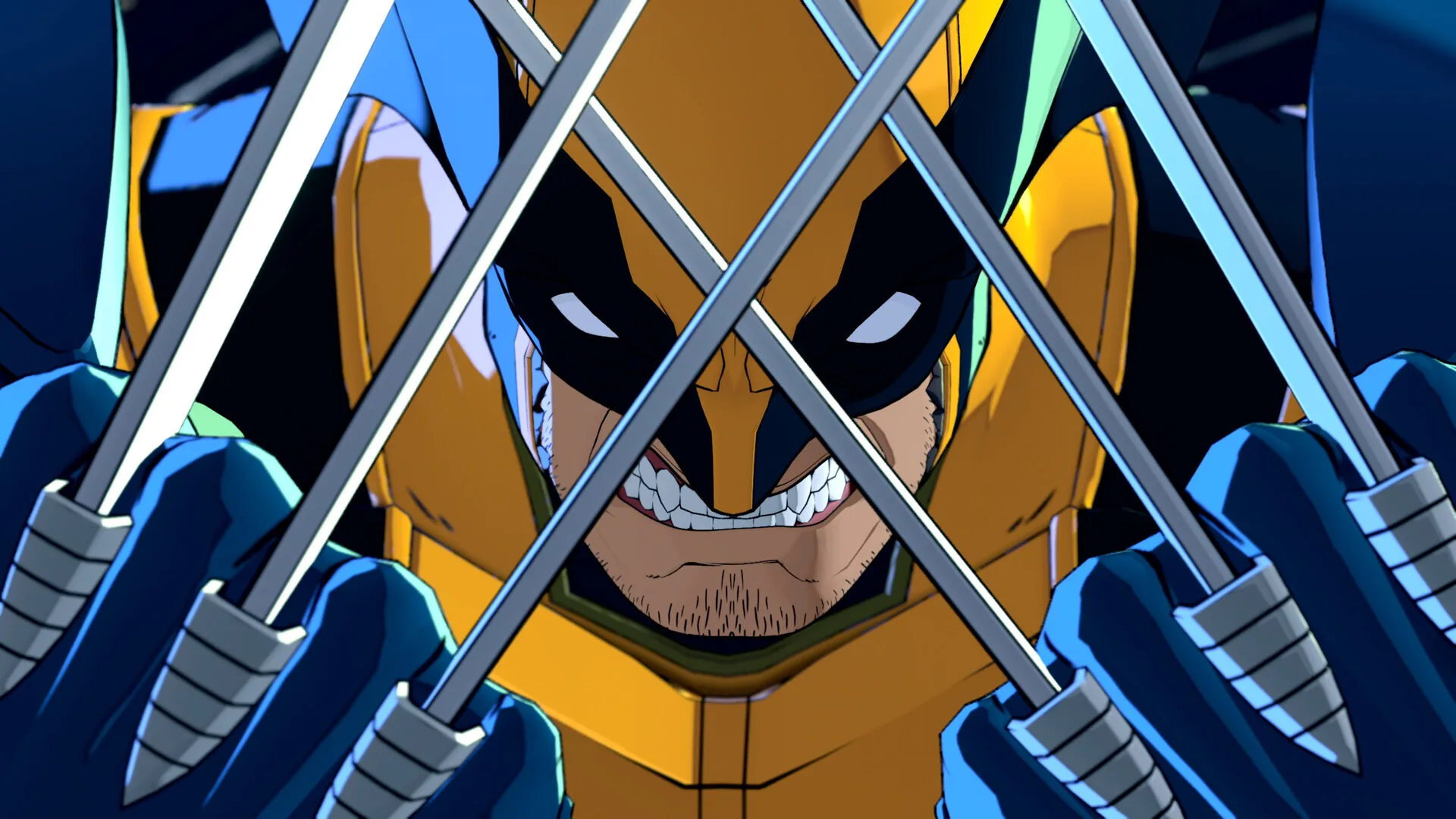
The system rests on the Marvel vs Capcom legacy, with a few decisive twists. You chain characters via tags, call assists to cover your approaches and extend your combos, and use launchers to send the opponent into the air and continue in an air combo. Each champion has normal, special and unique moves, plus cinematic Ultimate Skills that close big combos or turn an exchange around.
The most important mechanic to internalise is the single shared life bar. Your four characters draw from one health pool: every hit taken chips away at the whole team's life, and when the bar is empty, you lose the round. It means no character is expendable, and defending is as crucial as attacking, because one big combo taken can cost you the game in one go. Think collective resource above all.
Finally, adapt your inputs to your level. The game offers traditional inputs for full execution and simplified inputs to trigger specials and combos more easily. Start with simple commands to focus on strategy and tags, then switch to traditional inputs when you want to maximise your damage and creativity. And do not forget: as soon as you build your own team of four, the game names it after your point character.
A good team is not four stars placed side by side, it is a set of complementary roles. Think in terms of point character, mid-tier pillars and anchor. The point is the one you play most on the ground, often a rushdown or control character who opens the guard. The mid characters bring useful assists and combo relays. The anchor, played as a last resort, is ideally a character able to turn a situation around alone.
The key, with the shared life bar, is assist synergy. Choose assists that cover your point's weaknesses: a projectile for a close-range character, a lockdown assist to open the guard, a defensive assist to get out of pressure. A team where each character reinforces the others will always beat a team of soloists. Experiment, note the synergies that work, and build your composition around a clear game plan rather than your favourite characters.
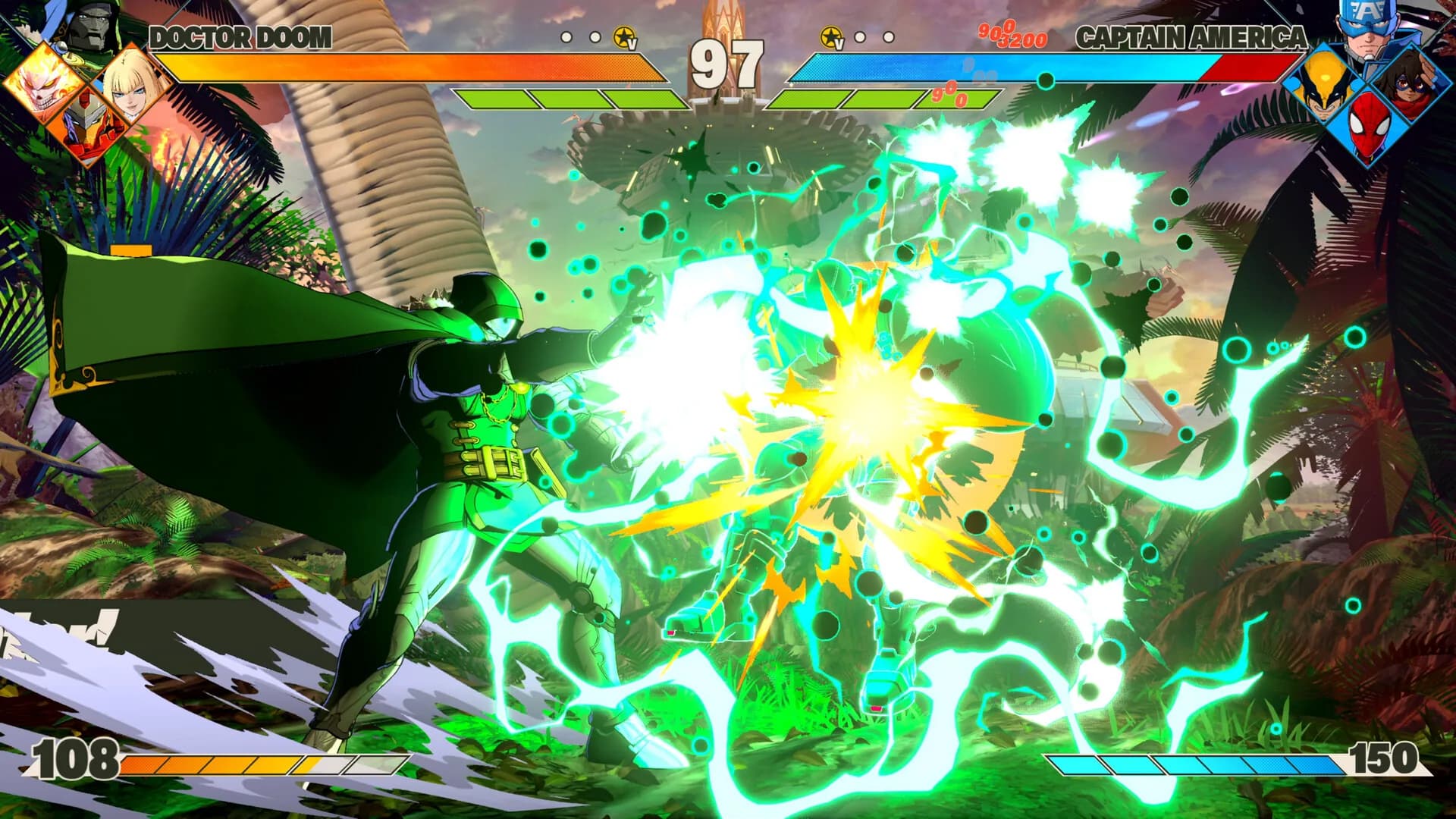
Wolverine is the pure rushdown archetype: fast, aggressive, built to stick to the opponent and never let go. Play him at point, get into the guard and chain high-low mix-ups relentlessly. He is an ideal opener for anyone who loves suffocating pressure.
Storm is a mobile zoner: mistress of the sky, she controls space with her lightning and wind projectiles and her aerial mobility. Play her at range, punish approaches and use her mobility to reset neutral. Excellent as an anchor or a control assist.
Magik relies on teleport mix-ups and the reach of her sword. Her stepping discs allow fearsome left-right crossups: condition the opponent's block, then strike from the unexpected side. A technical, tricky point character.
Danger is the team's adaptive all-rounder: Danger Room intelligence, she transforms and lays traps and technical tools. Play her on neutral control and adaptation, exploiting her setups to lock the opponent down. Flexible depending on your plan.
Captain America is the balanced character par excellence, king of neutral and footsies. Shield charge, thrown shield as a projectile, solid normals: he is an accessible, reliable point, perfect for learning the fundamentals while staying formidable.
Iron Man is a keepaway zoner: flight, repulsor beams, unibeam, he dominates at range. Keep the opponent far, control the airspace and chip away at their life with projectiles. Excellent as an anchor to close rounds from a distance.
Hulk is the team's heavy hitter: a big body with slow but devastating strikes, built to punish enormously the moment the opponent errs. He absorbs hits, walks forward, and a single opening is enough for him to tear a huge chunk out of the shared bar. Play him as an anchor, patiently, and make every poorly prepared approach pay.
Black Panther, embodied here by Shuri rather than T'Challa, plays the exact opposite way: swift, lethal strikes designed to catch the opponent off-guard. She is the team's agile rushdown, to be played at point, on speed and precision rather than brute force. The pairing she forms with Hulk is the sharpest contrast on the roster.
Spider-Man is the king of mobility and mix-ups: web swing, zip, wild agility and a web ball to control. Play him at point, use his movement to create unpredictable mix-ups and resets. A sharp, creative opener.
Peni Parker is a trap and setup specialist with her SP//dr mech: bombs, spider-drones, area control. Play her on lockdown, lay your traps and smother the opponent from a distance. Ideal as an anchor or a control assist.
Star-Lord is a gun zoner: his elemental blasters and ranged shots make him a keepaway master. Control neutral with projectiles, keep your distance and chip away at the shared bar. An effective zoning pillar.
Ms. Marvel exploits her elastic limbs for rare disjointed range: she controls space from afar and opens the guard with grabs and surprise stretches. Play her at point or mid, alternating long-range control and tricky closes.
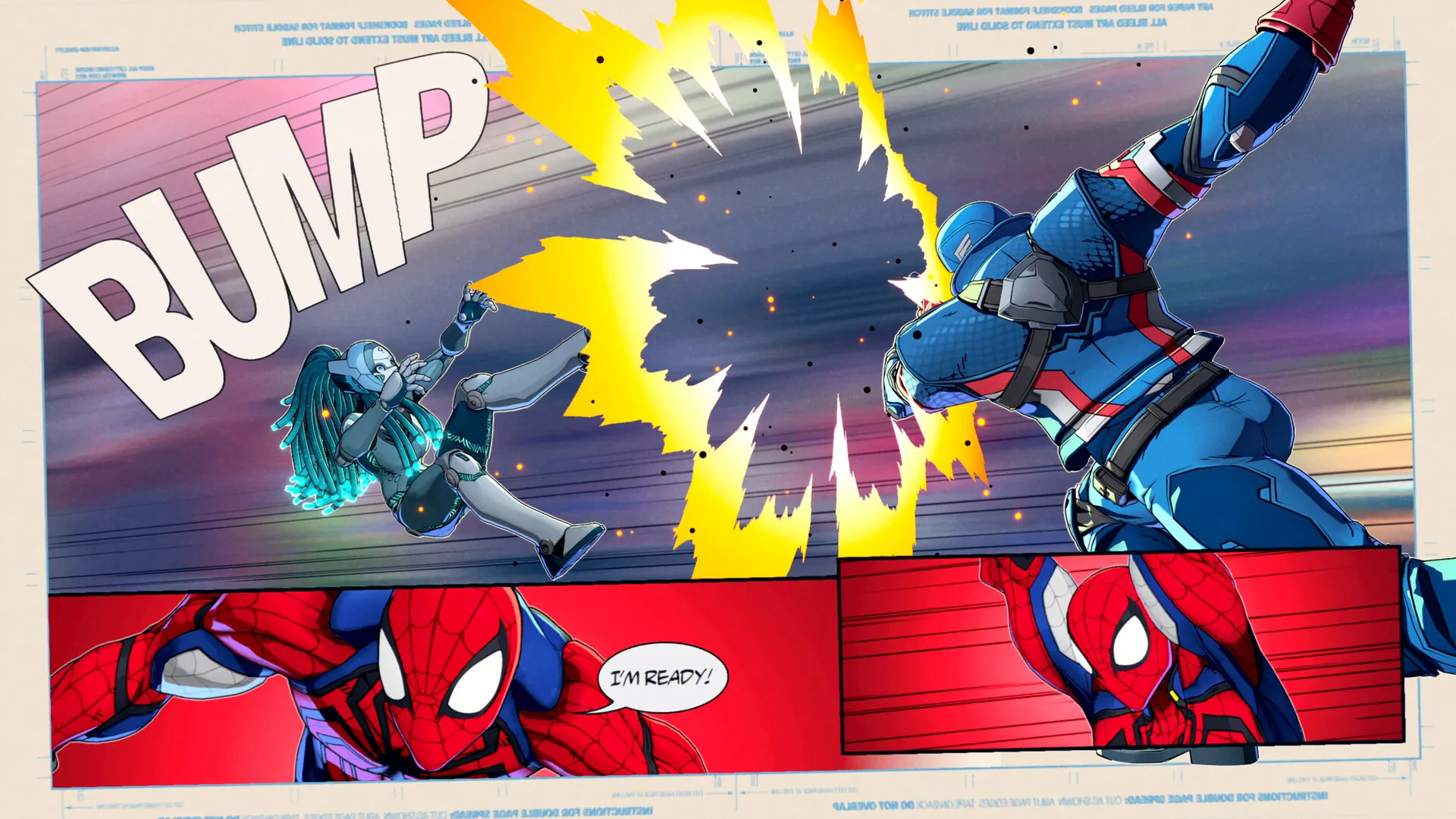
Doctor Doom is the roster's Swiss army knife, a historic Marvel-versus staple: projectiles, flight, and above all some of the most valuable assists in the game. Play him at point or anchor depending on your plan, and exploit his assists to cover your whole team. Versatile and essential.
Magneto is the high-execution rushdown character: magnetic mobility, air dashes, fast normals and dizzying mix-ups. Reserved for players who want to climb high, he rewards movement mastery with near-unstoppable pressure. The experts' point.
Green Goblin is a chaotic, trap-laying zoner: pumpkin bombs, glider mobility, all kinds of traps. Sow disorder at range, control space and stay unpredictable. A setup character for anyone who loves to destabilise.
Carnage is an aggressive rushdown with disjointed range: his symbiote tendrils strike far and allow brutal pressure. Overwhelm the opponent with reach and aggression, and open the guard through constant threat. A formidable point brawler.
Ghost Rider, in his Robbie Reyes version, is a master of long-range space control: his disjointed chains cover a wide radius and punish approaches. Zone with his chains, keep the opponent at a distance and punish every attempt to get in. A unique zoner-brawler.
Blade is a technical rushdown swordsman: sword combos, firearms, precise aggression. Alternate close-range pressure and ranged threats, keeping clean execution. A demanding but rewarding point.
Deadpool is the mid-range trickster: guns, katanas, unpredictable moves and teleport. Mix ranges, destabilise through the unexpected and play on chaos. A flexible, fun character, perfect for surprises.
Loki is an illusionist zoner: ranged magic, illusions and clones to fool the opponent. Play on misdirection, zoning and traps to control the pace. A trickster that rewards cunning.
Arc System Works has already unveiled the moveset of part of the roster. Useful reminder: each special can be triggered with a traditional Command Input (higher damage and skill gauge) or a simplified Quick Skill Input (QS button combined with an attack, but consuming double the gauge). Here are the moves of the revealed characters. Legend: QCF = quarter-circle forward, QCB = quarter-circle back, Z = forward dragon motion, ↓↓ = double down, L/M/H = light, medium or heavy attack.
Spider-Man: Web Shot (QCF + L/M/H), Spidey-Sense (←← + L/M/H), Arachnid Assault (QCB + L/M/H, ground and air), Web Bomb (↓ + L/M/H). Super: Web Warrior (QCF + M/H). Ultimate: Radioactive Spider (QCB then → + M/H). Uniques: Web Zip (R1 + direction), Web Hang (↑ + R1 in the air), Spider Crawl (↘ hold).
Ms. Marvel: Zoom Knuckle (QCF + L/M/H), Rubber Bind (↓↓ + L/M/H), Karate Chop! (QCB + L/M/H), Jersey Lariat (↓↓ + L/M/H, air OK). Super: Growing Pains (QCF + M/H). Ultimate: EMBIGGEN! (QCB + → + M/H). Uniques: Elasti-Grab (command grab), Flex On 'Em (↓ + Unique, evasion).
Magik: Demon Fire (QCF + L/M/H), Rising Soul (QCB + L/M/H), Soulsword Slice (back motion + L/M/H), Demon Flame (↓↓ + L/M/H). Super: Soulsword Sacrifice (QCF + M/H, air OK). Ultimate: Darkchild then Queen of Limbo in Darkchild state (QCB + → + M/H). Uniques: Dark Portal (R1 + direction), Teleport and Teleport Slash near the portal.
Storm: Lightning Strike (QCF + L/M/H), Cold Embrace (Z + L/M/H), Whirlwind (QCB + L/M/H, ground and air), Tornado and Hailstone (↓↓ + L/M/H, ground and air). Super: Hurricane (QCF + M + H). Ultimate: Eye of the Storm (QCB + → + M + H). Uniques: Tempest (R1 + direction), Free Flight (↑ hold).
Captain America: Shield Strike (QCF + L/M/H), Soaring Justice (Z + L/M/H), Freedom Charge (QCB + L/M/H, ground and air), Shield Shock (↓↓ + L/M/H). Super: Living Legend (QCF + M/H, gauge 50). Ultimate: Sentinel of Liberty (QCB + → + M/H, gauge 100). Uniques: Trick Shield, Ricochet Volley, Shield Guard (← + Unique).
Iron Man: Unibeam (QCF + L), Iron Flash (Z + L), Iron Avenger (QCB + L, ground and air), Smart Missiles (↓↓ + L). Super: Unibeam Max (QCF + M). Ultimate: Champion Buster, with the Unibeam Overdrive follow-up (QCB + → + M). Uniques: Repulsor Shot (R1), Multi-Dash, Free Flight (↑ hold).
Doctor Doom: Auric Ray (QCF + L/M/H), Mystic Cage (Z + L/M/H), Diplomacy (QCB + L/M/H), Merciful Smite (↓↓ + L/M/H). Super: Antimatter Extrapolator (QCF + M + H). Ultimate: Latverian Legion (QCB + → + M + H). Uniques: Nullify Shield (projectile defense), Free Flight (↑ hold).
Star-Lord: Blaster Shot (QCF + L/M/H), Gravity Mine (Z + L/M/H), Ravager Rush (QCB + L/M/H, ground and air), Rocket Step (↓↓ + L/M/H). Super: Elemental Outlaw (QCF + M/H, air OK). Ultimate: Dance Off (QCB + → + M/H). Uniques: Element Blast that switches element via the Groove Switch (Lightning up, Fire right, Ice left, Earth down), Free Flight.
The other twelve characters in the roster will have their move list added to this guide as official reveals and the launch come. These inputs are based on the movesets unveiled before launch and may be adjusted at release.
How many characters per team?
Four. The game moves to 4v4, with twenty playable characters split across five teams of four, but you can build your own custom team.
How does the life bar work?
Your four characters share a single common life bar. When it is empty, the whole team is defeated. No character is expendable, so defence is as crucial as attack.
Should you play with simple or traditional inputs?
Start with simplified inputs to focus on strategy and tags, then move to traditional inputs to maximise your damage and creativity once comfortable.
How do you build a good team?
Think complementary roles: a point that opens the guard, pillars with useful assists, an anchor able to turn a situation around. Choose assists that cover your point's weaknesses.
Which character should you start with?
Captain America is an excellent point for learning the fundamentals thanks to his solid neutral and versatility. Wolverine suits you if you prefer immediate aggressive pressure.
Guide written from official information, before the 6 August 2026 release. Precise combo routes will be enriched after launch and community stabilisation.
Found something better? Come and improve this guide on our Discord.