We watched a player paint themselves as a cut of meat, flatten onto a butcher's shelf between two slabs of beef, and hold there, motionless, while a hunter walked past at arm's length without spotting them. That is exactly the moment we understood Meccha Chameleon was onto something. This little hide-and-seek game from Japan does not reinvent the wheel, it repaints it, disguises it and hides it in the scenery, and the result is one of the most refreshing multiplayer ideas around right now.
The context
Meccha Chameleon is the work of a single man, Japanese creator lemorion_1224, who handles both development and publishing. It has just released on Steam at a tiny price, around five euros. So we are facing a pure indie game, casual, with no marketing budget, no publisher, arriving through the side door and relying solely on its concept to exist. Let us be honest upfront: the game is brand new, the community is barely forming, and any review at this stage judges above all a proposition, not a polished juggernaut. But what a proposition.
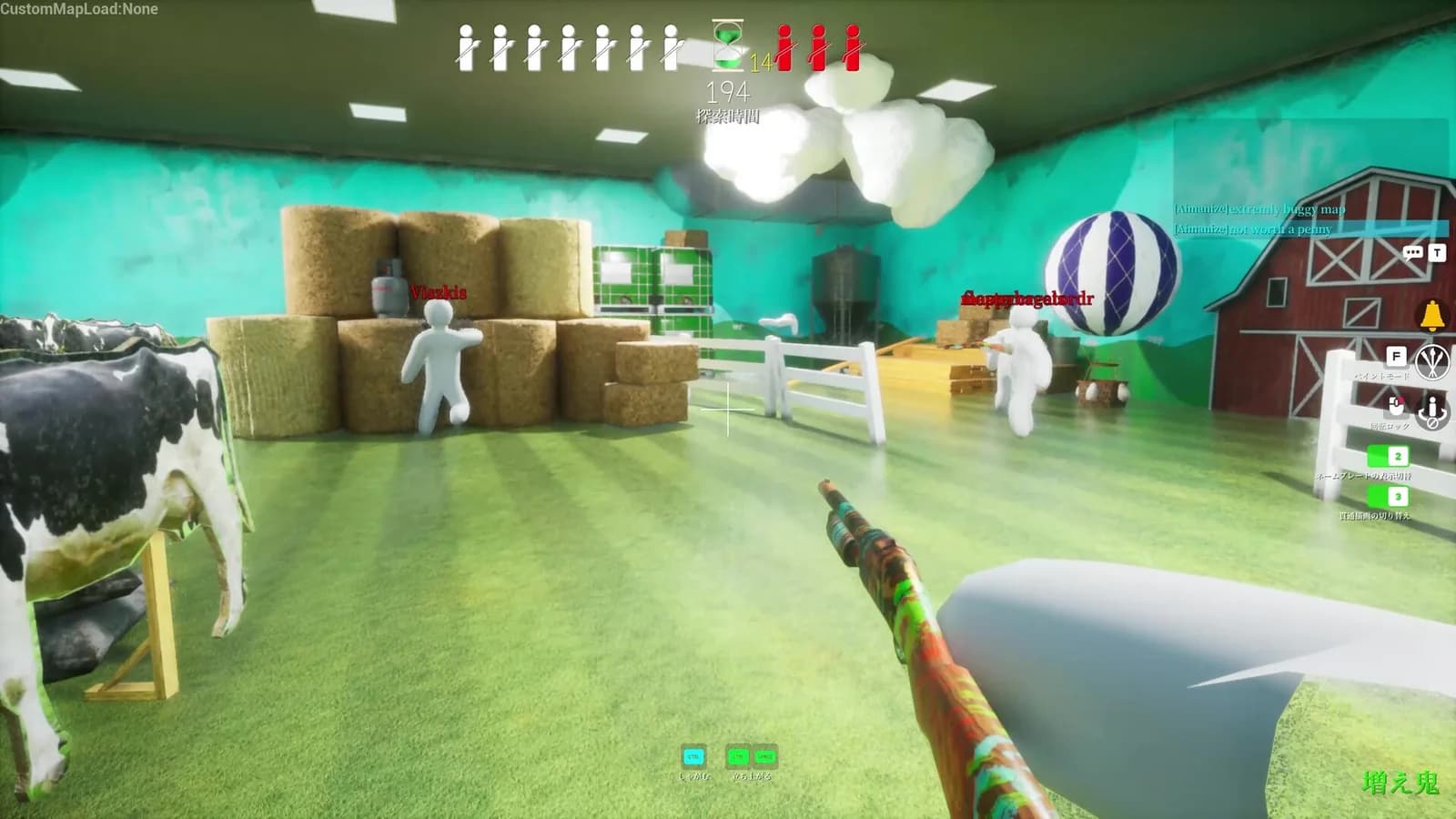
The basic rule fits in one sentence. You split into two camps, Seekers and Hiders, and it is a classic game of hide-and-seek: the Seekers win if they find everyone before the clock runs out. So far, nothing new. Except the way you hide has never been done quite like this.
Each Hider plays a fully white mannequin, a blank silhouette screaming with visibility. To disappear, you have to paint yourself. The game provides a genuine painting tool, with a color wheel, sliders, a palette, and even metallic and roughness settings to match the material you are imitating. Using an eyedropper, you sample the colors and textures of the scenery and coat your body to blend into a brick wall, a pile of laundry, a hanging painting or a meat stall. This is not a menu of prefab skins, it is free, manual, and therefore fallible painting.
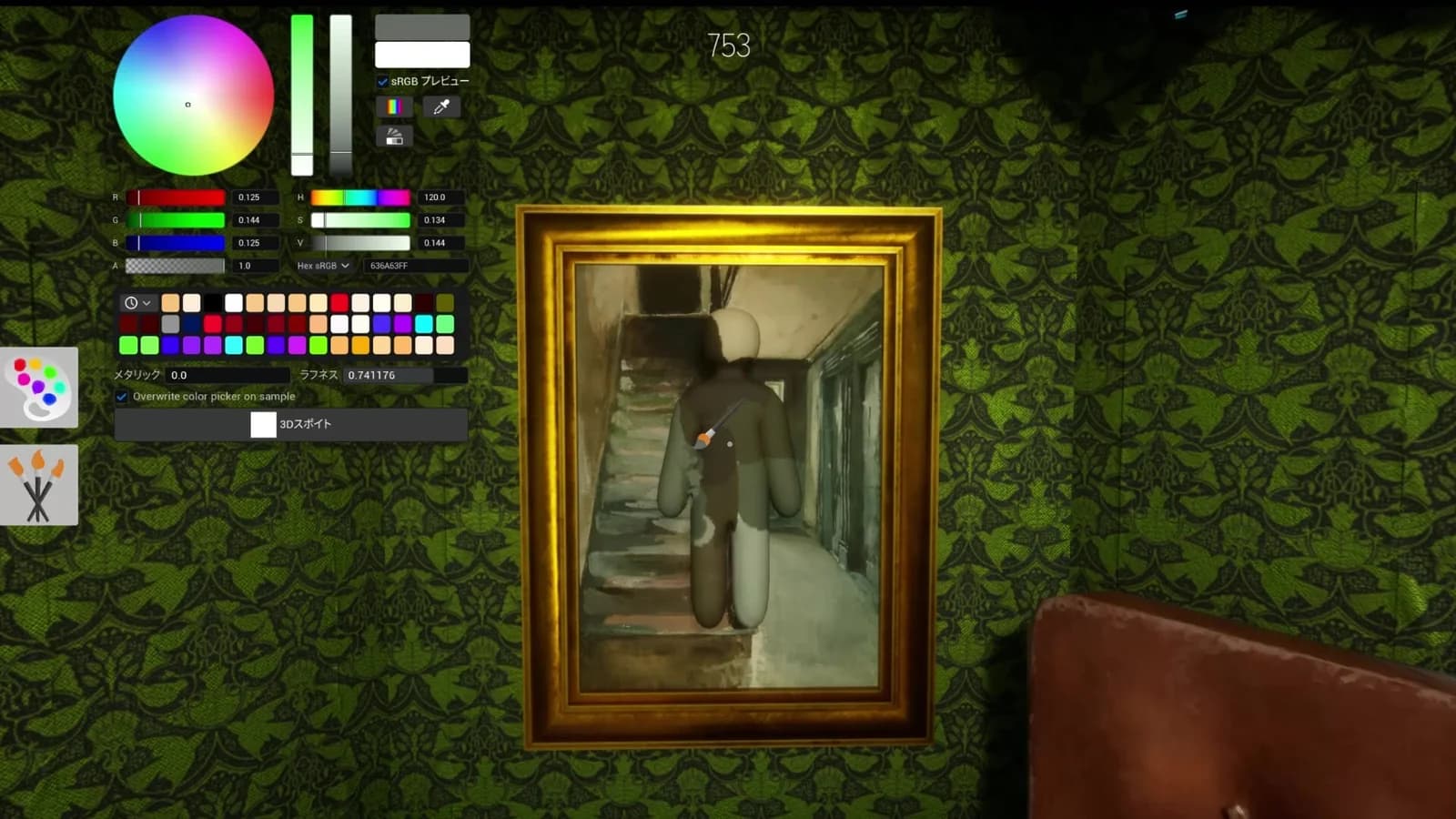
And that is where the genius kicks in. Because every player crafts their own camouflage by hand, no match resembles the last. There is no perfect hiding spot learned by heart, no identical prop every time, just your talent, your speed and your sense of observation against a ticking clock. Placement matters, but the pose matters just as much: you can lie down to mimic a wall decoration, stick to the ceiling, freeze in an absurd posture that, from the right angle, fools the eye. Camouflage becomes an artistic discipline, a performance, almost a music-hall act.
For the Seeker, the pleasure is inverted but just as tasty. You roam charming, slightly off-kilter sets, a barn full of cows, a laundry room buried under fabrics, a hallway papered in green, and you scrutinize the smallest detail that is out of place. That too-clean spot, that weird reflection, that cut of meat that breathes. Hitting real scenery costs nothing, but you lose precious time, and the constant doubt between the harmless object and the disguised rival creates a delicious tension. It is a game of pure observation, and it awakens the kid in us who used to look for Waldo.
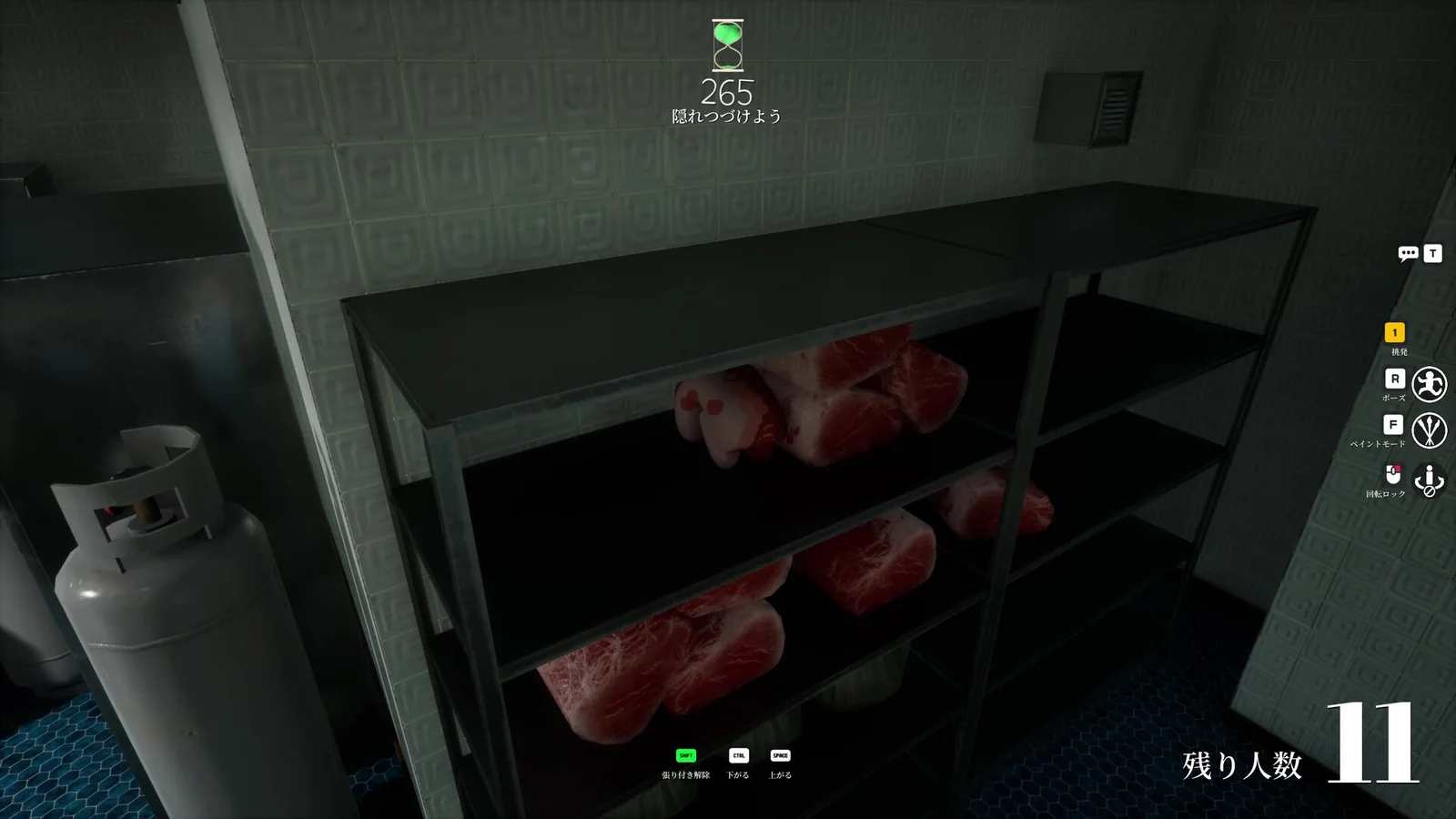
The concept's great strength is that it turns a party-game mechanic into a vehicle for expression. The game's best moments are not scripted, they emerge: the burst of laughter when you spot a friend painted as a sink, the sincere admiration for a stunning camouflage, the panic of a Hider who sees the Seeker approaching and prays their hue holds. That unpredictability born of player creativity is exactly what keeps great party games alive.
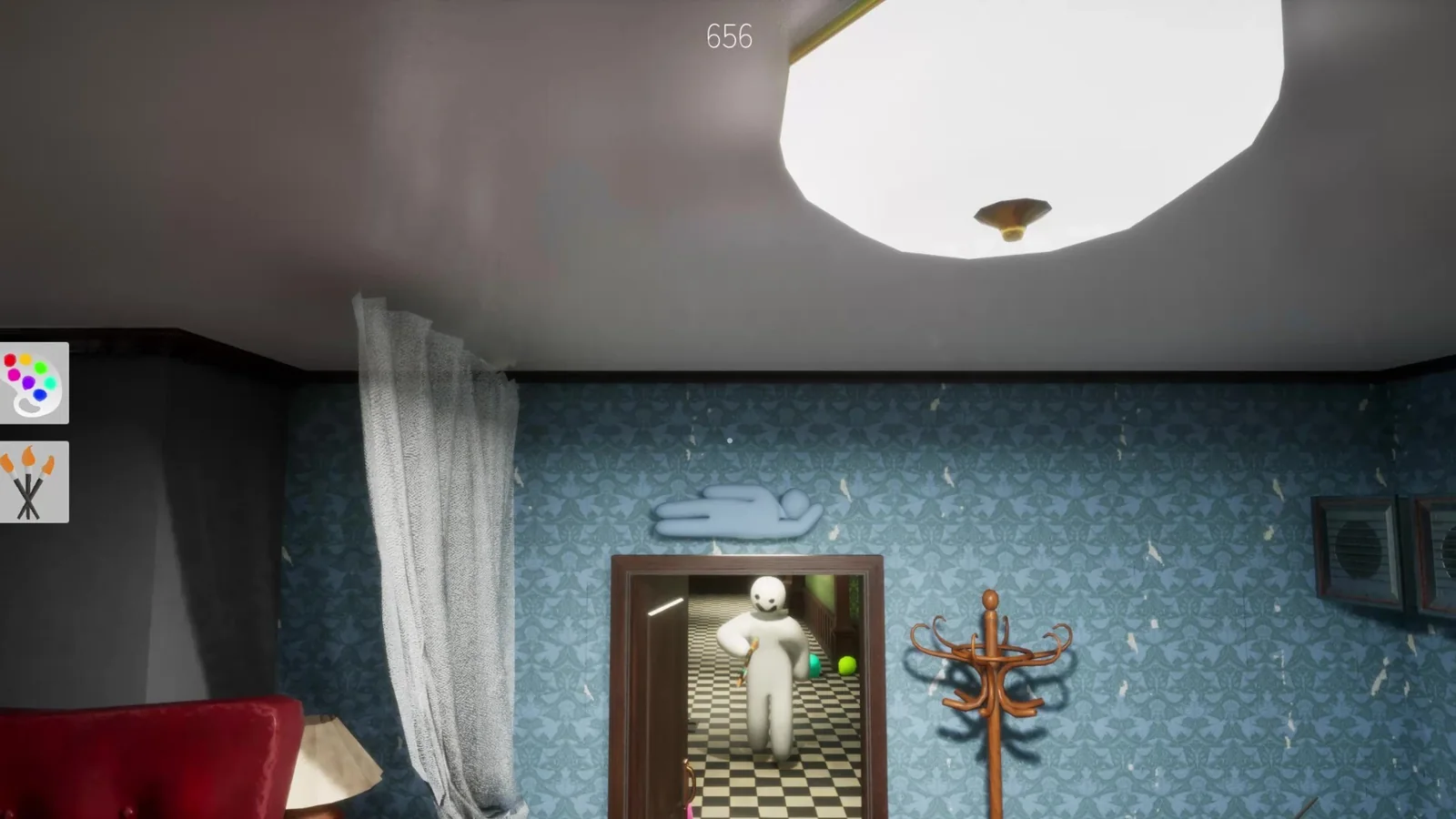
Beyond mere camouflage, a whole psychological game sets in. Should you hide in the darkest corner, at the risk that the Seeker searches it first, or dare a total bluff by painting yourself in the middle of a room, where nobody would think to look closely ? The cleverest Hiders learn to read the Seekers' routine, to shift a hair when danger drifts away, to freeze their pose at the worst moment. The Seekers, for their part, develop a sixth sense for anomalies, that one detail that does not quite fit, and end up swinging at the scenery on a hunch, even if it makes them look mad. That duel of patience and audacity, where the slightest twitch can betray you, gives the game a depth its small-party-game looks never hinted at.
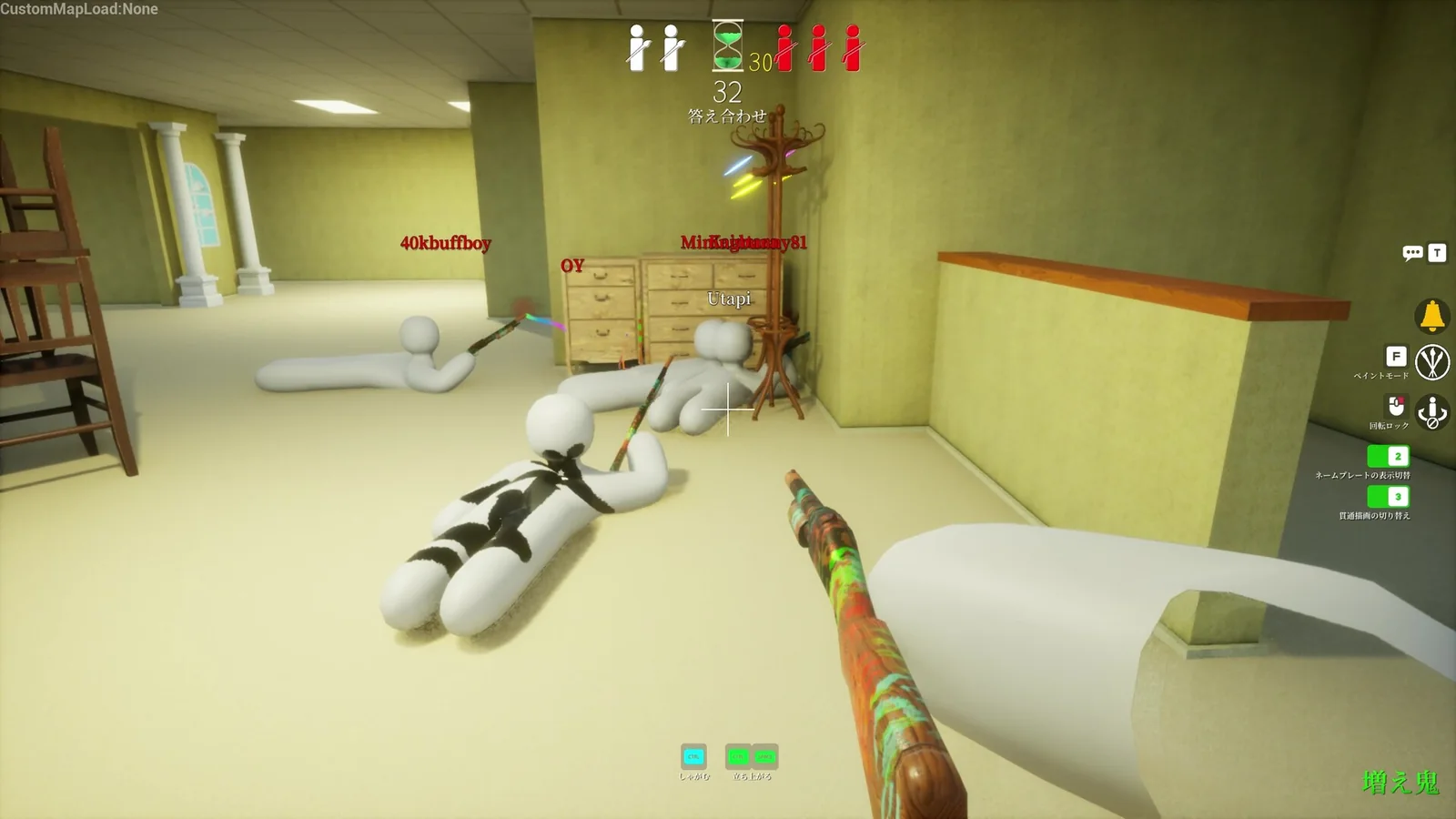
Meccha Chameleon is played with friends or total strangers, via public servers anyone can join, and it is designed from the start for streaming, with easy-to-set-up viewer-participation games. Three modes vary the rules: Normal, classic hide-and-seek where a tagged hider is eliminated, best in small lobbies; Infection, where each spotted hider joins the seekers until the last survivor; and Double, where everyone hides then everyone seeks. The recommended player count hovers around two to ten, but with an important nuance: the ceiling depends directly on the host's connection, since they host the match. In other words, the quality of your experience will depend as much on your group as on the machine running the server. To master everything, from the painting tool to the best hiding spots and seeker tactics, we gathered the essentials in our complete Meccha Chameleon guide.
This is where the game's main fragility lies, and it is structural. Like any multiplayer party game, Meccha Chameleon is only worth as much as the people you play it with. With a crew of motivated friends or a stream community, it is a guaranteed-laughs gem. Alone against empty servers, the experience collapses. Its lifespan will therefore depend entirely on its ability to rally a community, an always-risky bet for a one-developer game with no marketing muscle.
Visually, the game owns its modest budget with mischief. The sets, like a slightly unreal dollhouse, brim with materials and patterns to imitate, which directly serves the gameplay: the richer an environment is in textures, the more interesting the camouflage becomes. The deliberately simple white mannequins contrast perfectly with these busy backdrops, and lighting plays a real role in the success or failure of an imitation. It is not a graphical knockout, but it is coherent and readable, which is what matters here.
Accessibility has clearly been looked after in the options, with comfort settings like volume control, a mode playable without timed input, and family sharing enabled, details that show a developer who pays attention despite limited means. That is the kind of small care you do not always find in productions with a budget a hundred times bigger.
One point of caution we owe it to you to flag honestly: the game's interface is, as it stands, very largely in Japanese. For a title whose handling relies on fairly dense painting menus, this can be a real barrier for a non-Japanese audience, at least until you memorize the icons. The concept is grasped in a single match, but the first menus require a bit of patience. And since the game just launched, its balance, network stability and content are only waiting to evolve with feedback, which invites you to judge it as a promising starting point rather than a finished work.
Meccha Chameleon is one of those dead-simple ideas you are amazed nobody saw earlier. Making camouflage a creative act, turning a game of hide-and-seek into a painting contest under pressure, is clever, funny, and terribly effective in good company. For five euros, you get a generator of belly laughs and memorable screenshots, carried by a concept that belongs to it alone. Not everything is sorted: the Japanese interface slows the handling, the host-dependent format will show its limits if the community does not follow, and the longevity of an indie party game is always an unknown. But the spark is well and truly there, and it is rare.
A hide-and-seek that picks up the brushes: imperfect, fragile, but with a freshness we had not tasted in a long time.
Your verdict differs from ours? The Discord is the place to make your case.