Meccha Chameleon, the paint hide-and-seek game that exploded on Steam, looks absurd until a seeker walks right past you without noticing. Under its party-game looks hides real depth, and the difference between getting tagged in ten seconds and surviving to the final countdown almost never comes down to color. This complete guide gathers everything you need to know: mastering the painting tool, understanding why it's your silhouette that betrays you, choosing the right hiding spots, playing the seeker efficiently, tuning your settings, and knowing the three game modes. Enough to go from panicked white mannequin to the chameleon no one can find. For our full opinion on the game, head to the Meccha Chameleon review.
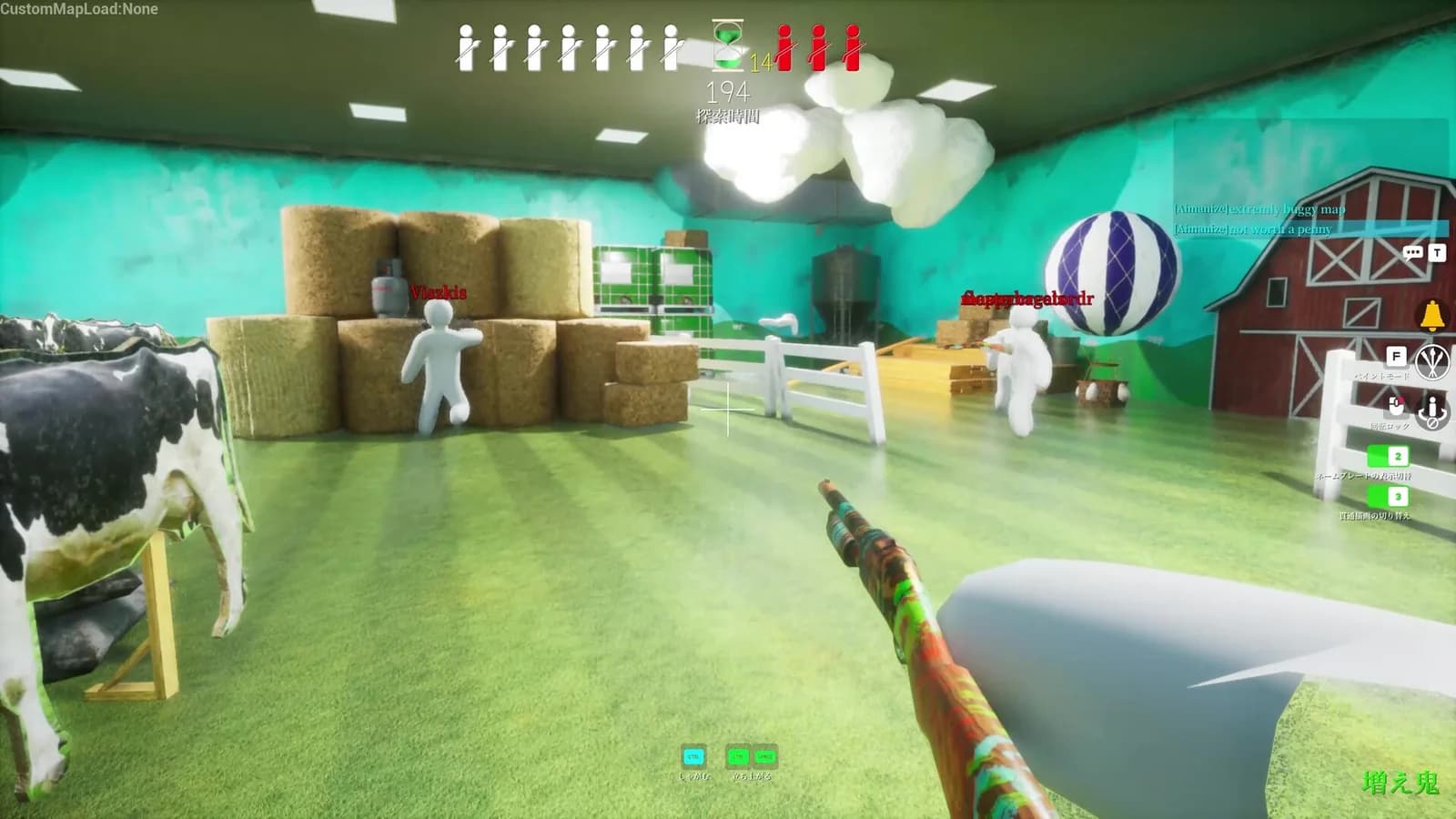
Each match splits into three phases, and grasping them well is the first key. During the preparation phase, the Hiders roam the map freely while the Seekers wait in a locked spawn room. This is the time to scout, paint your body and lock a pose before the countdown ends. Use it fully: a botched, panicked disguise is the number-one cause of elimination.
Then comes the hunt phase: the Seekers are released and scan every corner. The round ends either when the timer hits zero, and the Hiders win if at least one stays undetected, or when every Hider is tagged, and the Seekers win. Finally, the results phase is often the game's best moment: the post-match screen reveals where everyone hid, with close-ups on the most stunning camouflages. That's also where you learn, seeing what worked and what gave the others away.
Before sprinting to a hiding spot, spend your first match taming the painting tool, which feels more like drawing software than a game menu. Here's the order in which to master its functions.
- The eyedropper is the most important control in the game. Point it at the exact surface you plan to hide against, never at a similar wall across the room: lighting shifts color far more than you'd think, and a slight difference is obvious from a few meters.
- The HSV sliders (hue, saturation, value) adjust the sampled shade toward the shadow or light zones of your specific spot. The Value slider alone makes all the difference in a dark corner.
- The Metallic and Roughness sliders, which most beginners ignore, control how your body catches light. A perfect color but too glossy a finish against a matte wall, and you instantly betray your position. Match the surface's finish, not just its color.
- The palette samples save your colors to reuse in later rounds on the same map. That's how regulars re-hide in seconds.
- The camera rotation (middle click) spins the view around your body while painting, to check every angle a seeker might see you from. White elbows or an unpainted back are the most common leaks after a botched prep.
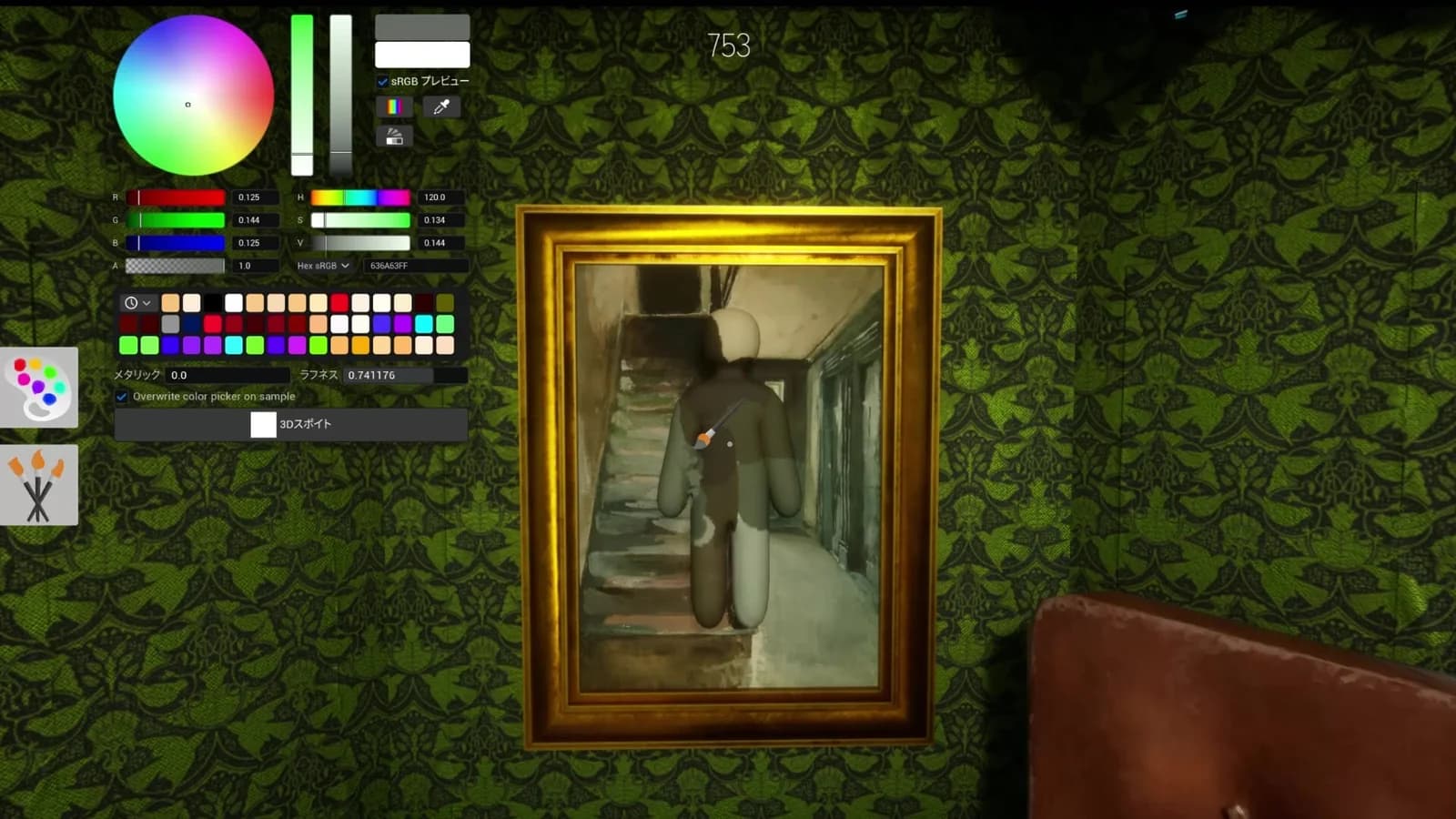
This is the game's most important principle, and the one most beginners miss. However pixel-perfect your color match, your character model stays identifiable as a human silhouette. It's that outline that betrays you, not the hue. To break it, two reflexes.
First, match the room's light direction, so your body has relief rather than looking like a flat sticker. Then, above all, adopt an unusual pose that turns your limbs into geometric shapes consistent with the scenery. The pose-lock mechanic completely freezes your model once you've found a position imitating an object: a crouched silhouette folded to look like a low step or a sign is infinitely harder to spot than a figure standing against a wall. Once the hunt starts, your hands must leave the movement keys: moving, even a hair, is almost always fatal, because human vision is wired to detect motion above all.
Remember this order, because reversing it is why so many players stall: location first, paint next, pose last, then don't move. Painting before choosing your spot almost always produces a mismatch, the panic-picked color rarely fitting the corner you end up in. Roam the room, find a cluster of objects or a wall section where your silhouette could plausibly fit, then match the average tone of the zone, not a tiny reflection on a single object.
Last reflex, the most profitable: before prep ends, spin your camera 360 degrees in third person. Check the white gaps between limbs (badly painted elbows cost more rounds than bad spots), the color sections that don't match the side lighting, any body part clipping through a wall or floating above the floor, and the glossy areas on a matte surface. That check takes five seconds and spares you the game's dumbest eliminations.
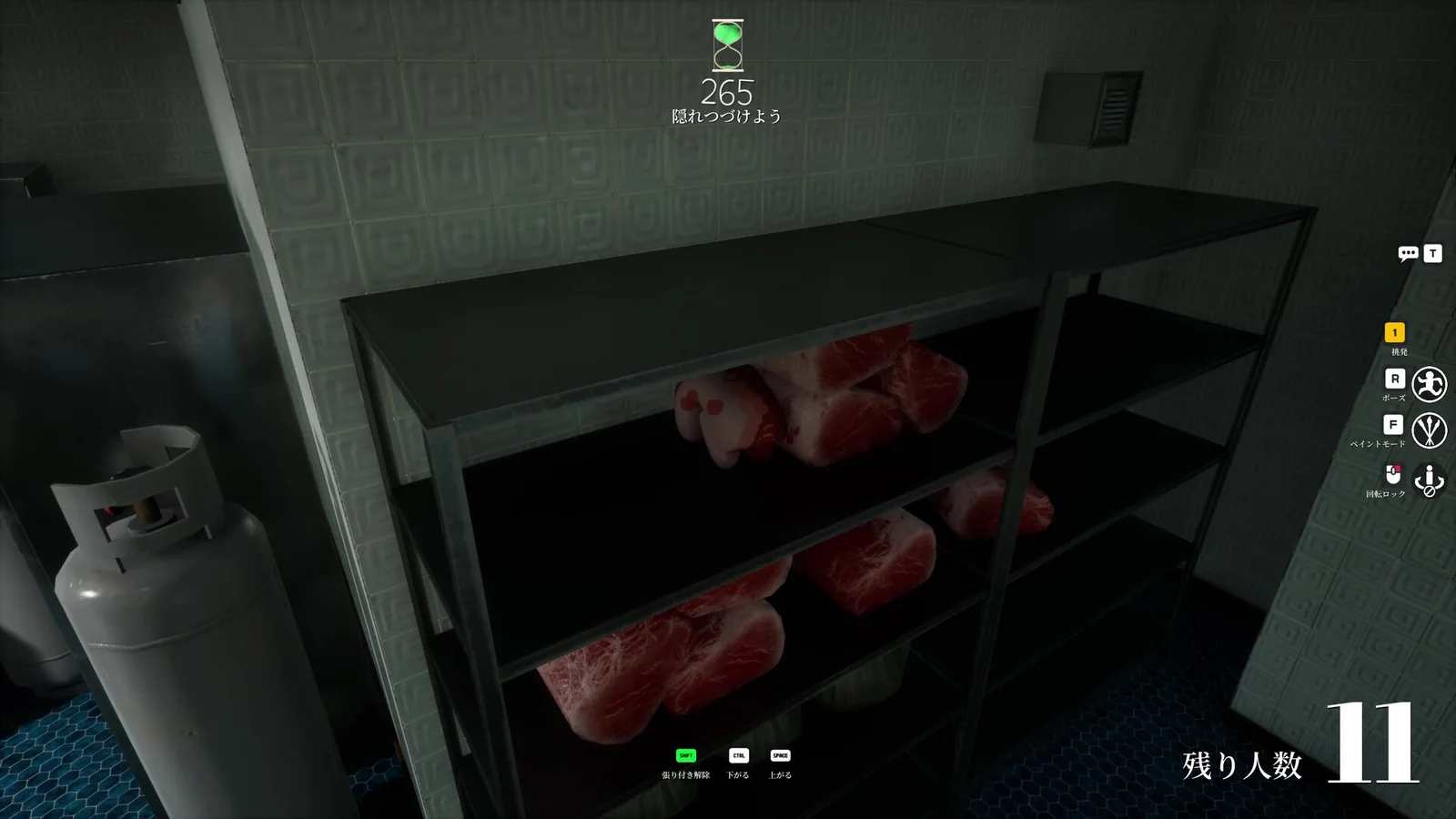
Flattening against a blank wall is the worst default: every experienced seeker checks those spots first. The players who survive stop imitating walls and imitate objects, a painting, a vase, an item on a shelf. It works because the seeker's brain already expects those objects to exist: they're no longer scanning for a strange color, but for a suspicious shape among shapes that all seem to belong. That moment of hesitation saves your round.
The best environmental targets:
- Checkered or patterned floors, whose visual repetition tires the scanning eye.
- Clusters of crates or stacked objects, whose overlapping shapes naturally break your outline.
- Dark corners and doorway recesses, by lowering the Value slider to match the ambient shadow.
- Busy murals and signage, whose patterns make silhouette-reading almost impossible.
Avoid, however, the alcoves that seem cut out for a player model: seasoned seekers know they exist and check them every round. And keep in mind the meta moves fast: a spot that worked in week one becomes common knowledge in days. Change position regularly and never reuse the same spot twice in back-to-back matches on the same map.
Searching efficiently means knowing exactly what to spot rather than swinging randomly at every corner. Three clues dominate. Broken symmetry first: maps are built with architectural consistency, rows of identical pillars, evenly spaced panels, uniform tiles. If a pillar looks a bit wider, has a bump at its base or lacks a natural shadow line, hit it. Texture breaks next: hug the walls and look for zones where the pattern shifts angle, seems blurrier, or betrays an inconsistency, because a hider imitating bricks must align their paint perfectly with the scenery's lines. Clipping anomalies finally: a foot floating a few centimeters off the floor, a geometric shape jutting from furniture, signal a failed pose.
Two reflexes round it out. Systematically melee the popular corners, dense clusters and behind big furniture in each new section, developing a route rather than wandering. And don't forget the transparent view, which highlights painted players through the scenery: it's the seeker's most important tool in cluttered rooms, and the easiest to forget. Last tip: lower your mouse sensitivity for hunting, because a slow, steady sweep spots nuances a fast movement misses.
Four faults recur constantly. Matching only color, not shape: painting your character solid red and standing against a red wall is the most common error, because the human silhouette stays instantly identifiable. Hiding in an open, brightly lit zone: lying in the middle of a courtyard with no shadows or clutter makes the model look artificial, whatever the paint. Skipping the third-person check: white elbows invisible from your own view are obvious to everyone else. And adjusting during the hunt: micro-moving your camera or position to watch a seeker triggers the motion detection. If you're found despite a correct color, work on pose and placement for a few rounds before retouching the paint: most losses come from outline and object logic, not hue precision.
Four settings make a real difference. Lower the mouse sensitivity for the prep phase, because aiming the eyedropper at a precise texture line needs a stable crosshair. Set texture quality to high: sharper surfaces make copying details easier as a hider and spotting distortions easier as a seeker. Keep your keybinds (paint menu, poses, eyedropper) within reach on the keyboard, because prep is short and fumbling costs the seconds needed to lock a pose. Finally, use push-to-talk in public lobbies: reacting out loud when a seeker passes your spot signals your position to the whole voice channel. Note that the game offers no official controller support and is designed for keyboard and mouse.
Meccha Chameleon offers three modes that radically change the pace. Normal mode is classic hide-and-seek, Hiders versus Seekers: a tagged hider is eliminated for the round, seekers win by finding everyone before the clock. It gives its best in small lobbies of two to four, where each round stays readable, and it's the ideal format for beginners and streaming. Infection mode (or Increasing Oni) turns each spotted hider into a seeker: the hunting team grows with every discovery, the pressure mounts, and the last hider still hidden wins. It shines at six to ten players. Double mode, finally, has everyone hide first, then switches all players to seekers simultaneously to see who finds the most, fastest: it's the mode where memorizing a map's frequent spots pays off most, and it comes into its own at six players and up.
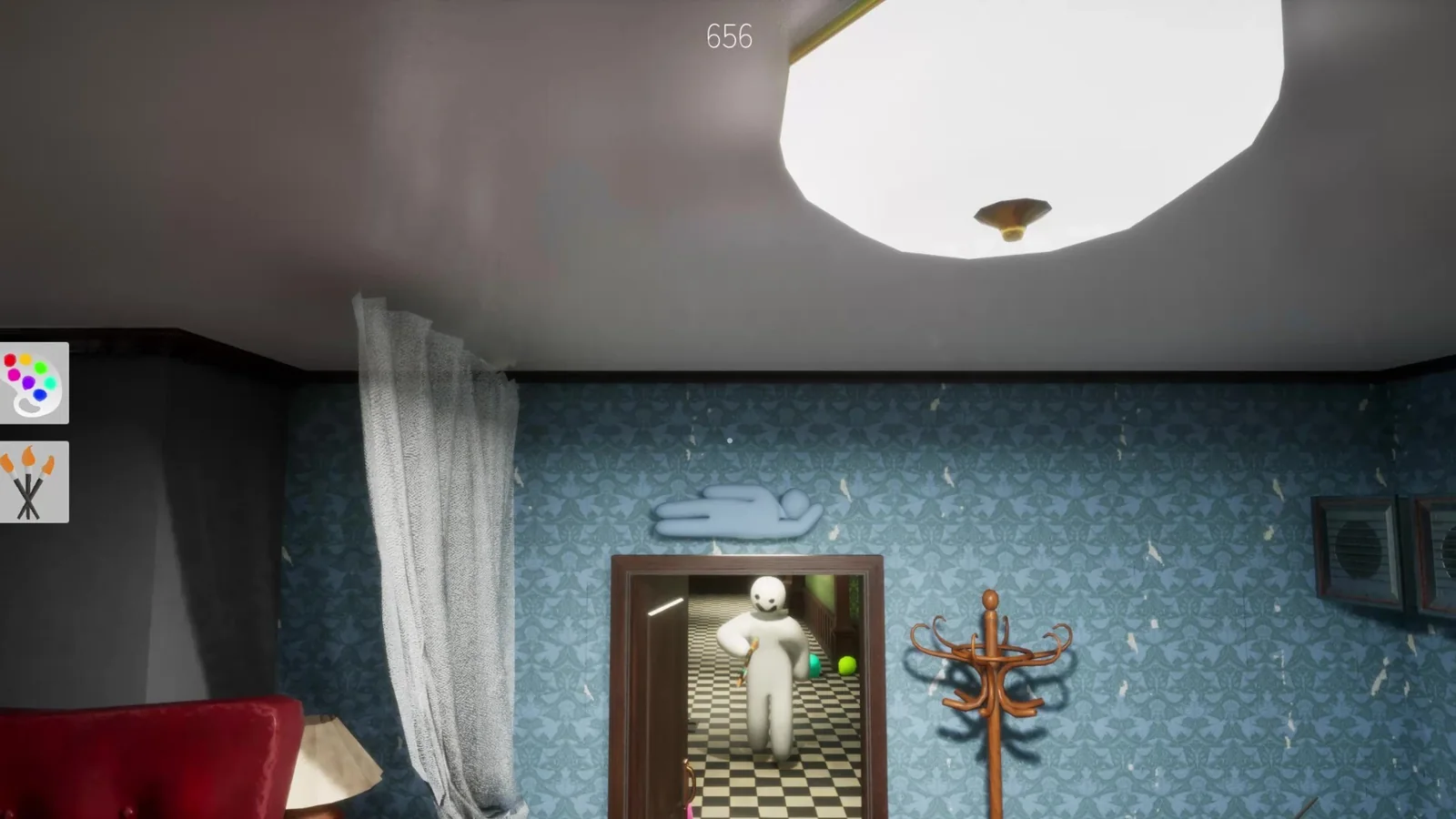
The officially recommended range is two to ten players, the one developers advise for a smooth session. Beyond that, the maximum lobby cap rises to twenty-four, but the stability ceiling sits closer to thirteen: sessions of fourteen to twenty-four depend entirely on the host's processor and connection, since they host the match. Crucial rule: if the host disconnects, the session ends for everyone. For a big group, make the person with the best PC and fastest connection the host.
Public lobbies are on by default: if you want to play with friends, lock the room private at creation. Platform-wise, Meccha Chameleon is for now PC-exclusive on Windows via Steam, with no cross-play or console or mobile version announced. On the comfort front, remember above all the cross-cutting lesson of this whole guide: paint is only a quarter of the disguise. Color, pose, placement and surface must all be consistent for you to look like an object that belongs in the room. Master that balance, and you'll become the hider no one can find.
How do you hide effectively in Meccha Chameleon?
Pick your spot first, imitate an object rather than a bare wall, sample the exact surface color with the eyedropper, adopt a pose that breaks your silhouette, then stop moving once the hunt starts. Movement betrays you faster than an imperfect color.
How many players can join a match?
Two to ten players recommended, stable up to thirteen, and twenty-four maximum depending on the host's connection. Beware: if the host disconnects, the match ends for everyone.
Is Meccha Chameleon cross-play?
No. The game is for now PC-exclusive (Windows, via Steam), with no cross-play or console or mobile version announced.
Can you play with a controller?
No, there's no official controller support. The game is designed for keyboard and mouse, which suits the precision of the color sliders better.
What are the game modes?
Three modes: Normal, classic hide-and-seek where a tagged hider is eliminated; Infection, where each spotted hider joins the seekers until the last survivor; and Double, where everyone hides then everyone seeks.
How do you find hiders better as a seeker?
Spot broken symmetry, texture breaks and clipping anomalies, develop a route rather than wandering, melee the popular corners, and don't forget the transparent view in cluttered rooms.
Guide written based on the PC version.
Found something better? Come and improve this guide on our Discord.