
7
Test
Aniimo: catching the creatures is not the point, becoming one of them is
A free open world where catching is only a step: afterwards you merge with your beast to fly, burrow or dive.
Alexandrosse
10 min

We took it for a slicker FTL. It is actually a noir space simulator, demanding and rare in its richness, where every decision costs you dearly.
Alexandrosse
InsertCoins.press Score
7.5/10
Verdict
Recommended
We have to start with a clarification, because we fooled ourselves too: Ostranauts is not really the FTL we imagined. Where FTL is a sharp, legible roguelike of space combat, Ostranauts is a whole other beast, a noir space simulator, slow, demanding, where you manage life aboard a ship and every decision costs you dearly. The comparison is misleading, but there was no disappointment: instead, we found a dizzying depth.
Ostranauts is developed by Blue Bottle Games and available on PC via Steam, in Early Access since 2020. It is a noir space-sim in which you pilot a scrappy ship through a boneyard, searching for valuable parts in abandoned wrecks, to upgrade your own vessel, sell your loot or pay down a debt that keeps climbing. The game takes place in the same universe as NEO Scavenger, rich in lore, after the collapse of civilisation on Earth. Suffice to say, we are light-years from arcade action: here, you simulate, you manage, and you survive the hard way.
The heart of the game is simulation pushed to a rare degree. You pilot your ship under the laws of Newtonian physics, learning to fly through in-game manuals and sheets, which sets the tone from the start: Ostranauts does not hold your hand. The game runs in real time, but you can pause or fast-forward as needed, and it automatically stops when a situation demands your attention. This approach, at the crossroads of the management simulator and survival, demands patience and investment, but generously rewards those who accept its logic.
The systemic richness is genuinely impressive. The ship simulates gas, temperature, power and lighting, and the crew must meet its physiological and psychological needs, which turns every expedition into a balancing act where everything is interconnected. Repairing a leak, managing the oxygen, maintaining morale, all while looting wrecks and juggling a crushing debt: the tension comes from that accumulation of systems that can all kill you if you neglect them. It is that depth, among the most accomplished in the genre, that gives the game its real value and has nothing to do with FTL's arcade promise.
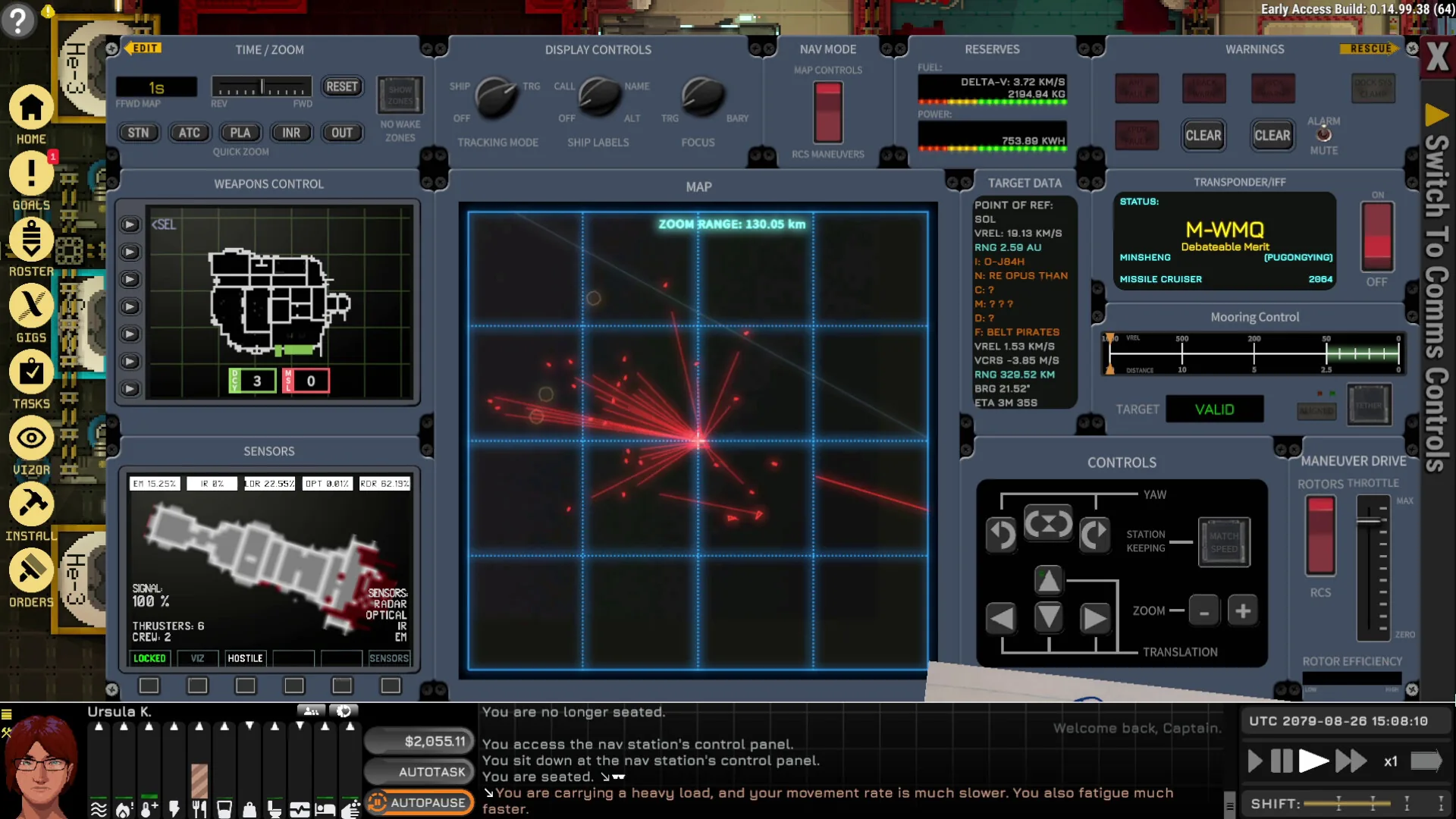
The noir atmosphere and the writing fully contribute to the experience. The world of NEO Scavenger, dark and desperate, pervades every corner of the game, and the constant pressure of debt gives the whole a harsh, adult tone, worlds away from the romantic space of so many games in the genre. Every decision counts, every expense weighs, and that survival economy creates a particular attachment to your scrappy ship and your fragile crew. It is a game that tells something through its systems as much as through its lore.
You must nonetheless be clear-eyed about its limits. Ostranauts is rough, as its long-standing Early Access status announces, with a dense interface, a steep learning curve and rough edges that betray a demanding niche game rather than a slick production. Its slowness and complexity will immediately push away players seeking instant action or accessibility, and you have to accept investing time before reaping the rewards. It is not a flaw but a stance, provided you know what you came for.
Technically, Ostranauts owns a functional presentation in service of its simulation. The legibility of the many systems, crucial in a game where you constantly watch gas, power, temperature and morale, takes time to adjust to but eventually rewards the effort. The dark, retro aesthetic perfectly serves the game's noir atmosphere, and the whole gives off a coherence that largely compensates for its visual modesty. Here, the richness is in the systems, not the glitz.
The technical reservations are those of a niche project in prolonged Early Access. The dense interface and the steep learning curve demand real investment, and a few rough edges betray the scale of the simulation relative to the studio's means. But the whole runs correctly and serves its ambition seriously, without ever betraying its depth through a fatal flaw. It is a game that bets everything on its system, and for this type of title, that is the right trade-off.
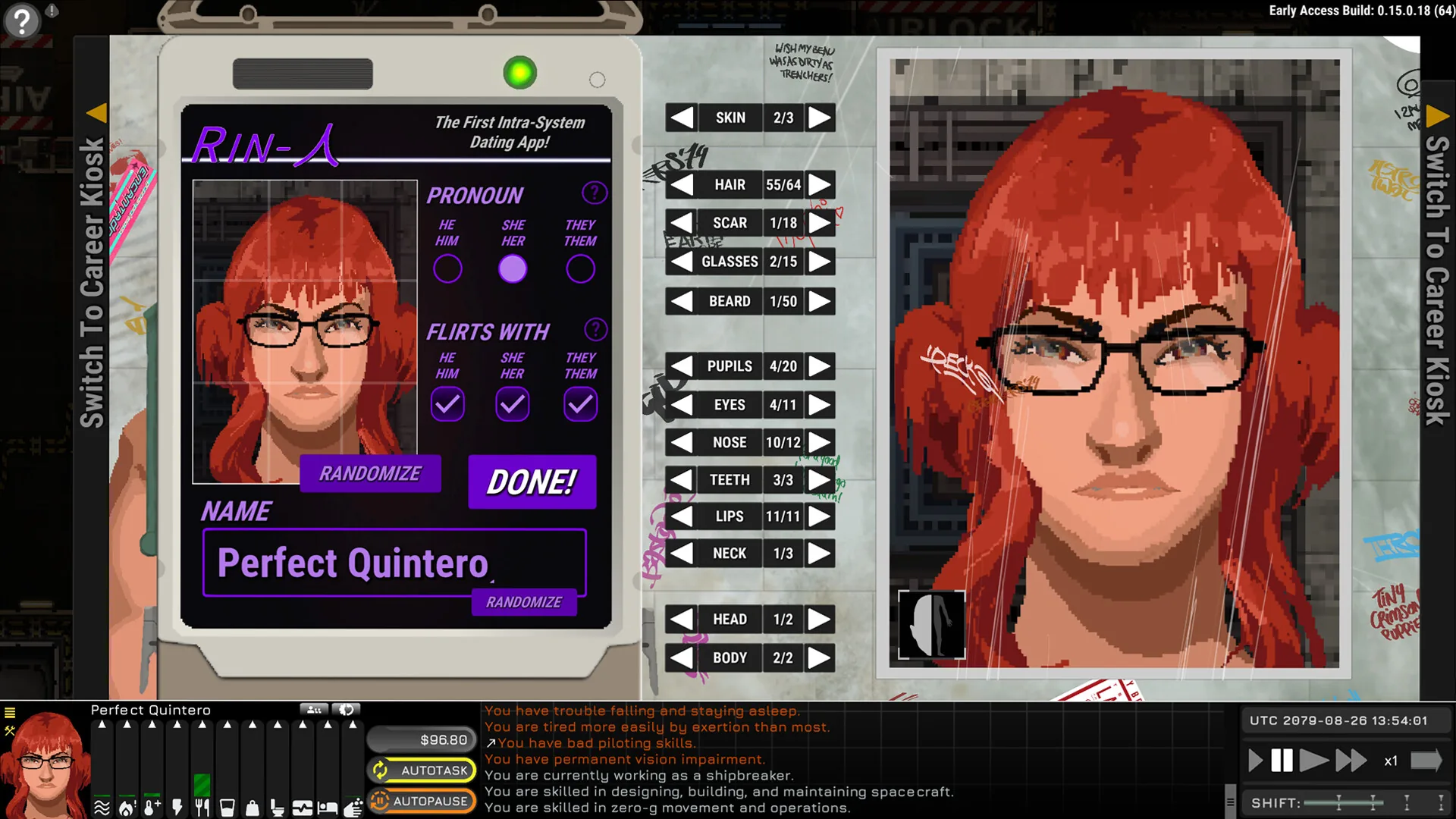
Ostranauts is a niche success for anyone who loves demanding, uncompromising space simulations. Its systemic richness, with its Newtonian physics, its complete ship simulation and its management of debt and crew, offers a dizzying depth among the most accomplished in the genre. Its noir atmosphere, inherited from NEO Scavenger, gives the whole a rare harshness and personality. For the patient strategist ready to invest, it is a memorable experience.
Its limits lie in its very identity: Early Access roughness, a dense interface and a slowness that will push away hurried players. And no, it is not the slicker FTL we thought, but something far richer and more demanding. If you are looking for a genuine noir space simulator rather than an action roguelike, Ostranauts has almost no equal. To reserve for those who love it when a game forgives nothing and rewards tenacity.
A noir space simulator of rare depth, demanding and rough, that shares nothing with FTL but the space.
Score: 7.5/10
Reviewed on the PC Early Access version.
Disagree with the score? Come and tell us on the InsertCoins Discord, where we defend our verdicts live.
Community
Your rating
Advertisement
No comments yet. Be the first.
You might also like
A free open world where catching is only a step: afterwards you merge with your beast to fly, burrow or dive.

New York 2012, a video store, night contracts. And a sales model that deserves a salute.
A burned island to bring back into bloom, a growing colony, and scorched zones that spread while you hesitate.