Let us be honest: it had been a while since an RTS made us want to sketch diagrams in a notebook. Powerplay does not just have you churn out tanks to send them dying across the map. It asks where the steel for those tanks comes from, which road it travels, and what happens when the enemy cuts that road. Finally an RTS that treats logistics as the real battlefield, not as a chore between two clicks.
The context
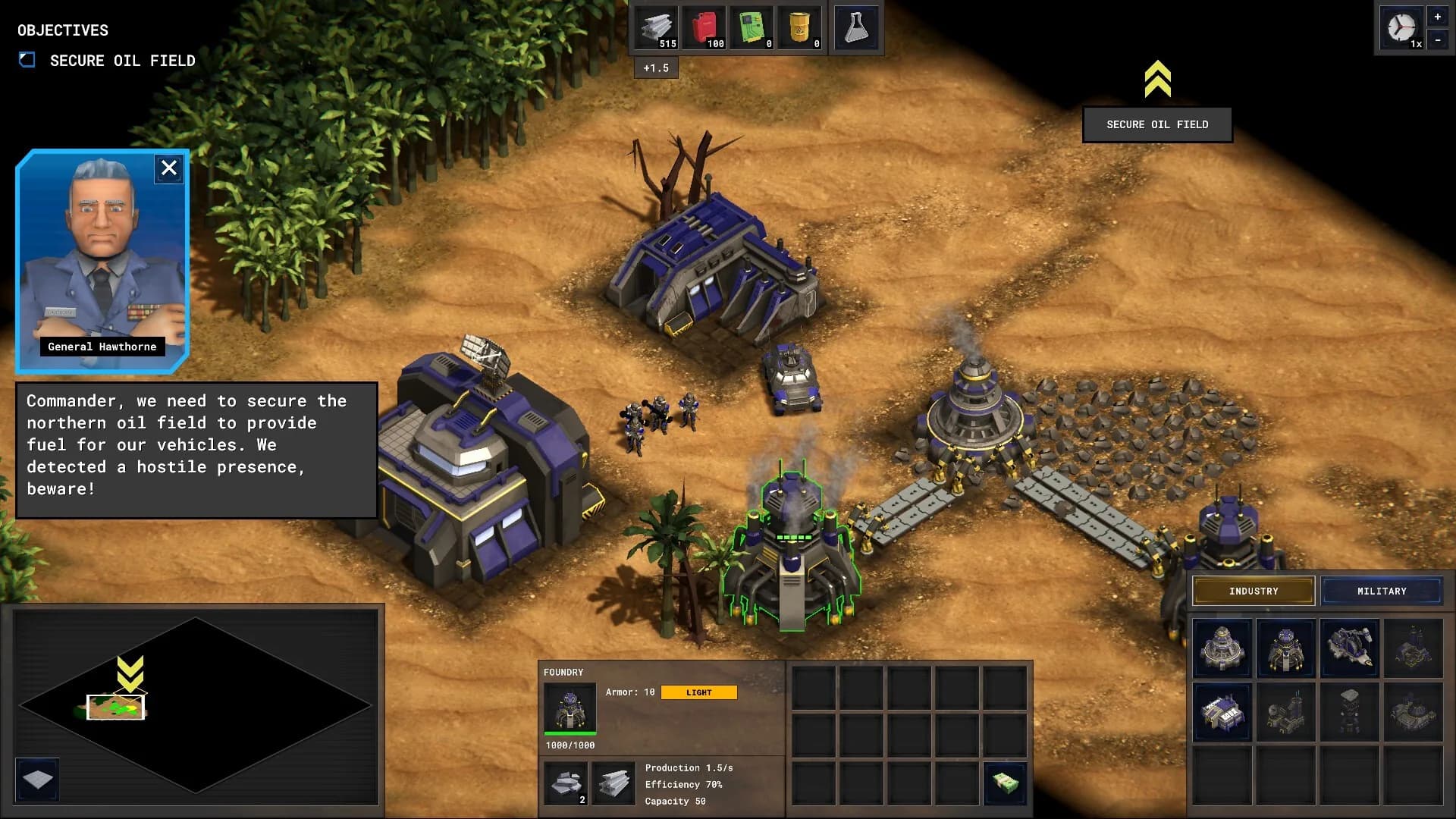
Powerplay is developed by Frantic and launches in Early Access on PC. It is a real-time strategy game centred on resources and industry, where you build production chains, organise transport and explore the map to secure deposits. The launch content is already substantial: a ten-mission campaign, seven skirmish maps and a map editor. The studio has already teased what comes next, with naval units for multi-domain warfare and ten speed levels paired with a tactical pause. In other words, a real RTS foundation, not a demo in disguise.
The heart of Powerplay is the idea that military power is the end of a chain, not its start. You do not click "produce a tank" and watch it appear by magic: you have to extract resources, route them to factories through a transport network you design, turn raw material into components, then into units. Every link can be optimised, congested or sabotaged, and that is where the game gets gripping. An offensive is not prepared by massing units, it is prepared by making sure your industry will keep pace with attrition. You inevitably think of factory-management games for the flow side, but grafted onto a real RTS with a shifting front, the formula takes on a fresh flavour.
What makes it clever is that the map is not just scenery. Exploring serves to find the deposits that will feed your lines, and therefore to extend your network toward zones the enemy also covets. As a result, the hotspots are not arbitrary, they are your supply arteries. Cutting the enemy's supply road is often worth more than a frontal assault, and defending means protecting your logistics as much as your bases. This loop, where economic geography dictates military geography, gives every match a strategic tension you rarely find in the genre.
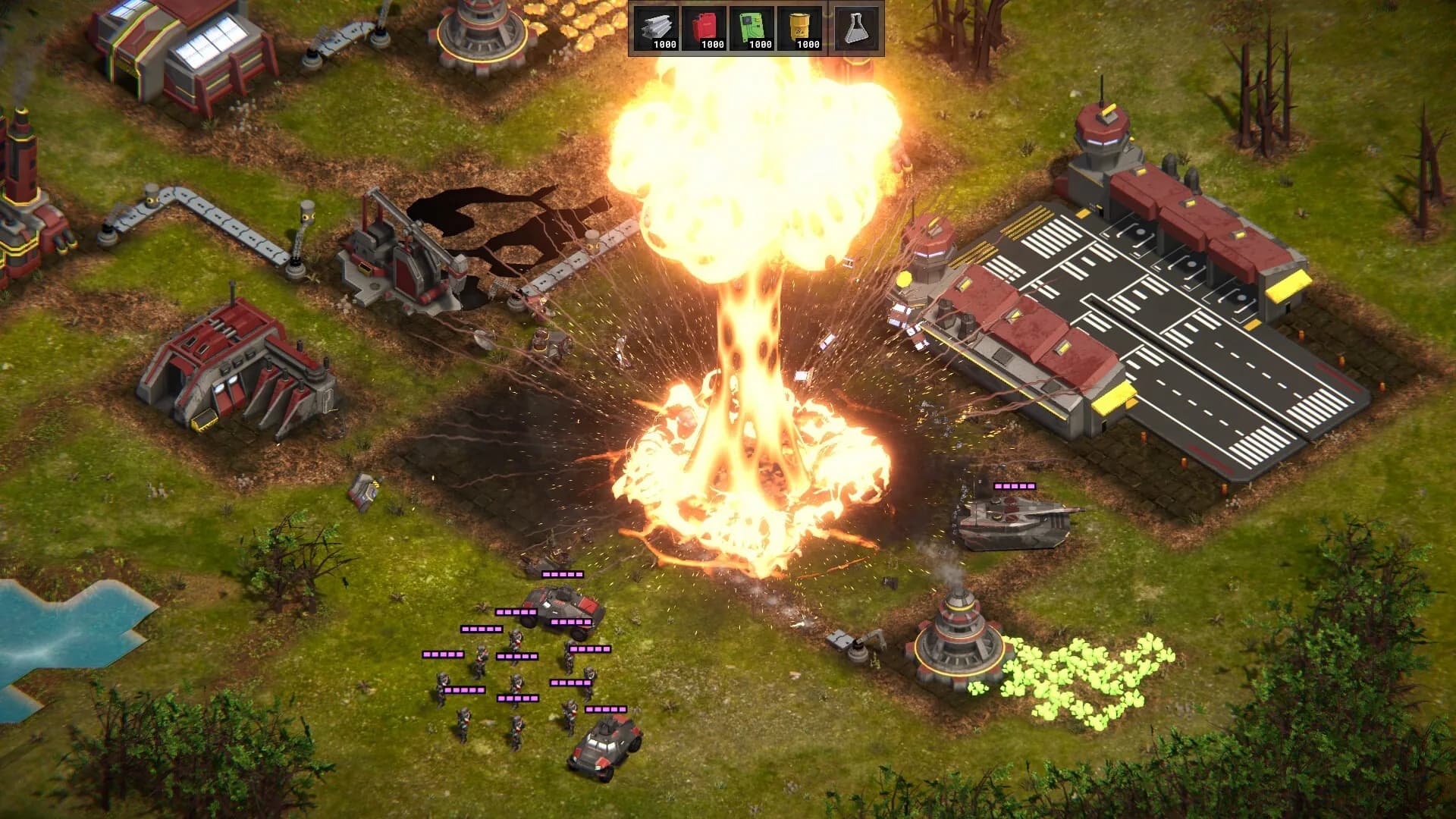
The ten-mission campaign works as a disguised tutorial and a power ramp: it introduces the layers of complexity one by one, from the first cobbled-together convoy to the sprawling networks you must defend on several fronts. The seven skirmish maps offer the free playground where the formula truly breathes, and the map editor already opens the door to a longer life through the community. For an Early Access launch, the offering is generous and coherent.
Still, the demand comes at a price. Powerplay is not an RTS where you improvise: neglecting your logistics costs you dearly, and the learning curve is steep for anyone coming for instant action. The balance of some missions occasionally leans too far into punishment, and the enemy AI, solid at managing its own lines, is more predictable in its offensive manoeuvres. These are Early Access rough edges, not design flaws, but they are a reminder that the game is aimed first at strategy fans who like to think before they click.
Powerplay embraces a functional art direction, legible before spectacular, which is the right call for a game where you must read the state of dozens of flows at a glance. The interfaces showing production, stocks and bottlenecks are clear once tamed, and that is essential in a title built entirely on reading information. The camera and zoom let you move from the local tactical view to the overall network picture without getting lost.
On performance, the game holds up well even when the maps fill with convoys and units, which was no given for an RTS this heavy on flow calculations. A few finishing touches are still missing, some welcome interface shortcuts and better alerts when a chain breaks far from the front, but nothing that mars the experience. You sense a studio that prioritised the depth of the system before the polish, and that is the right order.
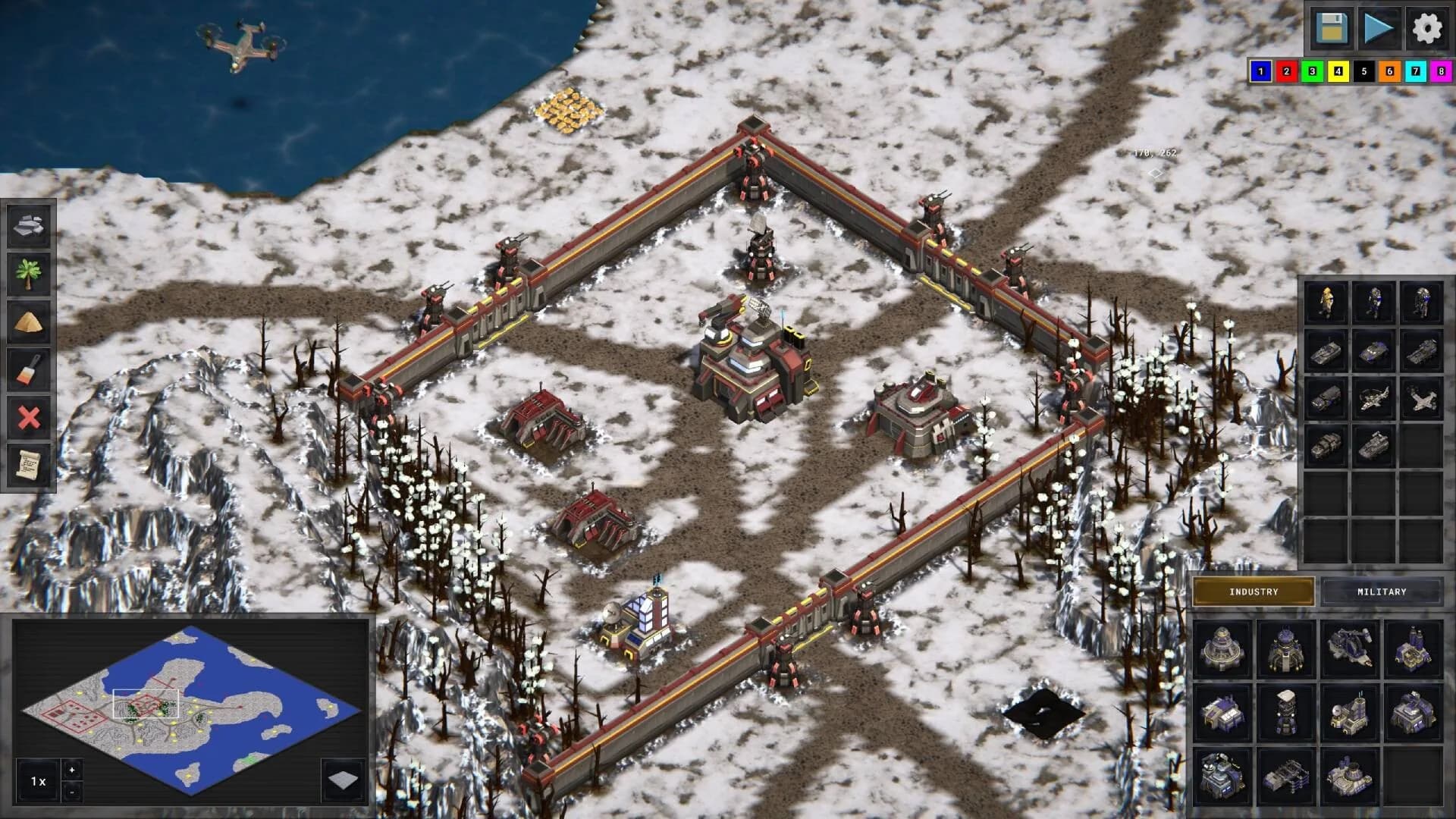
Powerplay does something rare: it puts back at the centre of the RTS what most games in the genre relegate to the background, logistics, and it draws genuine strategic tension from it. Building a supply network, watching it feed an offensive, defending it as you would defend a vital organ, that is a smart and rewarding loop that rewards planning over click speed. For an Early Access launch, the content is generous and the foundation is excellent.
It is not a game for everyone, and it does not try to be. Its steep curve and its demands will push away those who want instant action, and the balance as well as the offensive AI still need work. But for the strategy fan who dreamed of an RTS where winning the war starts with winning the supply run, Powerplay is a breath of fresh air we had not breathed in a long time. We will be watching very closely what Frantic makes of it.
The RTS that proves a well-designed supply chain is deadlier than one more tank.
Score: 8/10
Reviewed on the PC Early Access version.
We debrief every release on our Discord. The door is open, and so is the argument.