8
Test
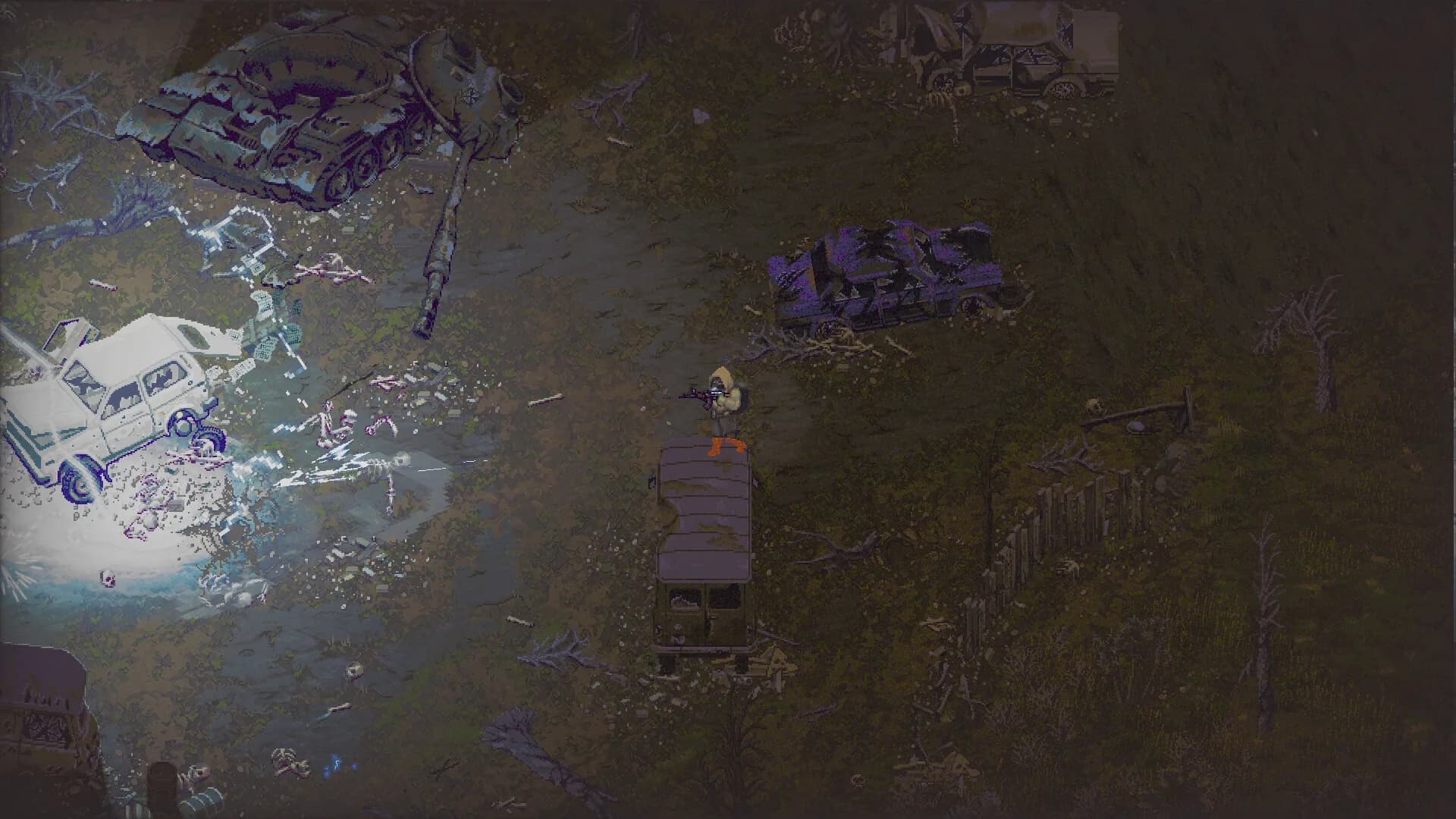
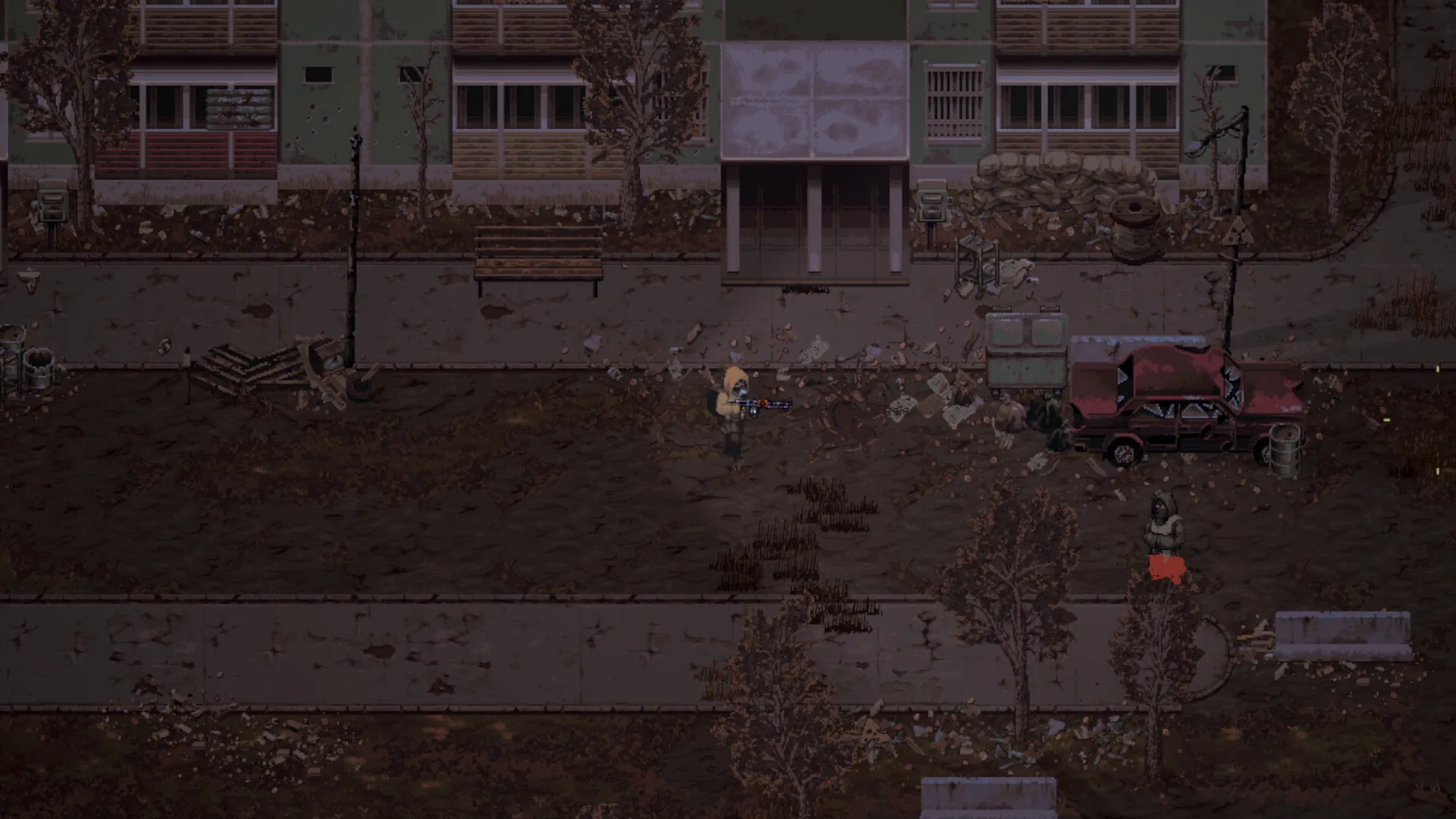
Scavland: the pixel art is not there to look pretty, it is there to hide what will kill you
One hour planned, a whole day swallowed. A post-Soviet top-down survival where darkness is a mechanic, not a filter.
Alexandrosse
11 min
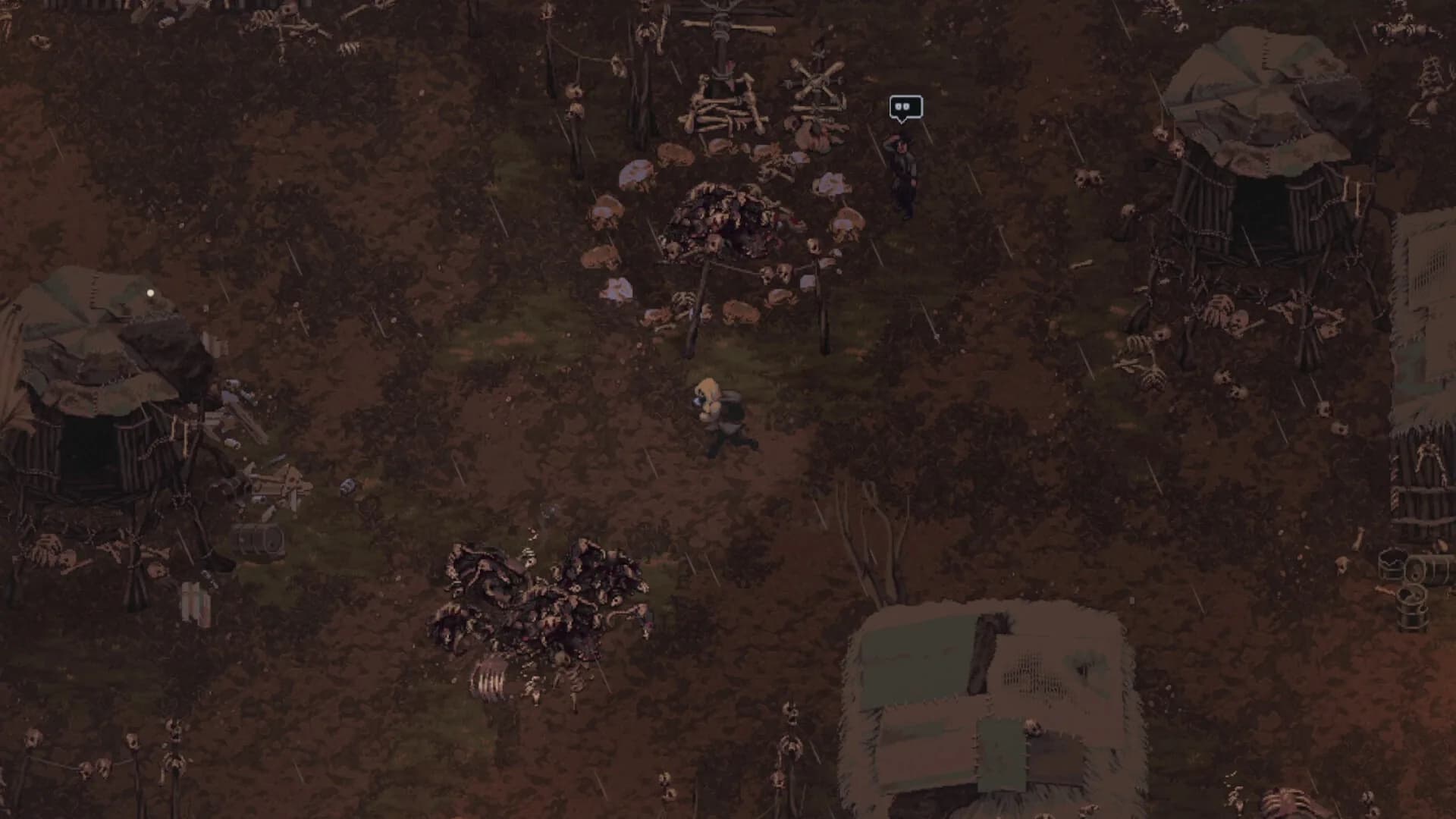
The habits that change everything from the first run: vision while aiming, bleeding, weapon upkeep, and a world that moves without you.
Alexandrosse
Scavland does not explain much, and that is deliberate. The game drops you into Zalesye with a bag that is too small, a weapon that can jam and a torch that does not reach far enough.
This guide gathers what you need to have understood before your second run, because the first one is going to go badly. Everything below comes from the official store page and the studio's patch notes, not from guesswork: you will find no invented loot tables and no miracle coordinates here.
Our full review is here if you are still hesitating.
The game turns on a very simple cycle: prepare, go out, scavenge, survive, return, upgrade, go further.
The important word is "return". A full bag that dies three hundred metres from camp is worth nothing. A half-full bag that comes back funds the next run.
So your first objective is not to find the legendary weapon, it is to set a safe distance that you extend little by little, one expedition at a time.
Here is the trick that will save you most often, and it is poorly known because it is not intuitive.
Raising your weapon increases your vision distance. The studio adjusted this explicitly so the player can spot an enemy before being spotted.
In practice, never cross open ground with your weapon lowered. Move while aiming, stop regularly, let your field of view unfold. You will see the patrolling bandit before he sees you, which turns an ambush suffered into an ambush chosen.
The same principle applies to looting: container outlines are visible from a decent distance, while the range at which you can actually open them is shorter. Use that to spot what is worth taking from somewhere safe, and to decide whether the round trip is worth the risk.
Advertisement
A lot of beginner deaths happen not during the firefight but two minutes later.
Bullets fired by humans can cause bleeding that keeps draining you once the exchange is over. That is not a one-off hit, it is a clock.
Two practical consequences.
First, always carry something that stops a haemorrhage, before you even think about extra ammunition. Second, deal with it immediately: running for the exit while bleeding means arriving at the door dead.
Worth knowing about the shotgun: one blast applies at most a single bleed, not one per pellet. It is a fearsome close-range weapon, not a multiple-haemorrhage machine.
Three things to absorb straight away.
Ammunition is scarce. Every magazine emptied into an enemy who was not worth it is a wasted run. Learn to go around rather than to clear.
Weapons jam. That is not scripted bad luck, it is a system, and repair and maintenance mechanics exist. A neglected weapon will fail you at the worst moment.
Weapons are built. The customisation system lets you change stocks, magazines, optics, muzzle devices and grips, from more than three hundred parts. The studio advertises more than twenty-five weapons.
The beginner's advice: do not look for the best configuration in the abstract, it does not exist. Build a weapon per purpose. Optics and a stable barrel for long approaches, a suppressed muzzle and a generous magazine for bunkers, and keep the parts to swap back at camp.
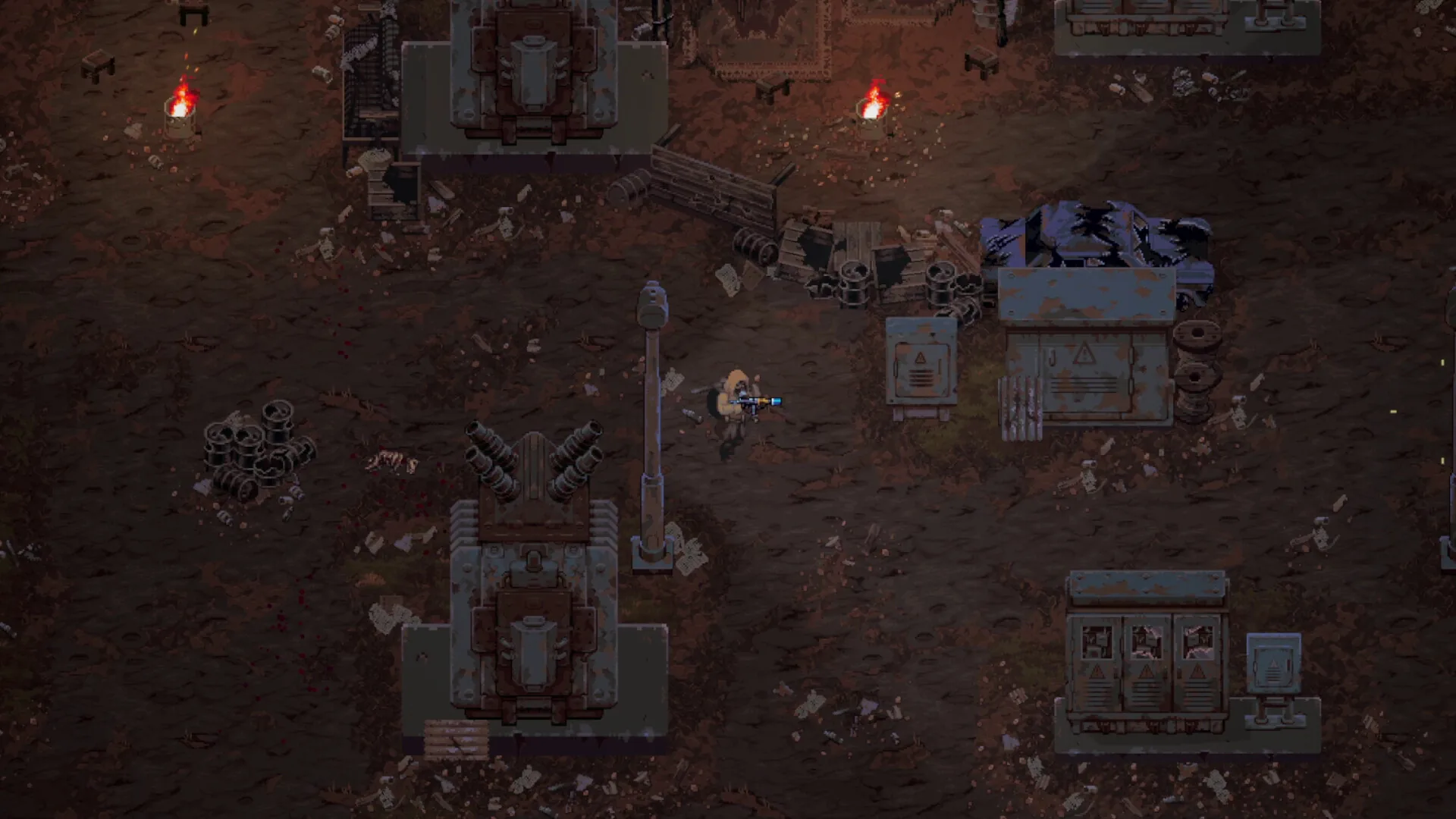
This is the system new players take longest to grasp, and it is the most useful.
Non-player characters, factions and creatures move and interact on their own. Patrols travel. Beasts wander. Factions run into each other and fight without you.
So you can hear gunfire in the distance, go and look, and arrive after it is over.
That is not a punishment, it is an opportunity. A cooled battlefield is a salvage site: bodies, weapons, ammunition, without a single round spent. Get into the habit of listening, circling, and arriving last.
Conversely, a silent area is not a safe area. It usually means the patrol is elsewhere and coming back.
Reputation exists with the ten factions, and also with the traders.
The principle is simple: a merchant's best stock is not bought, it is earned. Completed contracts, favours done and choices owned raise your standing and open entire shelves that were invisible to you.
For a beginner that means three things.
Pick a starting side and work for it rather than scattering contracts everywhere. Read contracts before accepting, because serving one group can close a door with another. And do not dump your loot on the first buyer: a trader who thinks well of you pays better and sells better.
Contracts, main quests and side quests are tracked in a built-in journal.
The world map is built for exploration: roads and information are revealed progressively as you discover Zalesye. You are not handed it whole at the start.
So the right habit is to make route discovery an objective in itself. A known road is a fast way home, and a fast way home is what lets you attempt a longer run next time.
This is the essential distinction between the surface and the underground.
The surface is handcrafted: you can learn its angles, its shortcuts and its high ground, and that knowledge stays valid.
The bunkers use procedural layouts. Every descent is different. So there is no point trying to memorise a plan, and it is dangerous to assume the exit will be where it was last time.
Go down with three things: something to heal with, something to light with, and room in your bag. Loot gets more interesting the deeper you go, but the journey back is longer too, and that is where beginners lose everything.
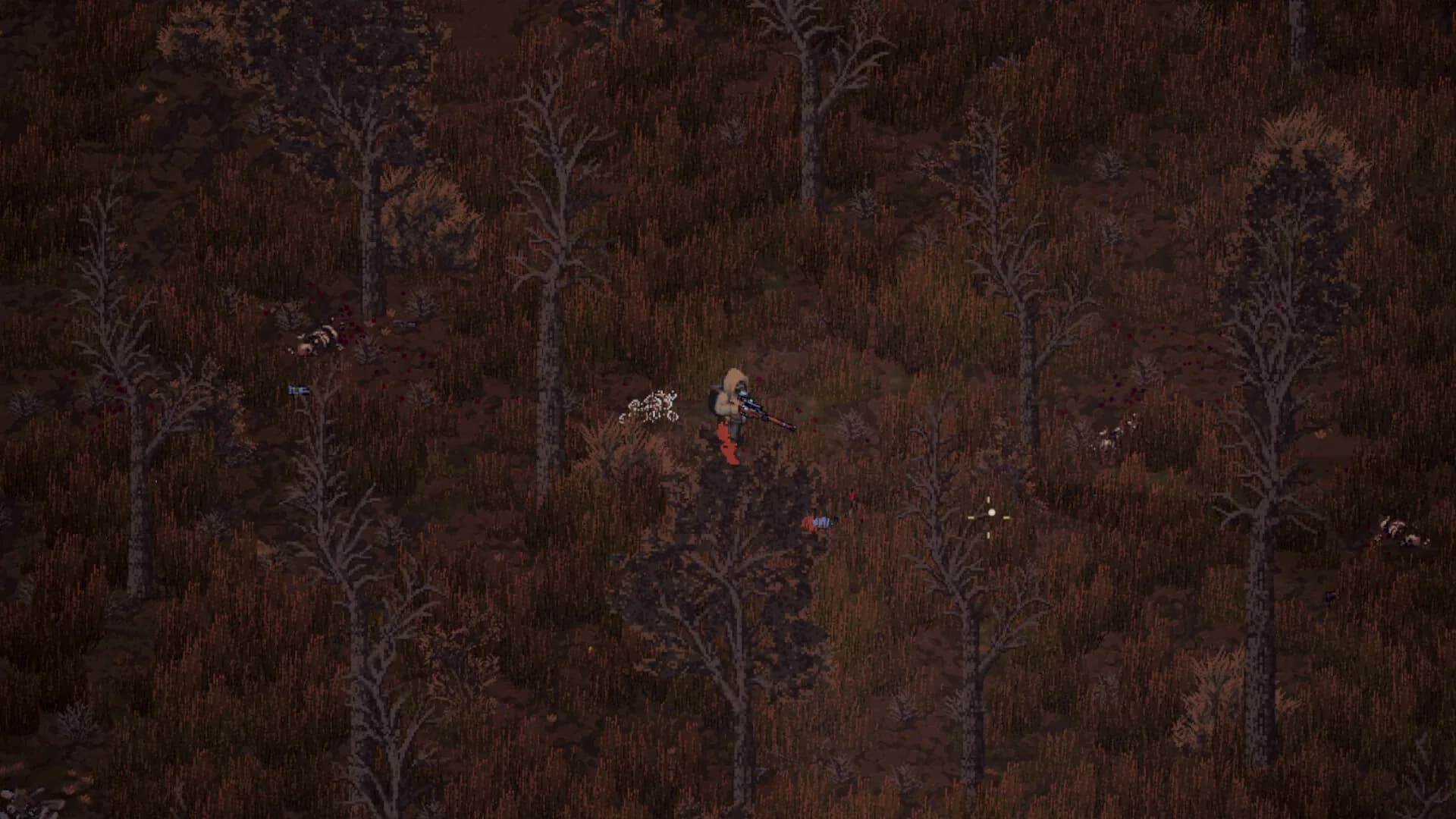
Three pieces of atmosphere that are also constraints.
Irradiated swamps are part of the setting and radiation is present in the world. Treat any unknown zone as a zone to test: go in a little, watch what the interface shows you, come back out.
The Mist is the great mystery of the story, the thing that ravaged the continent and around which your character's arc turns, a survivor who should have died. It shapes both the narrative and the geography.
The day-night cycle changes lighting and atmosphere. Night reduces what you can see without reducing what can see you, which is the worst possible trade. For your first runs, leave early and plan to be back before dark.
The game offers stealth mechanics and silent takedowns, alongside gunfire and melee.
It is often the best economic option. An enemy removed quietly means zero ammunition spent, zero reinforcements alerted, and a body you can search at leisure.
Get into the habit of watching a group before acting: how many, who drifts away, who turns their back. This game rewards patience far more than reflexes.
Setting out with no route home. The most frequent, and the most expensive.
Filling your bag on the way out. Keep space, or you will leave behind the thing you came for.
Shooting because you can. Every exchange costs ammunition, healing and sometimes a damaged weapon.
Ignoring maintenance. A weapon in poor condition fails during the one fight that mattered.
Treating a bunker as a known area. It never is.
The game has full controller support and was designed with handheld play in mind, with Steam Deck compatibility highlighted by the studio. Inventory, looting, combat and menus were reworked to stay usable without a mouse.
And it stays very light: two gigabytes of disk and eight gigabytes of memory are enough.
Let us be honest about the limits of any guide published on release day.
Loot tables, exact locations, reputation thresholds, crafting recipes and numeric weapon statistics have not been published by the studio. Be suspicious of any list handing you those today: it is invented.
A community wiki, scav.land, has launched around the game with an interesting policy, separating what is confirmed from what awaits in-game verification. As we write, its pages mostly restate the official store page and carry little field data, and one of them claims the Mist is not named on the Steam page, which is inaccurate. Worth following once the community has played, keeping the same habit as everywhere else: verify before believing.
Your first runs, your stupidest deaths and your unlikely finds all belong on the InsertCoins Discord, where we keep adding to this guide as discoveries come in.
Community
Your rating
Advertisement
Loading comments...
You might also like
One hour planned, a whole day swallowed. A post-Soviet top-down survival where darkness is a mechanic, not a filter.
Almost everybody who quits does so before hour two. Here is what the game does not explain and you need to know.
Your car park is not your income, it is your conversion tool. Until you grasp that, you stall in scenario one.
The ramjet, the heat, the planets that change your thermals, and the golden rule of parts: never build wide.