Deckbuilding is a crowded genre, where you think you've seen it all since Slay the Spire. So when a game shows up promising to throw out the rulebook, you prick up your ears warily. Shards of Order keeps its promise though: no turns, no mana points, but a time-based combat system that upends the formula. And over that mechanical audacity, a breathtaking dark beauty, a twilight dark fantasy that grabs you from the first image. You come for the eyes, you stay for the intelligence of a combat you'd never played this way.
The context
Shards of Order is a dark-fantasy card RPG developed by Fardust and published by Awaken Realms, available on PC since 28 July 2026. The game stands out from the start by claiming to be a true full RPG, with no roguelike or roguelite component, which is rare in the genre. You control a party of three heroes, each with their own skill tree, playstyle and personal arc, but sharing a single common deck. The adventure takes place in a dying world, where you seek to recover the lost Laws that once governed it. The demo had already thrilled its crowd, with 96% positive reviews, and we were keen to check whether the magic held over time.
What radically sets Shards of Order apart is its combat system with no turns or mana, an owned break with deckbuilding's codes. The heart of it all is a time counter: each enemy shows exactly when it will act, and each card you play pushes those moments closer or further away. You no longer endure a rigid alternation of turns, you actively manipulate the combat's tempo, delaying an enemy's threatening attack or hastening your own. That mechanic turns every clash into a temporal puzzle where timing prevails over raw accumulation, and it gives the game an immediately heady tactical depth, distinct from anything we know in the genre.
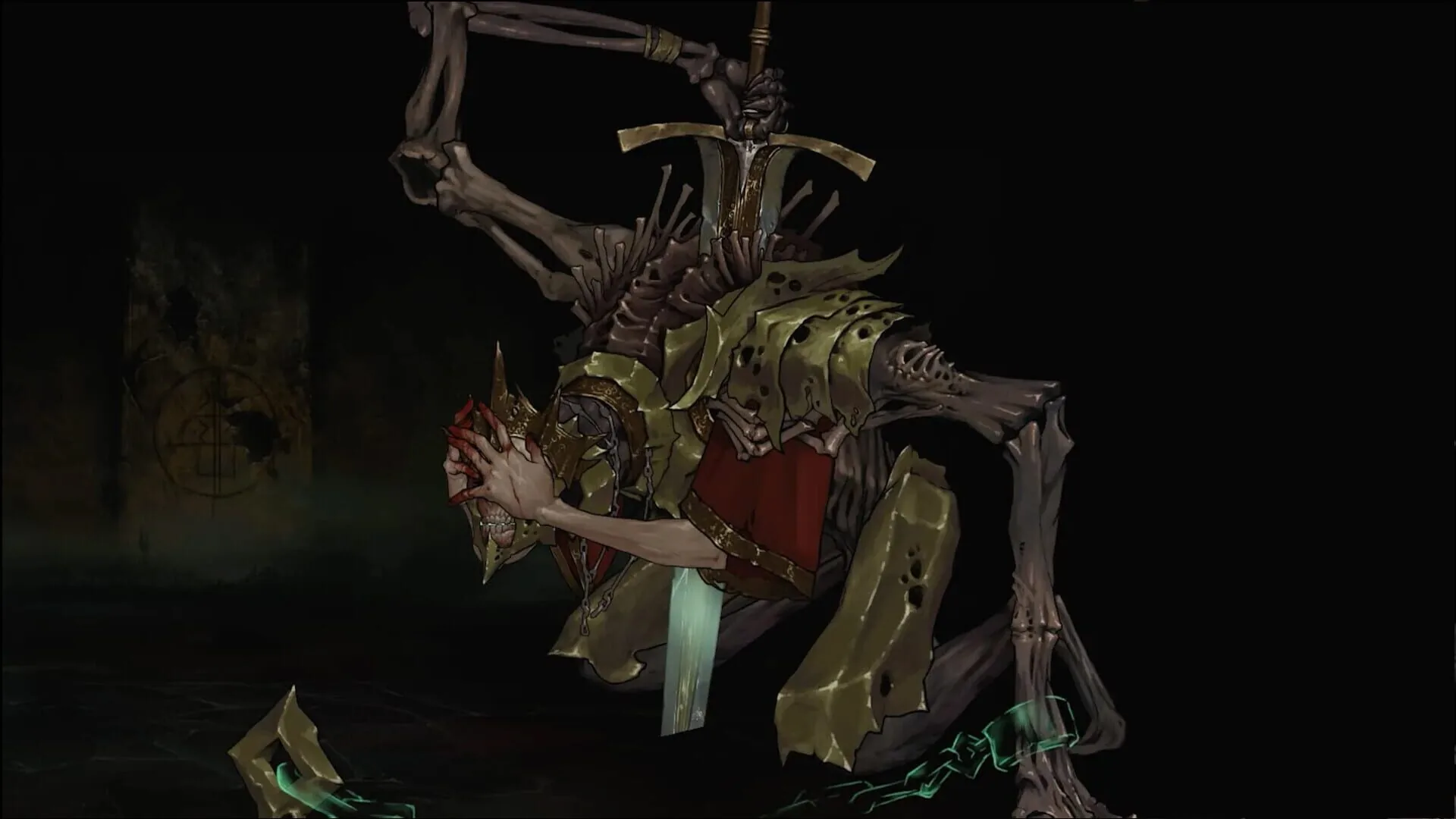
The RPG dimension enriches that base further. Controlling a party of three heroes with distinct skill trees and styles, while sharing a single deck, imposes a reflection on synergy and complementarity: each card potentially serves all three characters, and you have to build your deck thinking of the whole team. The heroes' personal arcs and the total absence of roguelite, in favor of real narrative progression in a dying world, anchor the game on the side of the long-haul adventure rather than the repeated run. The whole bathes in a superb dark-fantasy art direction, made of twilight, gravity and a polished aesthetic that gives the dying world a true soul. It's beautiful, dense and coherent.
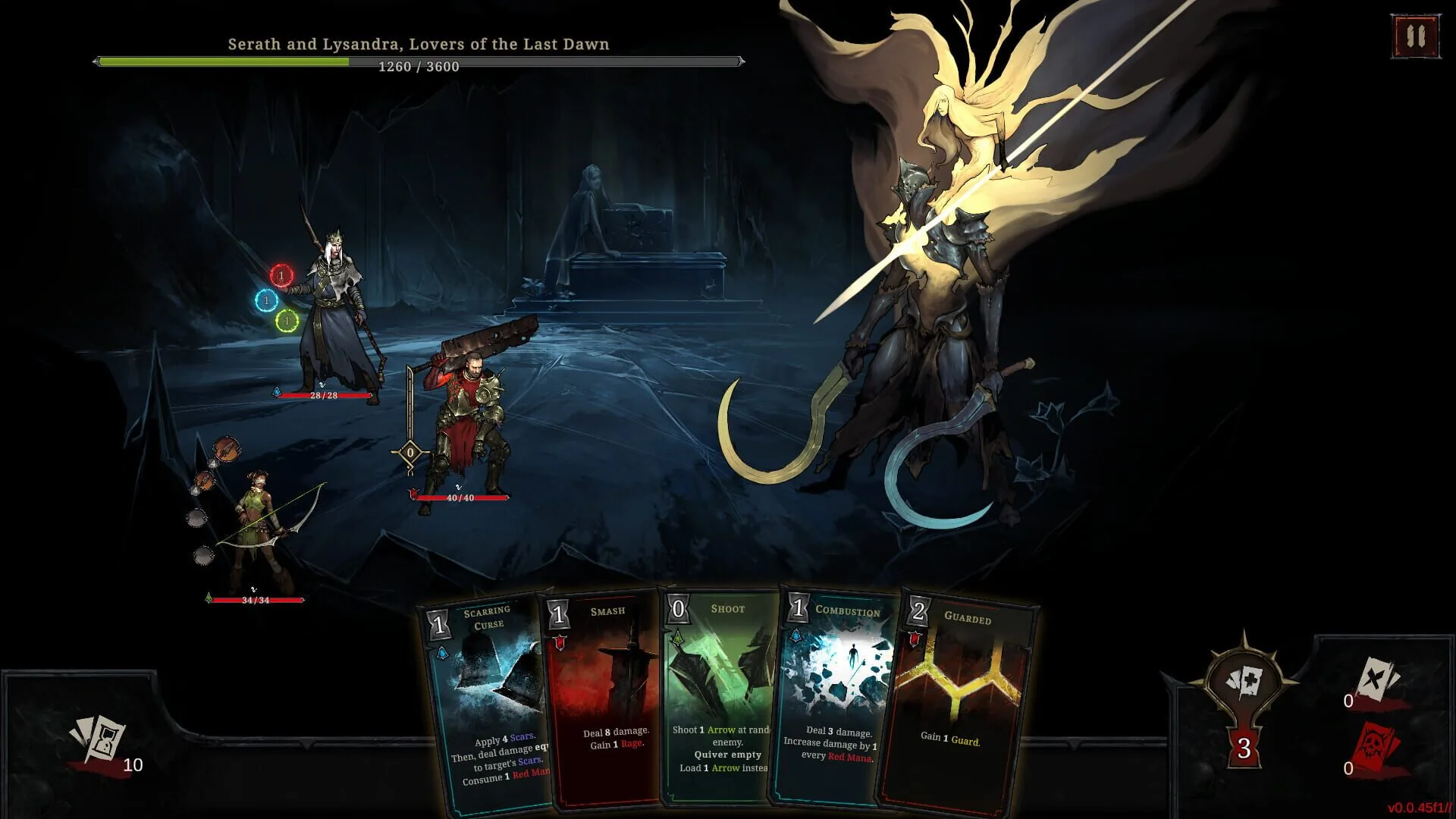
You have to stay lucid about what such mechanical audacity implies. The turnless, mana-less system, however brilliant, demands real adjustment time, and it'll shake up the habits of deckbuilding veterans drilled in the classic formula. Thinking in terms of a time counter rather than turns and energy requires unlearning some reflexes, and that learning curve, while it rewards investment, may throw you at first. It's the price of originality, owned, but you have to accept relearning how to play cards to savor its full richness.
The other reservation is the stance of an RPG without roguelite. By choosing real narrative progression over the infinite replayability of the run, Shards of Order exposes itself to the RPG's demands: everything will depend on the quality of its writing, the depth of its personal arcs and the richness of its adventure to last over time. Where a roguelite renews itself through chance, an RPG must convince through its story and progression, a riskier and less forgiving ground. The 96% demo bodes well, but the full version will have to confirm that the dying world and the quest for the lost Laws sustain interest all the way. It's a narrative gamble as much as a mechanical one.
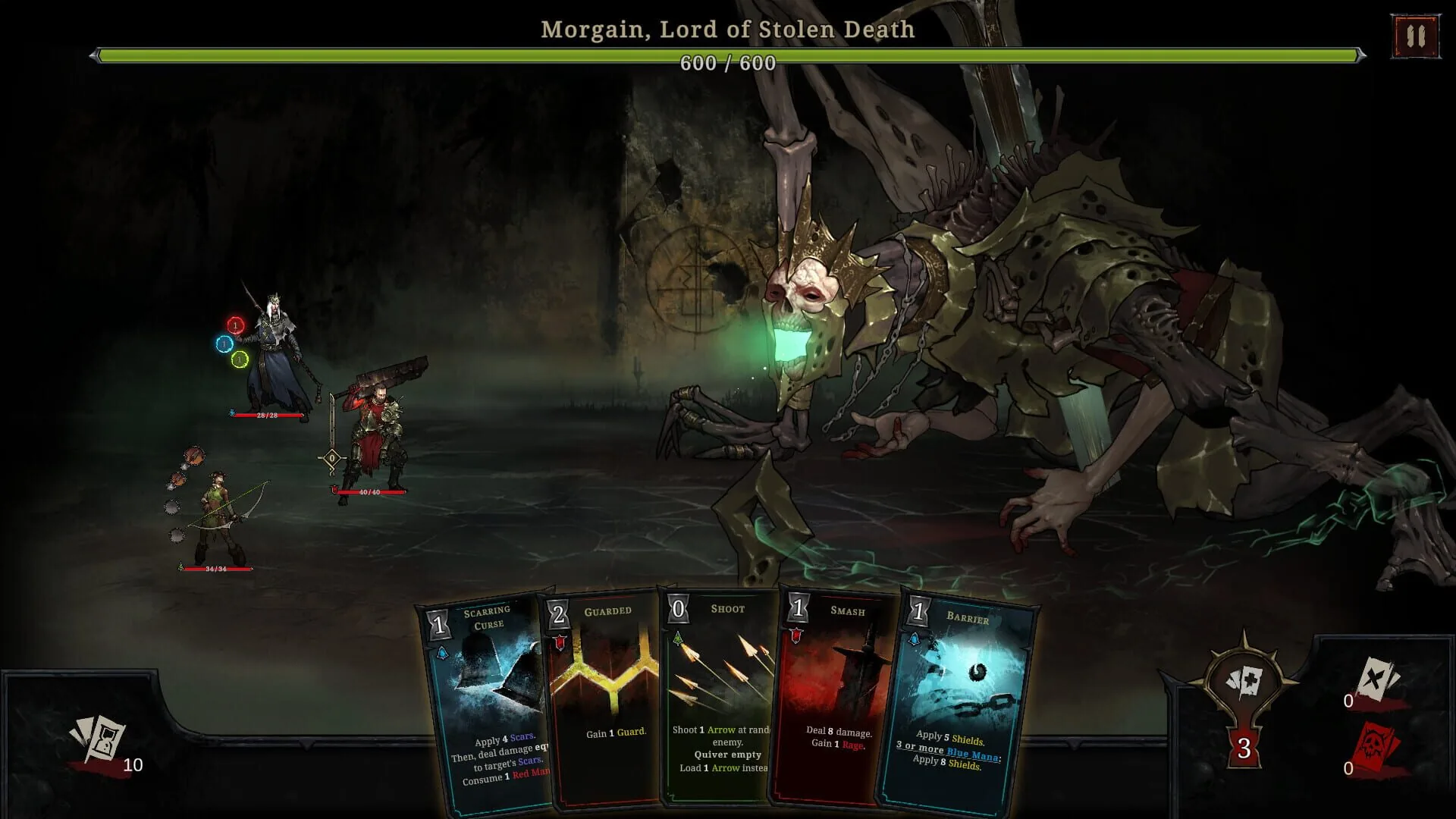
Shards of Order is a fine surprise that dares where deckbuilding purrs. Its turnless, mana-less combat system, built on a time counter where each card manipulates the clash's tempo, is a brilliant find that genuinely renews the genre, and its RPG dimension, with its three heroes with personal arcs sharing a deck, adds a rare synergy depth and narrative ambition. All served by a dark-fantasy art direction of breathtaking dark beauty, which gives its dying world a true soul. For the card fan seeking freshness, or simply for whoever loves beautiful dark fantasy, it's a gem.
You just have to accept its audacity and its stances. Its turnless, mana-less combat, however clever, demands unlearning your reflexes and will shake up habits, a learning curve that rewards investment but can throw you. And its choice of a true RPG without roguelite bets everything on the quality of its writing and progression, a narrative gamble whose success will play out over time. But on the essential, the originality of its mechanic and the beauty of its universe, Shards of Order holds a singular, superb proposition, rightly hailed in the demo. A deckbuilding that has the courage to rethink its rules, and the beauty to sublimate it.
A darkly beautiful dark-fantasy card RPG, with turnless, mana-less combat built on a time counter that renews the genre: audacious, deep and superb, despite a learning curve.
Strengths:
- Turnless, mana-less combat, built on a time counter, brilliant
- A dark-fantasy art direction of dark beauty
- A true RPG with three heroes with personal arcs sharing a deck
- A rare narrative ambition, no roguelite, hailed at 96% in the demo
Weaknesses:
- An original mechanic that demands unlearning your reflexes
- A narrative gamble whose success will depend on the writing over time
- A learning curve that may throw genre veterans
Tested on PC.
Your verdict differs from ours? The Discord is the place to make your case.