Some games you want to love just for their title, and Sir We Have An Orc Problem is one of them. That name, that deadpan tone of a military report overwhelmed by events, promises exactly what it delivers: waves of orcs so numerous you have to call in artillery, bombing runs and downright orbital lasers to hope to hold. We love the concept, we love the humor, and controller in hand, the promise of a tactical stress-reliever is met with delightful generosity. Here's a little game that knows exactly what it wants to be.
The context
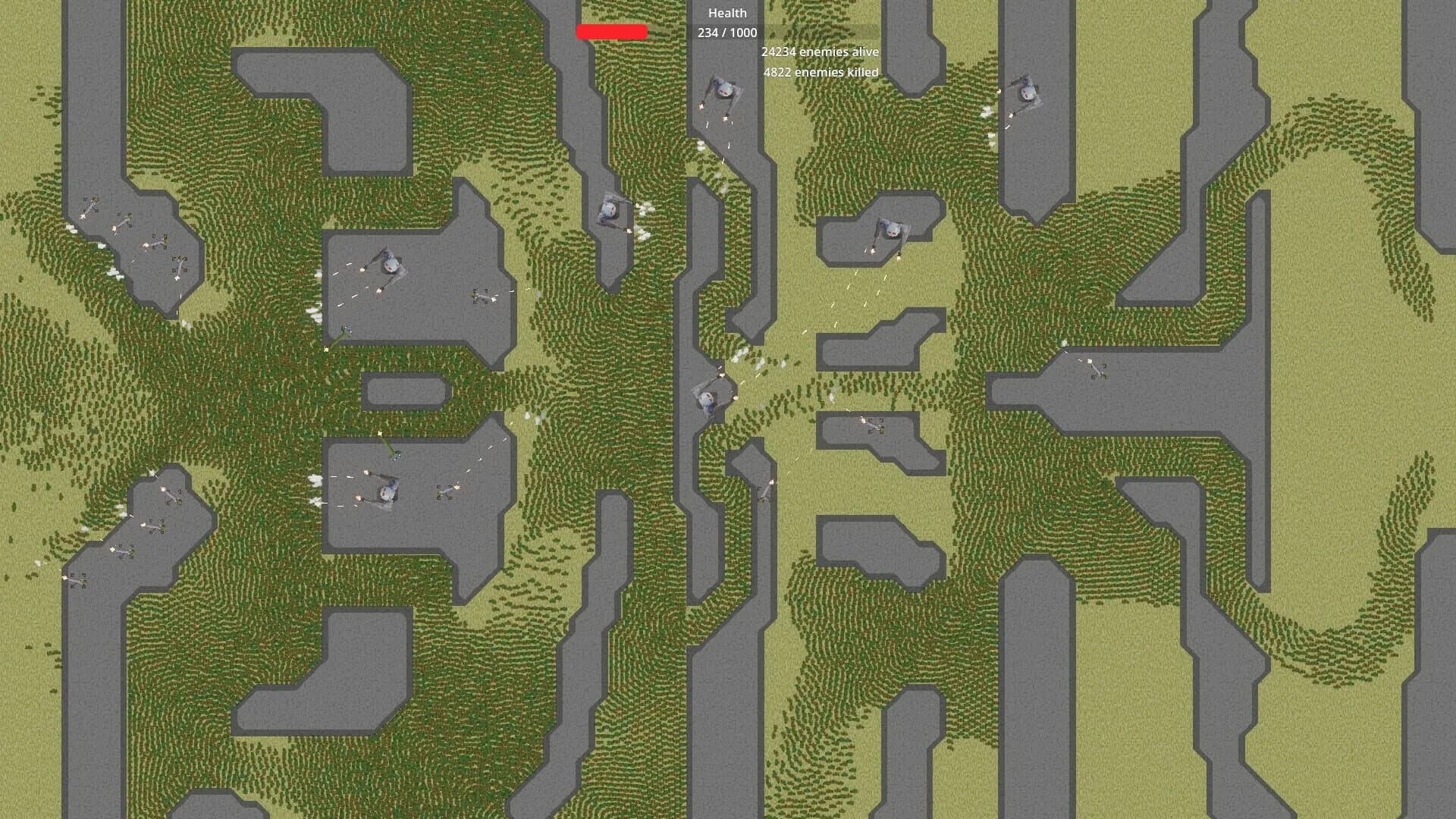
Sir We Have An Orc Problem is a tower defense with an incremental component developed and published by Mumpitz Games, available on PC since 28 July 2026. The principle is crystal clear: you defend your base against an outright crushing number of orcs, placing and upgrading a whole arsenal of turrets, and calling in artillery strikes, bombing runs and orbital lasers. The game's particularity is its meta-progression: the resources earned from every run, won or lost, are used to unlock and upgrade ever more powerful turrets. The whole runs on a physics simulation that makes every massacre as satisfying as it sounds. The developers aim for a total playtime of four to six hours, and the game has already won over its audience.
The heart of Sir We Have An Orc Problem is the tower defense loop juiced up with incremental progression. You place your turrets, you hold against the waves, and each run, win or lose, you bring back resources that strengthen your arsenal for next time. That permanent progression is the game's addictive engine: you never truly lose, each match advances the next, and you catch yourself relaunching endlessly to unlock the next turret or bump up your orbital laser. It's the well-known pleasure of the incremental, grafted onto a nervous, legible defense base.
But the game's true signature is its physics simulation, and it makes all the difference. The orcs don't just disappear when they die: they're launched, crushed, disintegrated, and every massacre has a weight and an impact that make defense viscerally satisfying. Watching a tide of orcs get pulverized by a well-placed bombing run or swept away by an orbital laser delivers an immediate, almost childlike glee that few tower defenses reach. The arsenal, from turrets to strikes by way of artillery, offers ways to vary your approach, and the title's humor imbues the whole with welcome levity. It's a tactical stress-reliever, owned and effective.
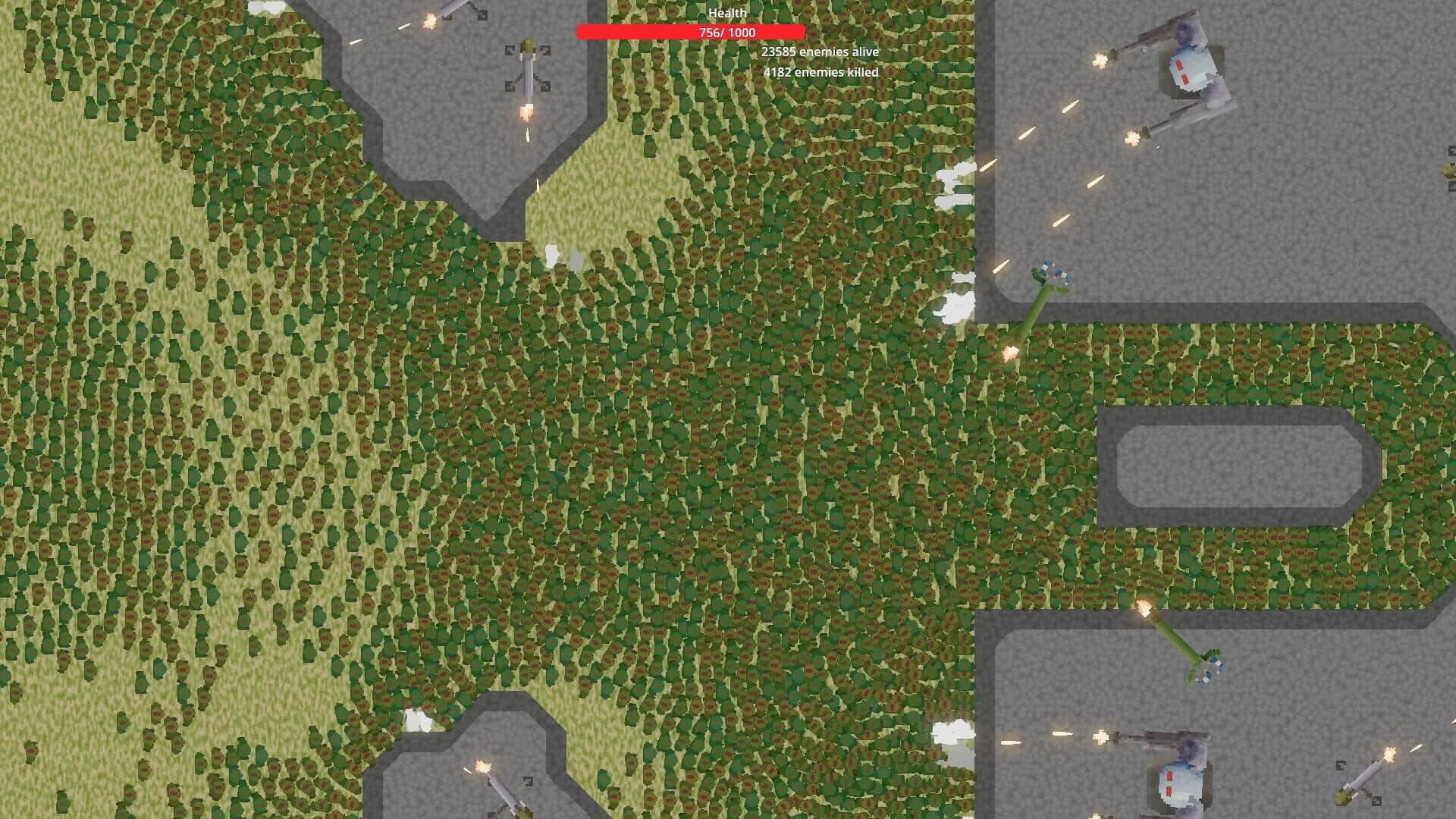
You have to stay honest about the scale of the proposition. Sir We Have An Orc Problem is a little game, and it owns it: the developers aim for four to six hours of content, which is short. Whoever seeks a sprawling tower defense and inexhaustible strategic depth will walk on, because that's not the title's ambition. It's a stress-reliever to savor over a handful of sessions rather than a long-haul adventure, and you should approach it for what it is, an immediate, concentrated pleasure, not a genre juggernaut.
The other reservation is the classic limits of the incremental and of balance. The loop, however addictive, rests on repetition and optimization, a niche pleasure that won't speak to everyone. And as often in this type of game, balancing the different turrets and strikes is a delicate exercise: feedback from the demo phase already mentioned discussions around some mechanics, like flamethrowers versus cannons. It's a point to watch so the arsenal's variety stays real and some options don't dominate too much. Nothing dealbreaking, but the to-be-refined aspect of a little game that bets everything on its efficiency.
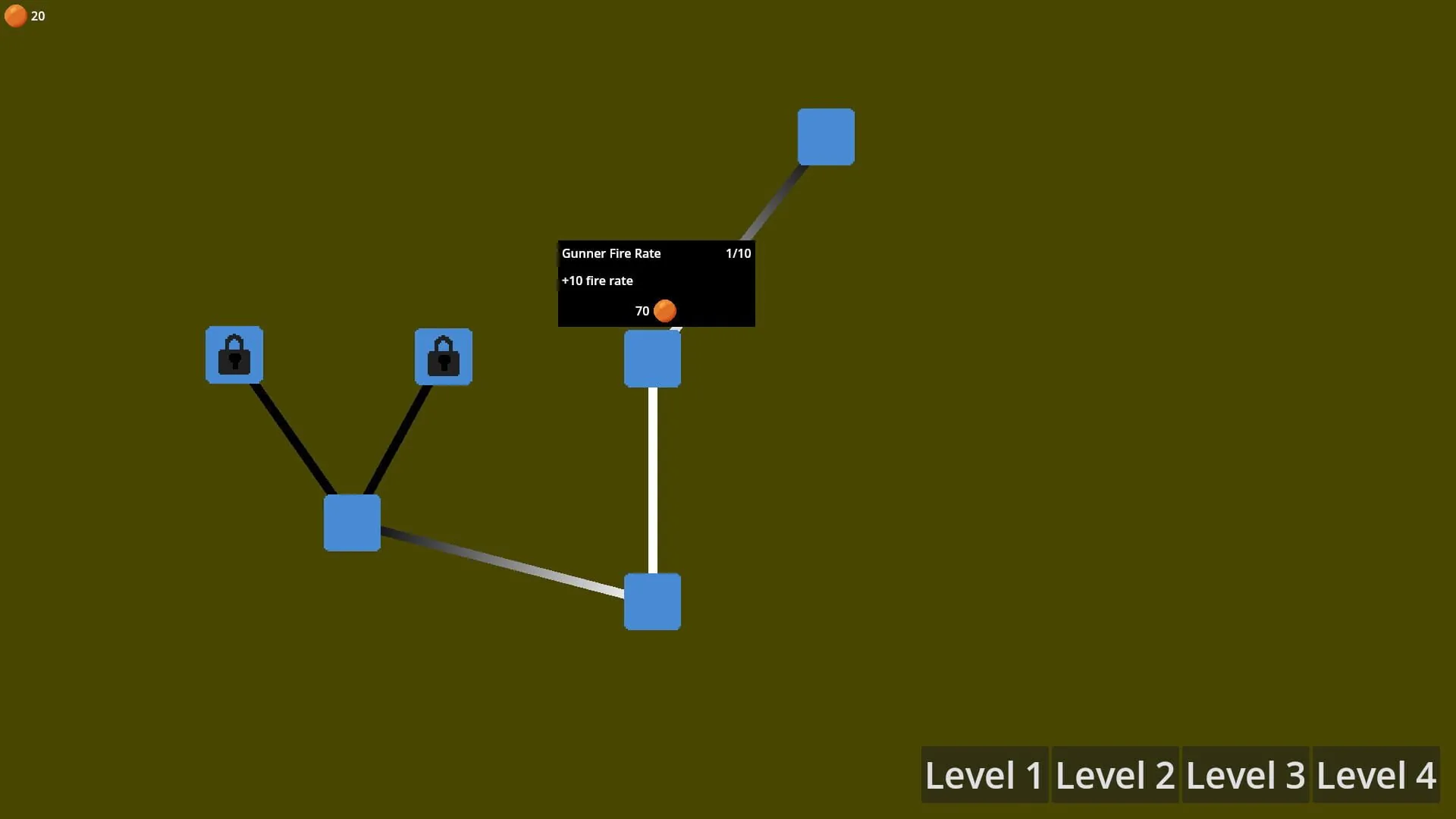
Sir We Have An Orc Problem keeps exactly the promise of its brilliant title: a tactical stress-reliever where you turn tides of orcs into mush with turrets, artillery and orbital lasers. Its tower defense loop juiced up with incremental progression is addictive, its physics simulation makes every massacre viscerally satisfying, and its deadpan humor imbues the whole with delightful levity. For a little game, it's a success full of personality, the kind you relaunch without noticing to unlock the next oversized weapon.
You just have to approach it for what it is. Its four to six hours of content make it a concentrated pleasure rather than a long-haul adventure, its incremental loop stays a niche pleasure, and its balance will need refining so the whole arsenal stays relevant. But on the essential, the immediate glee of a massacre well done, it delivers exactly what you ask of it, with contagious efficiency and good cheer. For an evening of stress relief between two big games, hard to do more delightful. We love the title, we love the game.
A short but gleeful incremental tower defense, where physics simulation turns tides of orcs into mush with orbital lasers: a tactical stress-reliever full of humor and personality.
Strengths:
- A physics simulation that makes every massacre viscerally satisfying
- An incremental-juiced tower defense loop, addictive
- A generous arsenal, from turrets to orbital lasers
- An irresistible title and deadpan humor
Weaknesses:
- A short runtime, four to six hours of content
- A niche incremental loop, repetitive by nature
- Arsenal balance still to refine
Tested on PC.
Disagree with the score? Come and tell us on the InsertCoins Discord, where we defend our verdicts live.