In The Spell Brigade, the difference between a wizard who clears the screen and one who gets overwhelmed isn't down to lucky drops, but to the coherence of their build. Between spells, elements, infusions, Enchantments and Relics, the customization depth is real, and it's easy to dilute your power by scattering your choices. This guide gathers the best meta builds, the dominant elemental synergies, the crucial role of infusions and how to adapt it all in co-op. Enough to hold the toughest waves, including in Hardcore mode. For our full opinion on the game, head to the The Spell Brigade review.
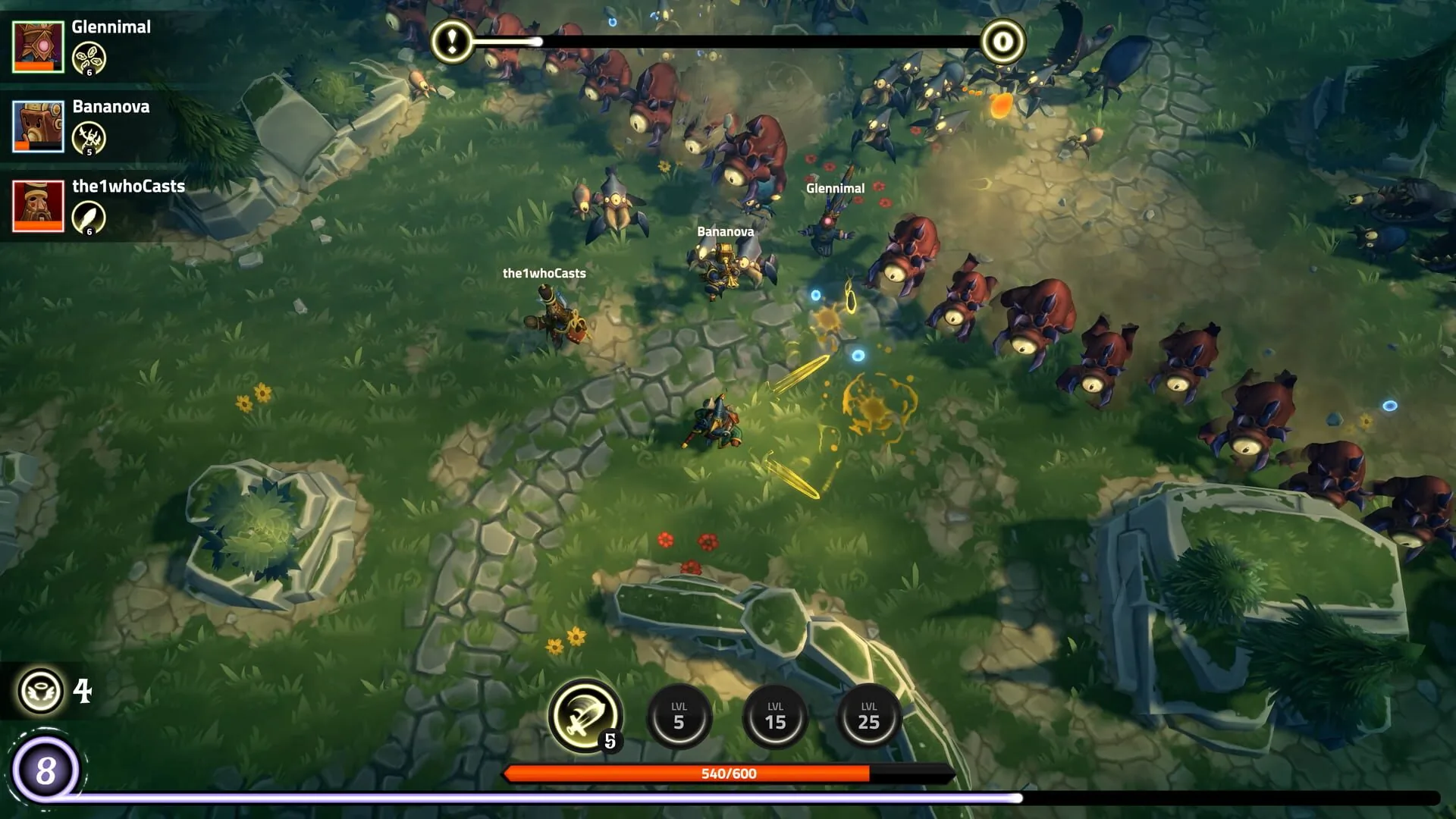
Before the precise recipes, understand the underlying logic. Solid builds almost always come from the same stat families: cast speed, cooldown reduction, spell size, movement, crit, Luck and augments. Stacking these stats around a coherent primary spell is what turns a plain ability into a damage machine. Spreading yourself thin, conversely, is the number-one trap: better an overloaded spell than a handful of mediocre ones.
But the real key, the one beginners underestimate, is infusions. A good build with bad infusions will fail, while a decent build with strong infusions can carry you far, deep into Hardcore mode. So treat your infusions as the heart of your progression, not a secondary bonus. And always keep some flexibility: you can pivot your build mid-run by focusing on utility upgrades like cooldown reduction and area-of-effect size, because these stats universally benefit all spells.
The element choice structures the whole build, and the current meta has its favorites. The Ice and Lightning combination dominates, because it offers both control and damage: Ice slows enemies significantly, while Lightning chains damage across groups. It's the safest marriage for managing hordes while hitting hard. Alongside, Fire provides damage over time, precious against big enemy packs, while Acid reduces enemy defenses, making bosses noticeably easier to bring down.
A golden rule never to forget: don't mix opposing elements like Fire and Frost on a single character, unless you have a specific artifact that bridges the two. Without it, you dilute your damage multipliers and ruin your late-game scaling. Elemental coherence beats variety: a well-built mono-element build almost always outperforms a gaudy, synergy-less assortment. Pick your element early, and make all your choices converge toward it.
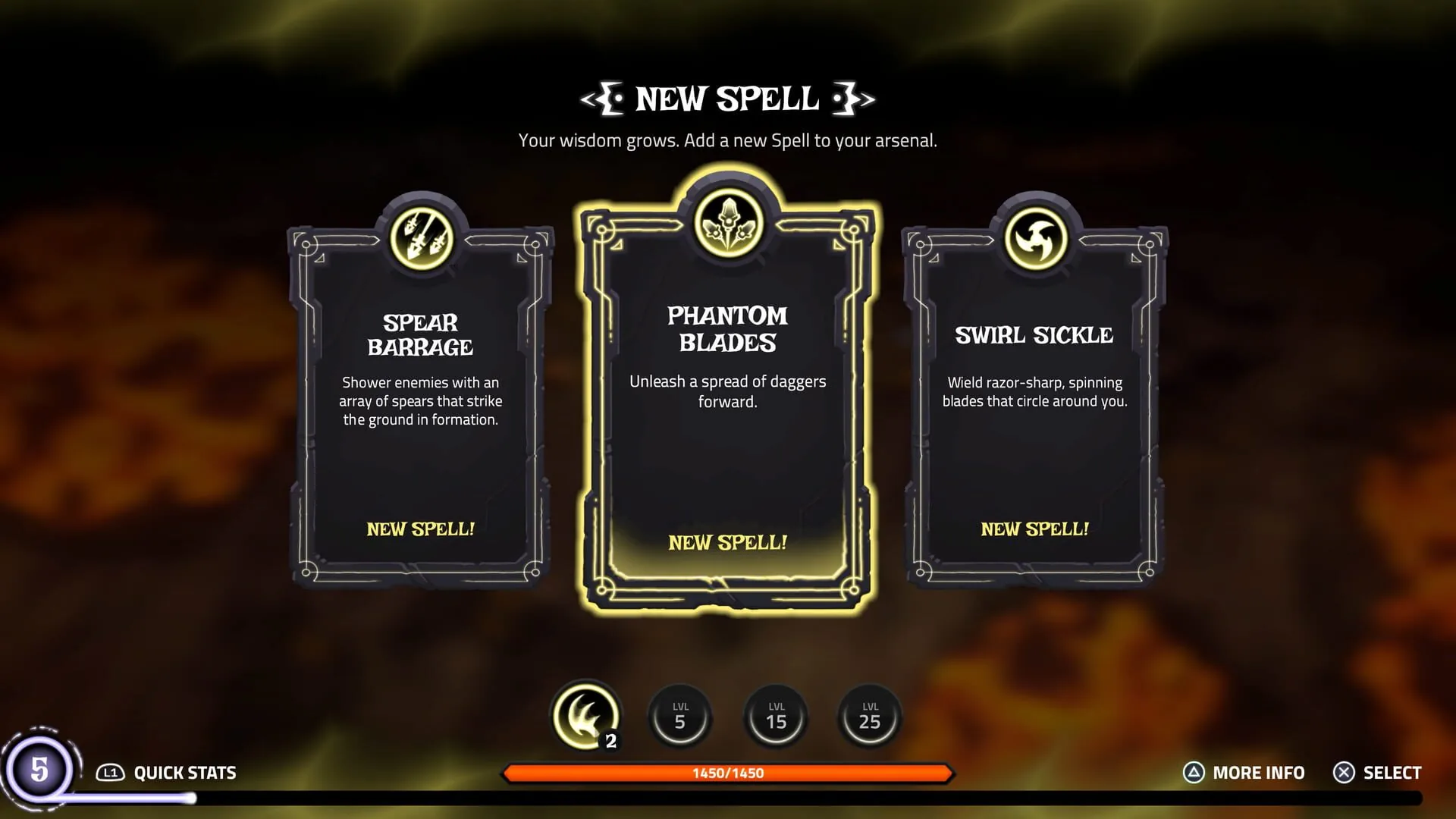
Several builds stand out in the meta, each with its own execution difficulty. The most powerful in the community 1.0 meta is the Falling Stars Lightning build on the Star Mage, a formidable damage machine but more demanding to set up and play correctly. If you're after simplicity, the easiest build to reproduce is Solar Pulse Aura, which offers an excellent power-to-accessibility ratio, ideal for starting out or chaining runs without hassle.
Around these two pillars, the meta counts other safe bets to explore by style: Acid Multi-Hit for crowd control and bosses, Scepter Mesh Plasma for fans of sustained damage, Solitary Focus for play centered on a single damage source, Pipwick Summoner for those who prefer summoning, Bell March, and Full Dark Corruption for a darker orientation. The point isn't to master them all, but to pick one that fits your sensibility and make your infusions and stats converge toward it. An owned, coherent build beats a rough imitation of the moment's best recipe.
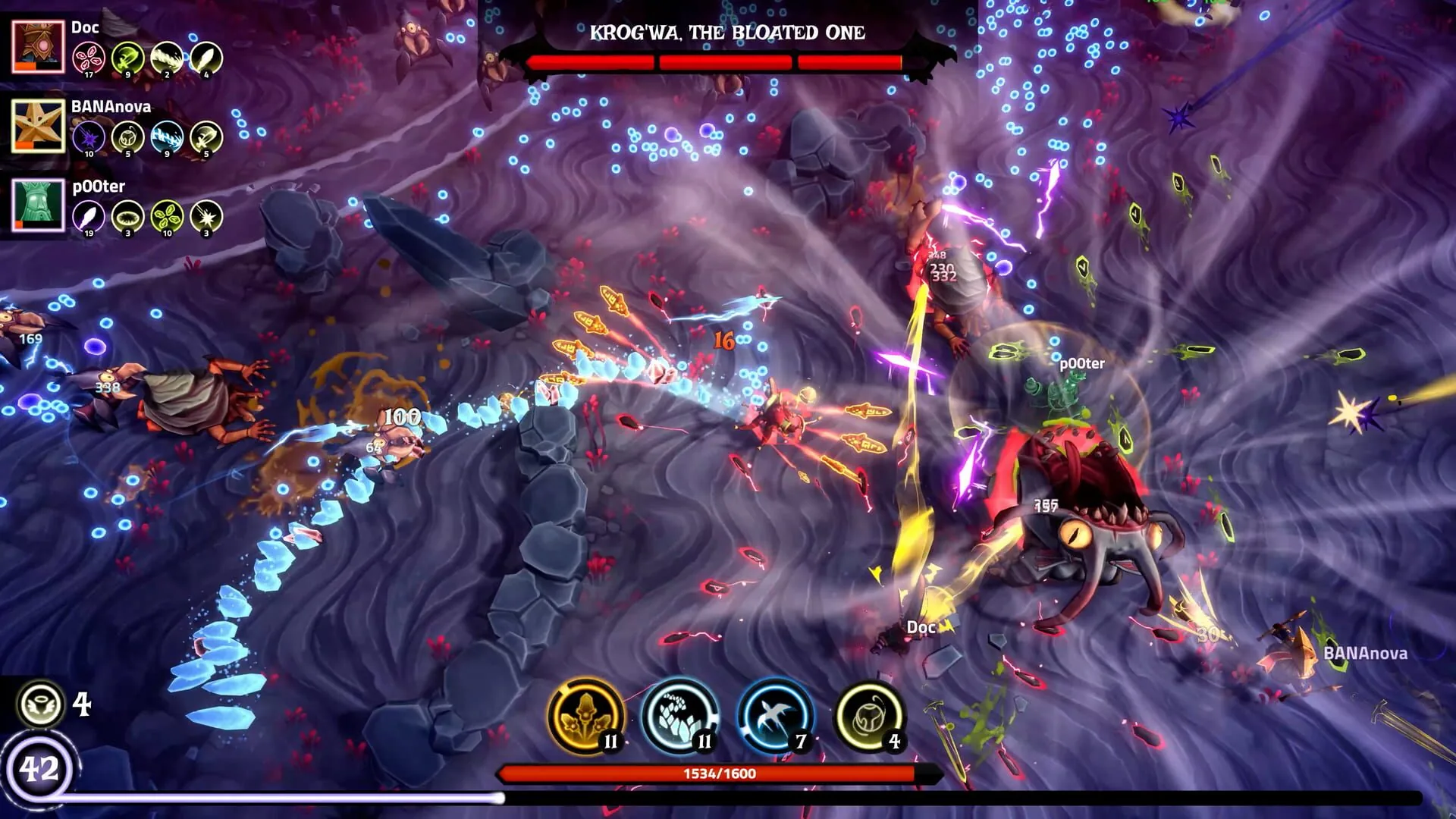
Co-op changes the deal, and not just because of friendly fire. In a team, the classic mistake is for everyone to go for the same dominant element, which saturates the screen with identical effects and wastes the group's potential. Instead, split the elemental roles: one player on Ice control to slow the hordes, another on Lightning or Fire for damage, a third on Acid to erode boss defenses. That complementarity turns four solitary wizards into a genuine war machine, where each weakness is covered by a teammate.
Friendly fire also imposes positioning discipline. In a bullet hell where your projectiles can hurt your allies, favor universal utility stats, cooldown reduction and AoE size, which strengthen everyone without multiplying accident risks. Avoid clumping, leave each player space to deploy their spell swarm, and communicate about your effect zones. A successful co-op build isn't the most selfishly powerful, it's the one that slots into a collective strategy and minimizes fratricidal chaos while maximizing the group's elemental coverage.
What is the best build in The Spell Brigade?
The most powerful in the 1.0 meta is Falling Stars Lightning on the Star Mage, but the easiest to reproduce is Solar Pulse Aura, excellent for starting out.
Which elements should you pick?
The Ice and Lightning combination dominates (control plus damage). Fire offers damage over time and Acid reduces defenses, very useful against bosses.
Can you mix elements?
Avoid mixing opposing elements like Fire and Frost without a dedicated artifact, because it dilutes your multipliers and ruins your scaling. Stay coherent.
Why are infusions so important?
A good build with bad infusions fails, while a decent build with strong infusions can carry you into Hardcore. Treat them as the heart of your progression.
How do you play in co-op?
Split the elemental roles rather than all playing the same element, favor universal utility stats, and manage your positioning because of friendly fire.
Guide written based on the PC version.
Found something better? Come and improve this guide on our Discord.