In a card game, the meta is a tyrannical king: a few dominant cards lay down the law, and we all end up playing the same decks. Ariokan has a wild idea to overthrow that king: let players create their own cards, and entrust an automatic system with balancing them before pouring them into the shared library. On paper, it's a dizzying bet that could just as easily birth ungovernable chaos as a permanent renewal of the game. And it's precisely that audacity that makes Ariokan so intriguing to dissect.
The context
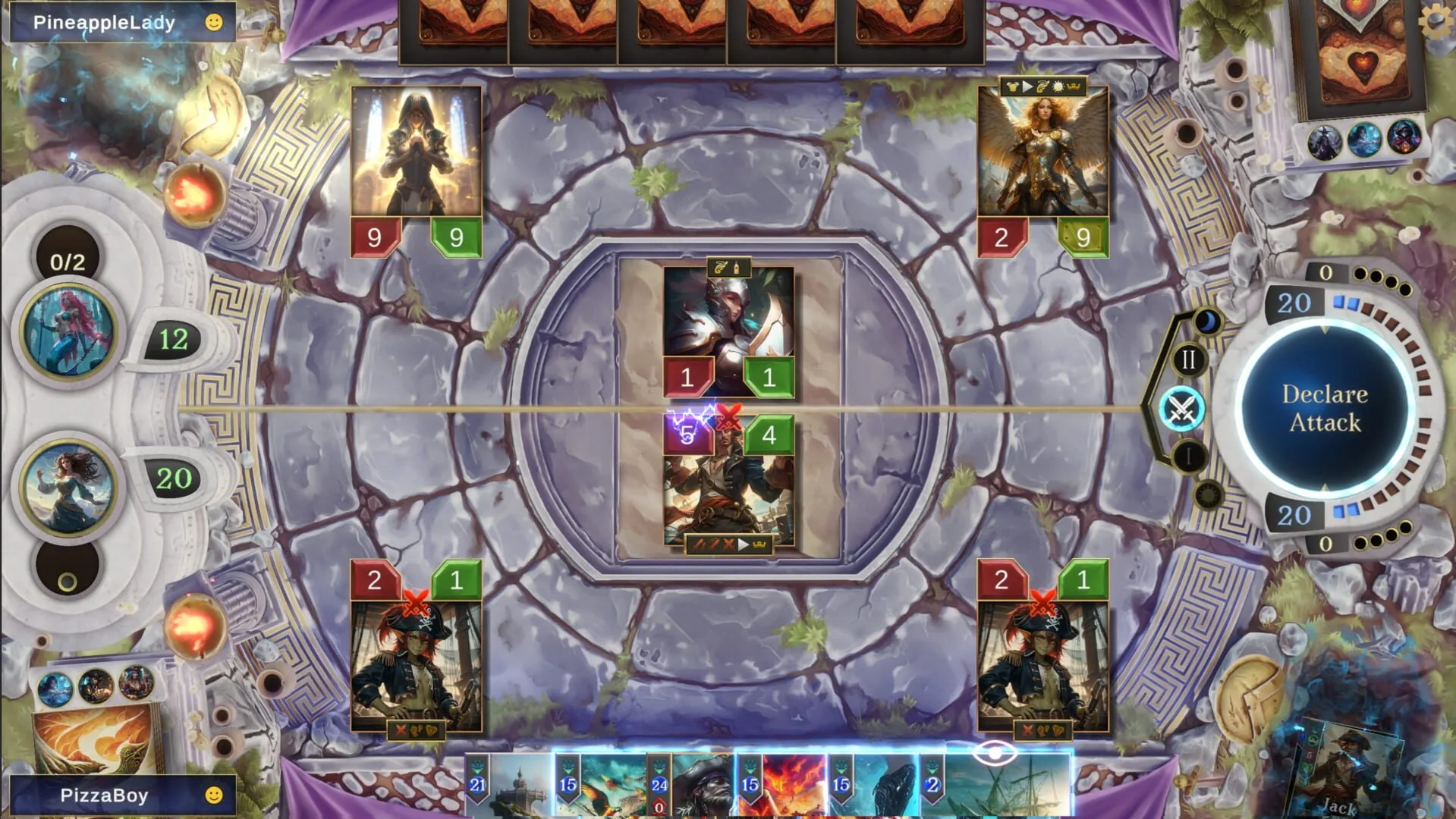
Ariokan is a competitive online card game developed by Fatum Games, available on PC via Steam and the Epic Games Store since 27 July 2026. At its core, it takes the genre's codes: you manage Mana to deploy Minions and Spells, and you win by reducing the opponent's Life Points to zero or forcing them to exhaust their deck. Each deck is led by a God, a kind of leader who grants passive bonuses to all the cards of its Faction, and you can summon powerful units called Legends by completing mini-quests during a match. A solid, familiar base, onto which grafts an idea that belongs to it alone.
What radically sets Ariokan apart is its built-in card editor. Through it, players can combine the effects and keywords of eight different Factions to create balanced cards that make their deck and strategy truly unique. That's where all the game's audacity lies: instead of enduring a fixed catalog decided by the developers, you shape your own tools, you invent your own synergies. The promise is that of a card game in perpetual renewal, where the meta is never carved in stone since everyone can add their stone to it.
The stroke of genius, or the bet, is that the editor automatically balances players' creations before adding them to the game's shared library. It's that safeguard that distinguishes Ariokan from a chaos where homemade cards would break the game: the system tries to guarantee a created card stays playable and fair. Around it, the competitive loop works with the genre's tried-and-true mechanics, Mana management, deploying Minions and Spells, objectives to complete to summon your Legends, all led by the God that gives the deck its identity. The game also offers a roguelite mode, where you pick a God, modify your deck and collect relics that add new effects, offering welcome solo progression alongside the online competitive side.
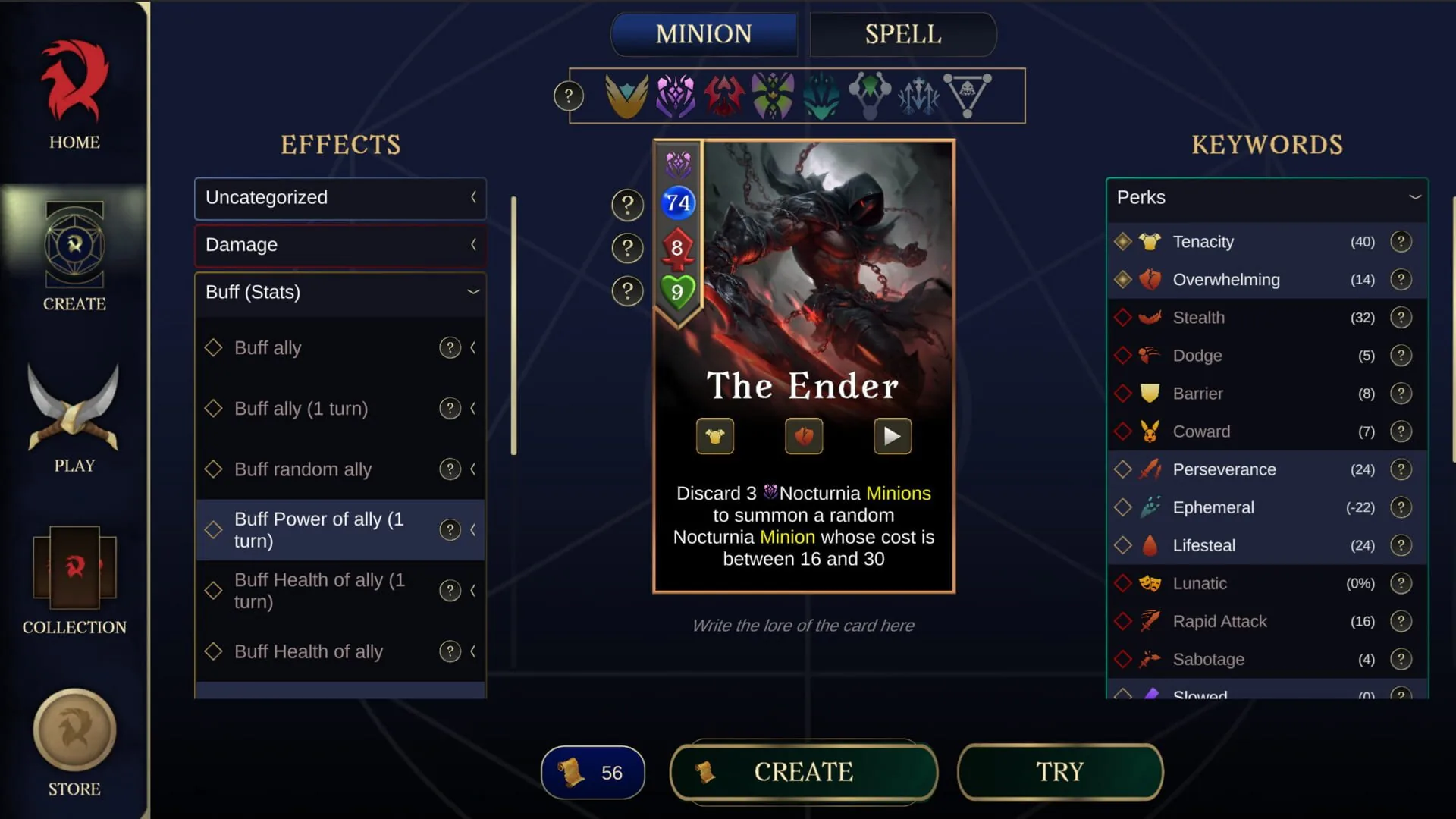
You have to stay lucid, because the very idea that makes Ariokan's strength is also its biggest risk. Entrusting the balancing of player-created cards to an automatic system is a bold bet, and everything rests on the reliability of that safeguard. If it works, the game holds a unique promise; if it falters, the shared library could fill with dominant or degenerate cards that would spoil the competitive experience. It's a major unknown, that can only be judged over time, once the community is at work and thousands of creations have passed through the algorithm's grinder. The ambition is real, its soundness remains to be proven.
The other reservation is the very nature of a competitive online card game, a demanding and merciless genre. Its success depends entirely on its community and support: without an active player base, the queues lengthen and interest collapses, and without constantly monitored balance, weariness sets in. Ariokan will also have to convince against well-established juggernauts of the digital card game, which is never a small feat. The roguelite mode fortunately offers a solo gateway for those put off by competitive play, but the heart of the game, and its bet, plays out online, where everything remains to be built. It's a title to follow with as much curiosity as caution.
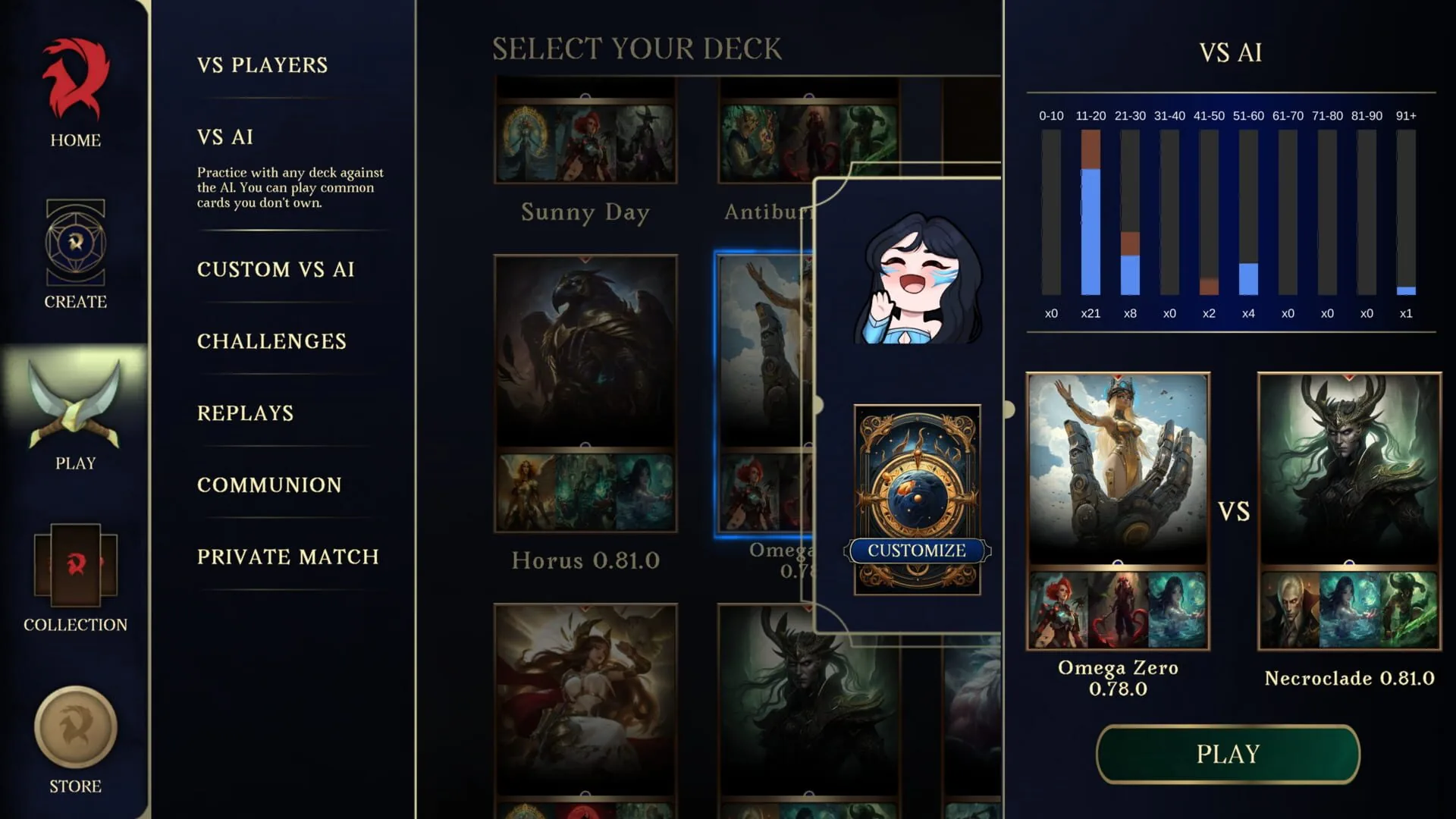
Ariokan is one of the most audacious card games we've seen in a long time, precisely because it dares to tackle the genre's most stubborn problem: the tyranny of the meta. By letting players create their own cards and entrusting their balancing to an automatic system, it promises a game in perpetual renewal, where the community's inventiveness becomes the engine of content. Its competitive base is solid and familiar, its Gods and Legends give decks personality, and its roguelite mode offers a fine solo gateway. For the card-game fan seeking freshness, the proposition is frankly exciting.
You just have to accept that its finest asset is also its biggest bet. Everything rests on the reliability of its automatic balancing, that unknown that will decide whether the game keeps its promise or sinks into the chaos of broken cards, and on its ability to rally and sustain an active community, the survival condition of any online card game. It's an ambitious and fragile project at once, to support for its audacity while keeping a cautious eye on its evolution. If the bet is met, Ariokan could become a truly distinctive card game. And just for daring this madness, it deserves a look.
A competitive online card game that lets players create and auto-balance their own cards, plus a roguelite mode: an audacious and refreshing bet, whose soundness will depend on its balancing and its community.
Strengths:
- The card editor that lets you create your own cards, a unique idea
- The automatic balancing that aims to preserve fairness
- A solid competitive base, led by the Gods and Legends
- A roguelite mode that offers a real solo gateway
Weaknesses:
- An automatic balancing whose reliability remains the big bet
- A success hinging on an active community and constant support
- The stiff competition of digital card-game juggernauts
Tested on PC.
We debrief every release on our Discord. The door is open, and so is the argument.