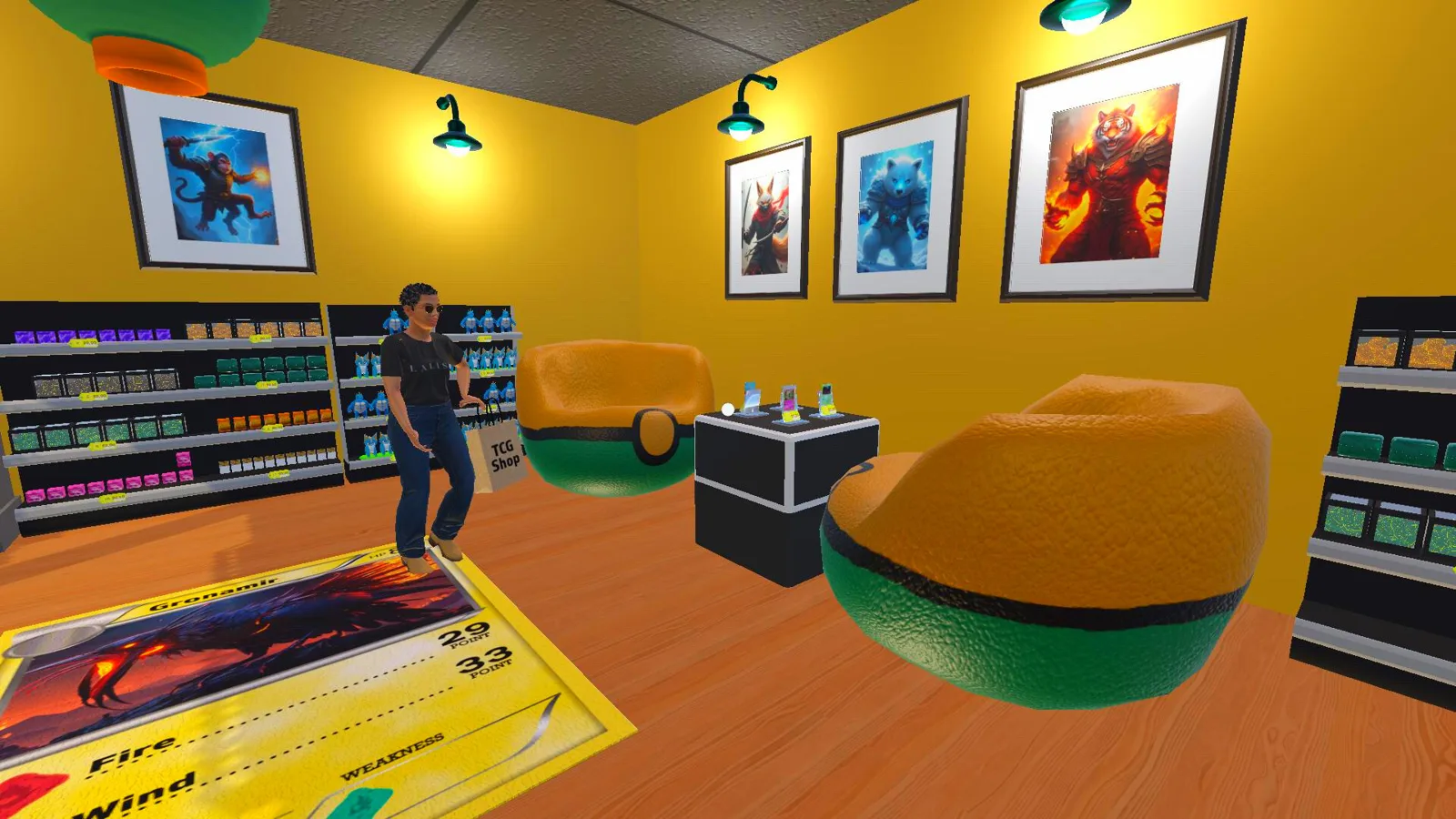
TCG Multiplayer Card Shop Simulator only makes sense played with others: that is what sets it apart from TCG Card Shop Simulator, and it is the conclusion of our review. So this guide starts there: how to organise, and how not to fool yourself about the cards.
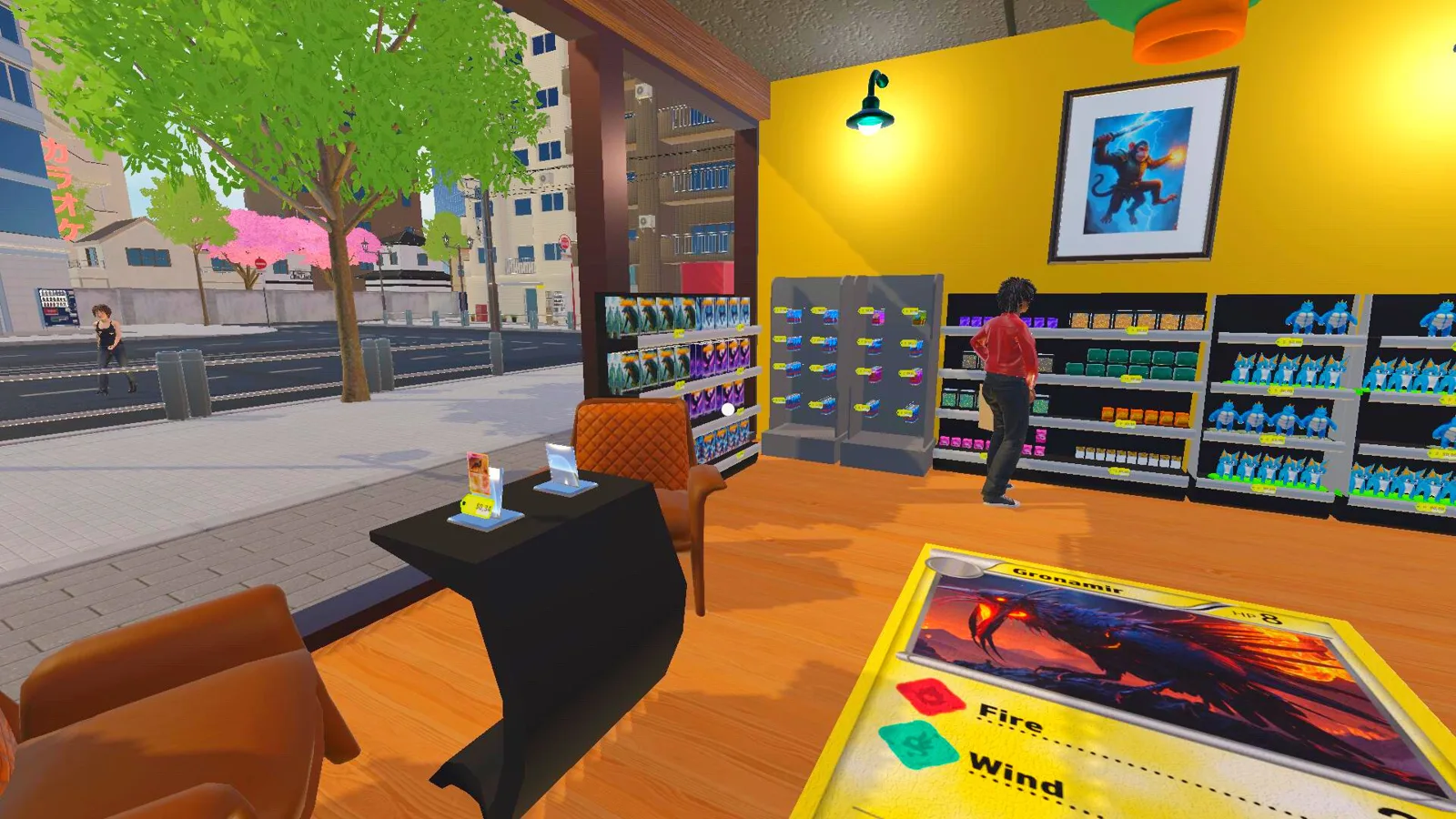
The classic mistake is everyone doing everything. Four people rushing the same box of boosters while the queue grows at the till. Better to set positions from the start, rotating from one day to the next if you like:
- The till. One player stays at the counter. It is the least fun job, and the most important.
- Restocking. One player watches the shelves and fills them before they empty, not after.
- Outside. One player handles online shop orders (accept, pack, ship) and does the rounds of the vending machines around town.
- The manager. With four, the last player handles prices, staff, tournaments and decoration.
With two, merge till and restocking on one side, outside and management on the other.
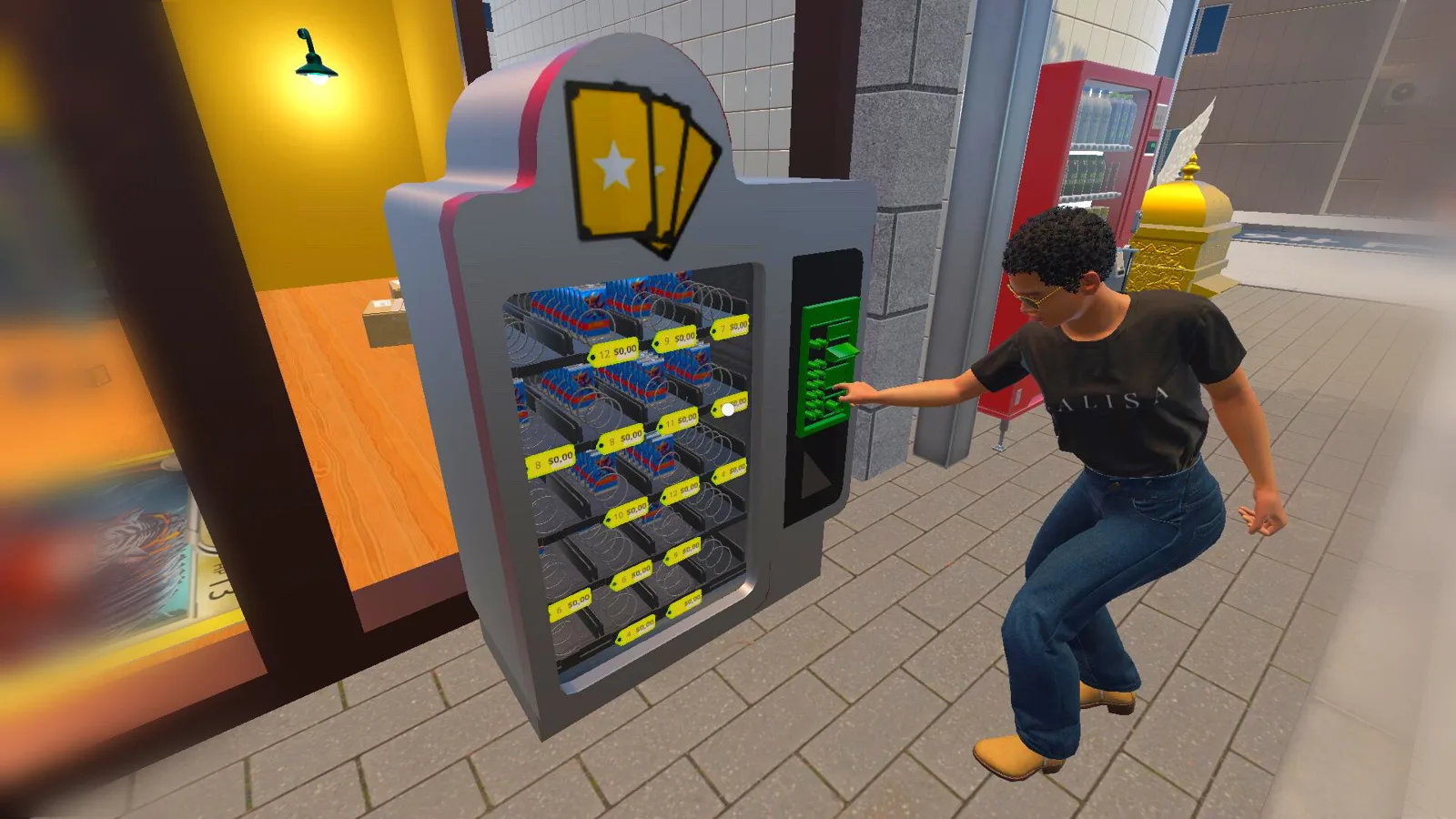
Vending machines are placed around town and keep selling even while you are offline. It is the only income that runs without you: place some early, in busy spots. They need refilling, hence the value of having one player whose job that is.
The studio publishes its odds, per slot, on 8-card boosters. Translated into boosters, that gives:
| Rarity | Chance per slot | On average |
|---|
| Common | 70% | 5.6 per booster |
| Uncommon | 20% | 1.6 per booster |
| Rare | 7% | about one every 2 boosters |
| Epic | 2% | about one every 6 boosters |
| Legendary | 0.9% | about one every 14 boosters |
| Ultra rare | 0.1% | about one every 125 boosters |
These are averages: you can open 300 boosters without seeing an ultra rare. And every booster you open yourself is one you do not sell. Agree on a rule as a group (for example, only open yesterday's unsold stock), or the shop will pay for it.
All your cards go into your Steam inventory, and the Steam Market is open for this game. But common cards sell there for around 3 cents, and each has more than a hundred listings. The rare listings at tens of dollars are asking prices for a single copy, not completed sales.
The Steam inventory is mostly useful for one thing: trading duplicates with friends to complete your collections. That is where it really shines.
- Tournament tables earn money and XP, and unlock bigger competitions as the shop grows. Set one up as soon as you can.
- Alkamon eggs can be crafted, collected or sold. A side income, not an early priority.
- Staff take over the most tedious job. If nobody wants the till, that is your first hire.
And Karen. There is a Karen. The game's page invites you to kick her butt.
The game is unstable, and some players report quests losing their progress. Avoid betting everything on an ongoing quest objective. And since very few people are online, bring your friends: matchmaking with strangers is unlikely to find anyone.
For comparison with OPNeon's solo game, our TCG Card Shop Simulator guide still applies for pricing and stock management.
Looking for teammates to open shop with? The InsertCoins Discord is the place to recruit your cashier.