Post-apocalyptic survival is a genre where you feel you've seen it all, between juggernauts like DayZ and blockbusters like Dying Light. So when a small Dutch studio shows up with The Left Behind and its promise of a day to explore and a night to survive, you prick up your ears with a mix of hope and caution. The concept is solid, the ambition real, and the day-night loop has appeal. But from the demo, a doubt sets in: does the game really keep its promises, or does the execution betray an ambition greater than the means? After playing it, the answer is nuanced, and we have to be honest.
The context
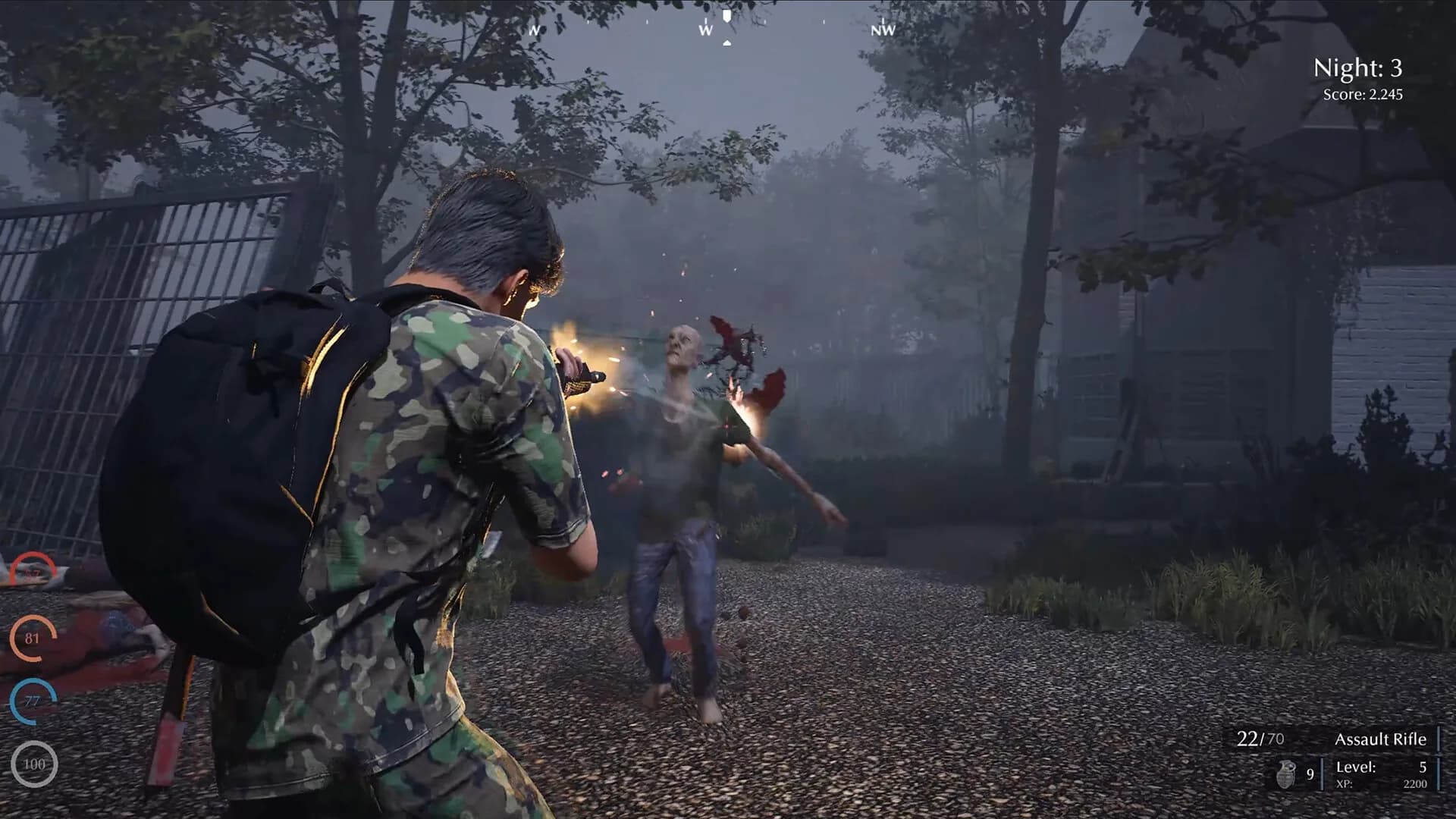
The Left Behind is a solo and co-op post-apocalyptic survival game developed by the Dutch studio Extrude3D, available on PC since 27 July 2026. You explore an open world inspired by typical Dutch landscapes, looting by day and defending by night, when hordes of enemies show up. The pitch sums up well in one formula: DayZ by day, Dying Light by night. Every building can be searched, you have to constantly watch your hunger, thirst and health, and each night becomes harder than the last. The game offers several modes, including a main story mode of one to three hours, plus survival, horde and free-exploration modes. Crucial point: there's no save system, everything being built around permadeath.
The Left Behind's big idea is its day-night rhythm, and that's where the game is most convincing. By day, you freely explore the open world, you search the buildings, all accessible, you gather food, water and gear in a DayZ-style looting logic. When night falls, the tone shifts: the hordes pour in, tension rises, and you go from explorer to cornered survivor, Dying Light style. That alternation between the relative freedom of day and the dread of night gives the game its identity and its best argument, all the more since each night hardens, installing a growing pressure that pushes you to prepare your defenses well.
It's permadeath that seals that tension. With no save system, every decision counts, every night sortie is a gamble, and death erases everything. That radical stance ramps up the stakes of survival: you no longer take reckless risks, you weigh every expedition, you ration your resources knowing a mistake can cost everything. The game grafts a few light building elements onto this, like barricading your windows or storing your loot in chests, without however offering a full base-building system. The proposition therefore bets everything on tension and preparation rather than on system depth, which works when the day-night mechanic runs well.
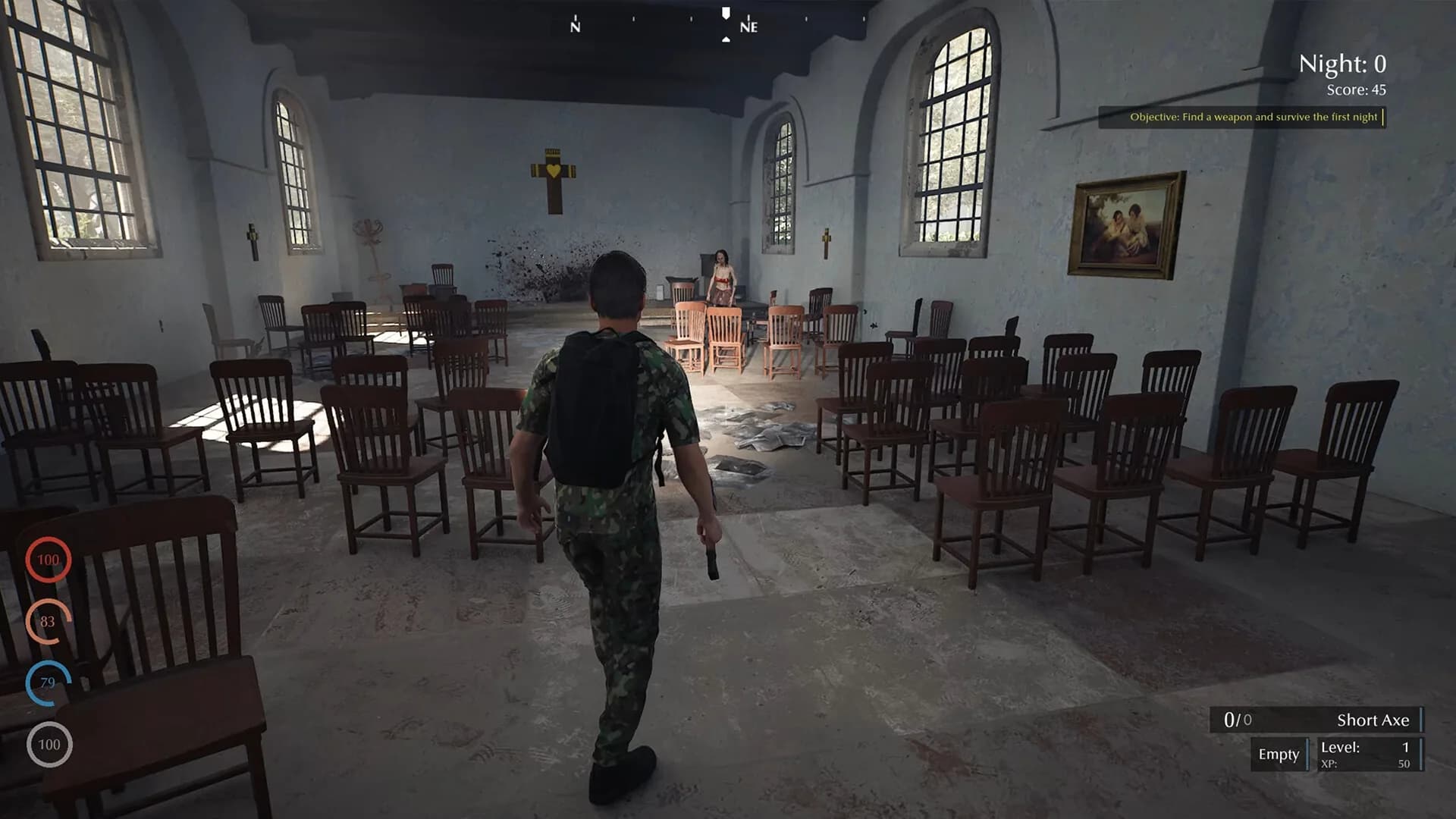
We have to be frank, because the demo left a mixed impression, and it would be dishonest to hide it. Player feedback on that demo was largely divided, a sign the execution doesn't yet fully convince. A small studio taking on a genre dominated by references as heavy as DayZ and Dying Light inevitably runs into high expectations, and The Left Behind shows its modest means in places, whether in polish, variety or the robustness of its systems. The ambition is there, but it sometimes exceeds what the game manages to deliver, and that's the main brake on enthusiasm.
The other reservation is the scale and balance of the proposition. The story mode, the announced heart of the game, only lasts one to three hours, which is short, and the survival elements there are present but very light. Those coming for a deep, sprawling survival risk being left wanting, while permadeath with no save, if it creates tension, can also frustrate when a death erases hard-won progress. The limited building, with no real base building, also closes the door to part of the genre's pleasure. It's a proposition that owns its modesty, but that should be approached knowingly, without expecting a survival juggernaut.
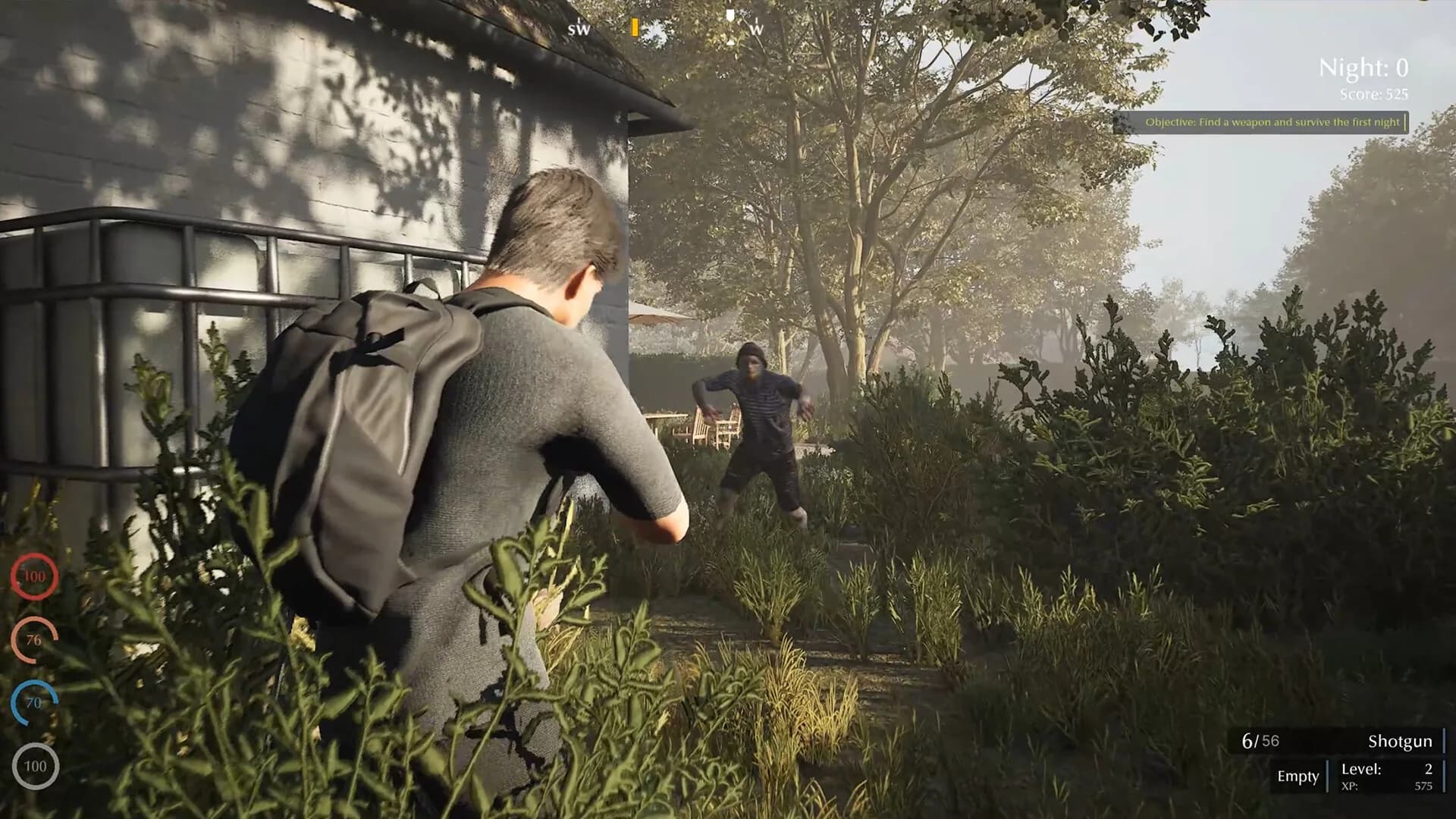
The Left Behind is a post-apocalyptic survival game carried by a strong concept and real ambition, that of marrying DayZ-style daytime exploration with Dying Light-style nighttime survival. Its day-night loop, its growing tension and its no-net permadeath give the game an identity and gripping moments, especially when night falls and the day's preparation is put to the test. For a modest studio, the intention is laudable and the skeleton is there, and you feel a sincerity that makes the project endearing despite its flaws. In co-op, the shared tension can even make it a memorable experience.
You just have to approach it with clear eyes and no outsized expectations. The demo divided, and the execution betrays in places means not up to the ambition, between improvable polish, a short story mode and light survival systems. Permadeath and limited building are owned stances that will please some and frustrate others. It's a game to support for its concept and ambition more than for its perfection, betting on updates to fill the rough edges. A promising but rough survival, to reserve for curious, forgiving genre fans, ready to accompany an ambitious small studio rather than to demand a rival to the giants from the start.
A post-apo survival with a strong concept, DayZ by day and Dying Light by night, carried by a tense day-night loop and permadeath, but held back by rough execution, a short story mode and a mixed demo reception.
Strengths:
- The day-night loop, daytime exploration and nighttime survival
- No-save permadeath that ramps up the tension
- A fully searchable Dutch open world
- Real ambition and endearing sincerity, solo and in co-op
Weaknesses:
- Rough execution that betrays modest means
- A short story mode and very light survival systems
- A mixed demo reception, sign of a formula not yet nailed
- Limited building, with no real base building
Tested on PC.
Disagree with the score? Come and tell us on the InsertCoins Discord, where we defend our verdicts live.